Labour is in denial about the economy

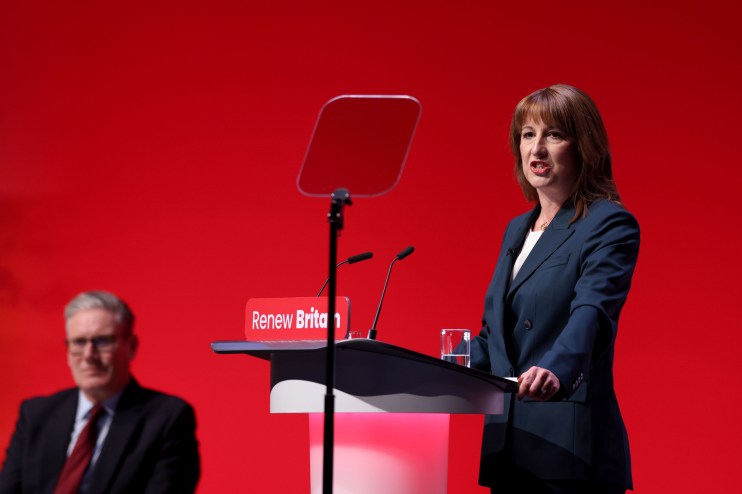
The recent Labour conference as an exercise in denial, revealing a party plagued by internal divisions and lacking a coherent economic plan, says Helen Thomas
As the Labour conference drew to a close, one word dominated the mood: denial. Denial of the scale of Britain’s economic challenges. Denial of the fault lines within the party and the country. Denial about what must be done to bridge them.
This year’s gathering was therefore less a triumphant reset and more a masterclass in self-delusion. Beneath the public bravado lurked deeper fractures: between moderates and ideologues, between ambition and pragmatism and between political theatre and fiscal reality.
Party conferences often lean rhetorical, mobilising supporters by drawing contrasts with opponents and casting someone else as the enemy. But this year, Labour took things further. Rather than engage with internal dissent or escalate self-criticism, speakers opted for theatrical confrontation. We heard ministers urge attendees to “grind what’s left of the Conservative party into the dust”. Newly promoted Treasury minister Torsten Bell described Liberal Democrat Ed Davey as a “fat bloke in a wetsuit”. Journalists, not surprisingly, pounced on the graphic language, trying to coax senior MPs into naming Nigel Farage a racist.
The decision to focus on your political opponent is a risky choice. It gives oxygen to opposition voices and reinforces the optics of a party in perpetual campaign mode rather than one that feels assured of victory following a landslide election win.
Restless leadership
Leadership at Labour is restless. Ministers admitted confusion over the recent reshuffle; even those promoted often seemed ill-prepared for their briefs. In the corridors, whispers abound about Starmer’s successor. Andy Burnham’s aborted coup may have receded, but the speculation hasn’t. The upcoming deputy leadership contest is shaping up as a lightning rod for internal dissent.
Lucy Powell, viewed as the favourite, fuelled the intrigue by announcing she would decline a Cabinet position if elected, positioning herself as a potentially critical voice from within. That stance speaks volumes. Not just of her ambition, but of the sense that being within the administration itself may be seen as a reputational risk in these unsettled times.
Being involved with this administration is now seen as a reputational risk
If Labour’s messaging was mixed internally, its economic pitch was even more so. The government seems caught between ambition and restraint, with the Treasury locked in a daily fight with bond markets. The Prime Minister and the chancellor are tethered to a doctrine of “securonomics”, loosely defined as a pledge not to gamble with economic stability. Yet the very necessities of governance may force them into contradictions.
Chancellor Reeves, for instance, is lobbying the Office for Budget Responsibility (OBR) to accept the assumptions that enable her to argue for higher productivity ahead, enabling her to finesse the numbers and meet her fiscal rules. But if that gambit fails, she may quietly break manifesto pledges on tax rises, blaming them on OBR revisions rather than policy failure.
Prime Minister Starmer, for his part, tied his narrative to an economic critique of Labour’s last stint in power: we bet too much on globalisation; we treated migration as a panacea; we allowed wealth to be amassed, not shared. In his keynote speech he said the government’s “defining mission” was to “change the way we create growth”, adding that “a Labour government that cannot control spending is a Labour government that cannot govern for our times.”
But creditors, markets, and bond vigilantes don’t heed speeches. They care about debt levels, borrowing trends and real yields. And in that realm, Labour looks vulnerable.
The Chancellor doesn’t yet know what will go into the next Budget, because she doesn’t know how the OBR will model her decisions. This led former chief secretary to the Treasury (and now chief secretary to the Prime Minister) Darren Jones into a rather tortuous attempt to preserve optionality when pressed by journalists over whether promises not to hike the main taxes would be respected: he garbled that the manifesto “stands today because decisions haven’t been taken yet”.
That lack of discipline feeds into the narrative of uncertainty: a government squabbling with itself while the country waits.
Labour’s conference closed not with triumph, but with an uneasy truce. Loyalists tried to convince themselves that the promised land lies just over the horizon whilst a disparate bunch of rebels tried to figure out how to destabilise the Prime Minister without destabilising bond markets in the process.
This is dangerous. Markets and stakeholders care less about internal debates and more about outcomes. If the governing party can’t present a cohesive economic roadmap, confidence will falter. Conversely, over-reliance on rhetorical flourish without substance leaves room for opposition critiques about vacillation, brinkmanship, or worse, incompetence.
In the final analysis, what Labour seems to be missing is less a script or messaging plan than a serious conversation with reality. Denial may work in fragments, on social media or at activist rallies, but governing demands hard choices, accountability, and structural clarity. Until that reckoning begins in earnest, the country – and markets – may decide to move on, whether Labour is ready or not.
Helen Thomas is founder and CEO of Blonde Money