Labour’s war on business is a gift to Nigel Farage

Labour’s paralysis is driving business away from Britain and paving a path to power for Nigel Farage and Reform, says Alexander Temerko
The government of Keir Starmer has internalised a culture of hesitation so completely that inaction is no longer perceived as a flaw, but as a mode of governance. Over the past year, a reluctance to act has become institutionalised, and what once might have provoked alarm now passes as procedure. Instead of directing the state toward coherent objectives, the machinery of government turns inwards, caught in an endless cycle of procedural churn and bureaucratic self-reference. The result is a managed stasis that mistakes the absence of crisis for the presence of control.
A functioning government must be judged by its capacity to bring about change in the real world. In domains essential to national strength – infrastructure, energy, defence, finance and industrial capacity – our country has utterly lost the ability to act decisively. Projects that should be manageable in scope and straightforward in process are routinely ensnared. What was once a dependable regulatory environment has devolved into a Byzantine labyrinth of lack of accountability, intrigues and speculation.
I have repeatedly witnessed this firsthand with my own project, AQUIND. A totally privately financed £2.5bn energy project of huge strategic and economic value that will reduce energy costs across the country, create jobs and lower our carbon emissions. Interconnections like this are backed by clear political consensus and AQUIND has taken substantial private investment, yet it has taken more than seven years to gain approval from government after government, despite every independent expert assessment agreeing on the project’s necessity, urgency and benefits, and not one pound of funding is required from the state. At every junction, decisions are deferred and the previous decisions reviewed. The architecture of governance, rather than supporting action, now seems to exist primarily to delay it. What should require weeks or months requires many years.
The scale of the problem is nauseatingly vast: The Infrastructure and Projects Authority has made it plain: 84 per cent of the 227 major national infrastructure projects currently underway are experiencing serious difficulties, and dozens are at risk of non-completion. These include everything from digital health modernisations to transport upgrades to regional flood defences.
The paralysis is everywhere in our country. In the construction sector, over 800 small and mid-sized firms collapsed in the first half of 2025, many of them already mid-project, some working on state-backed schemes. These failures are not just because of economic fragility; they are symptoms of an environment where uncertainty, delay, and regulatory opacity make delivery impossible. The government has created the conditions in which even willing participants are driven out of the market by the sheer unreliability of the state as a partner.
Now the rot is spreading. In 2024, Britain lost a net 10,800 millionaires; second only to China in global high-net-worth outflows. But in 2025, the exodus is expected to reach 16,500, putting the UK far ahead of any other nation. This is a bloody hemorrhage of private capital, institutional talent and long-term investment. Billionaires are leaving London, top-tier banks are rerouting wealth operations abroad, and family offices are shutting their doors rather than face an increasingly hostile fiscal environment.
When businessmen, investors and corporations leave the country, we are all made poorer. Let there be no mistake; this isn’t at all the caprice of a few ultra-wealthy individuals that Keir Starmer won’t miss.
With 16,000 fewer millionaires, we will have fewer business-owners, fewer investors, fewer major taxpayers, and fewer job-creators. The top one one per cent of UK earners pay 30 per cent of all income tax collected by HMRC. According to the Institute for Fiscal Studies, an HNW individual worth between £10m and £50m contributes between £1m to £5m per year to society, from investment to job creation to taxes.
Scaled up, this means that losing 16,500 millionaires this year will cost Britain £40bn in lost economic potential.
The year after, it will be worse. And there is a compounding effect. Every year we lose capital, we lose investment and we lose growth. UK productivity is already abysmal; soon our GDP and national wealth will be eclipsed by France, and then Italy.
This is a direct response to the government’s decision to eliminate long-standing non-dom provisions. Confidence is collapsing in real time because of an active decision by the Labour government to punish wealth and penalise mobility. Investors, financiers and innovators no longer see Britain as a stable home. We see risk without reward.
Businesses are being shackled
At the same time, British businesses are being shackled by a 310-page industrial relations bill introduced by the Labour government, informed directly by anti-business trade unions, which will destroy decades of labour-market consensus, and further ruin our prospects for growth.
As my friend Andrew Griffith MP – the Shadow Business Secretary – has made clear, this legislation will be disastrous for business, growth and investment. It includes shorter strike notice periods, a dangerously low threshold for compulsory collective bargaining, and even intrusive union access to internal communications systems and private business premises. It would create a state-funded enforcement agency empowered to bring cases against businesses even where no employee has complained. This Bill will cost British businesses £5 billion per year and destroy 50,000 jobs.
This is no longer merely bureaucracy; it is sabotage. Labour is actively turning against the forces of growth. The state is becoming the chief obstacle to prosperity and economic development.
If Britain wishes to re-establish itself as a place where investment is encouraged and enterprise rewarded, then its government must change the regulatory system within a few months. First, if funding from the state isn’t required, then support for the project should be given automatically. Second, private investment is above bureaucratic instructions. Each stage of state regulation should have time limits, such as up to one month. In total, the entire process should not take longer than one year. If the regulator cannot make a decision on time, the applicant receives it automatically. If the regulator refuses, but loses in court (or during Judicial review), the regulator reconsiders its decision within 10 working days. Regulation without specific deadlines has no right to exist. The country needs investment now, preferably long-term. It is much more necessary than the so-called regulatory bodies. If the Government is unable to reduce taxes now, then it should at least shorten the regulation.
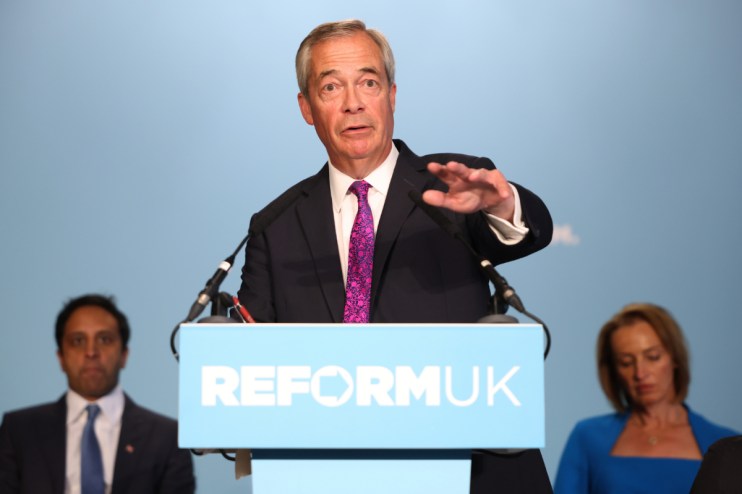
Meanwhile, other political forces are waiting in the wings. Nigel Farage’s Reform Party is beginning to channel the frustrations of a public that sees competence eroded and action deferred. In the vacuum left by a government that governs in symbols but not in substance, the path opens for those willing to speak more plainly and act more decisively, such as Mr Farage.
Every misstep by Starmer’s radical anti-business Government offers fresh legitimacy to alternatives once thought beyond the pale. The Conservative Party of today offers nothing at all to the voters, and Kemi Badenoch’s colourless and uninspired leadership is the only thing currently keeping Keir Starmer’s Labour Party in a strong position. But the longer this national drift continues, the more our wealth declines, and the more the next election will become a reckoning with the lost credibility and broken promises of Westminster.
The outcome is easy to predict: Nigel Farage will become our next Prime Minister. If he can provide decisive action and, together with business, propose a programme for the economic renewal of Great Britain, I will welcome it.
Alexander Temerko is a political commentator and energy investor