Skip to content
Sunday 13 September 2026London --:--Frankfurt --:--Zurich --:--
NewslettersSearchEN · DE · FR
MorningWire

European business, markets and politics

FTSE 100
10,650.44
+0.39%
DAX
25,568.56
+0.82%
CAC 40
8,179.77
+0.78%
STOXX 50
6,325.13
+0.90%
  • Europe
  • Markets
  • Business
  • Economy
  • Regulation
  • Politics
  • Opinion
More
GermanyFranceEU InstitutionsCompetitionPublic AffairsBankingTechnologyEnergy
  • Germany
  • France
  • Europe
  • Markets
  • Business
  • Economy
  • Regulation
  • Politics
  • Opinion
  • DE
Tuesday 10 March 2020 4:12 am  |  Updated:  Monday 09 March 2020 6:16 pm

Lebanon should learn the lessons of the past to protect the future when it comes to its debt problem

By: Joumanna Bercetche

Add as a preferred source on Google
LEBANON-POLITICS
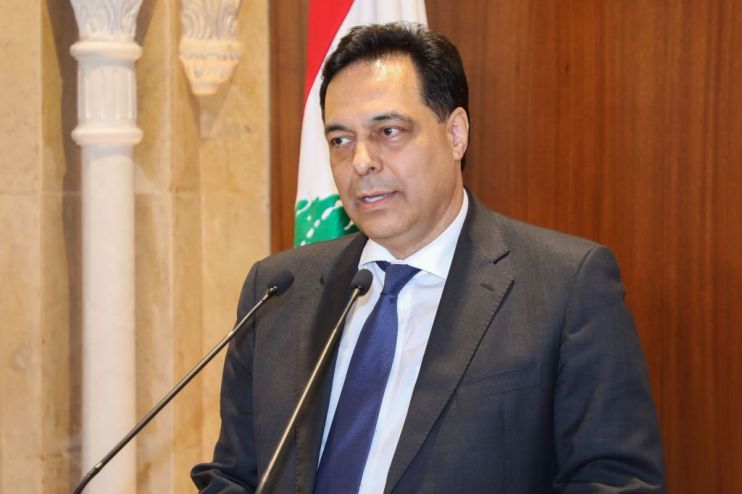
Prime Minister Hassan Diab announced to the world that Lebanon would be defaulting on its debts

In a solemn press conference over the weekend, the relatively new Lebanese Prime Minister Hassan Diab delivered a speech that will go down in history. 

Conceding that the country was paying for mistakes made in the past, Diab announced to the world that Lebanon would not be rendering whole the bond payment due on Monday, and that the country would kickstart a process of debt restructuring with its creditors to re-profile the roughly $32bn in outstanding eurobonds. It was the first ever default for the tiny Middle Eastern country.

People not following the story might assume that Lebanon, with one of the highest debt-to-GDP ratios in the world, had become the first country to fall victim to a slowdown in global growth, one that only looks likely to be exacerbated with the onset of the new coronavirus.

That is not the case. The situation Lebanon found itself in economically is one that has been almost entirely homegrown, due to unsustainable imbalances and twin deficits. The country has been running a negative balance of payment for the better part of the last 10 years, while simultaneously running ballooning budget deficits (2018’s budget topped 10 per cent). 

Debt servicing alone accounts for about half of the spending, while an inefficient and costly electricity sector consumes another third. After the Civil War ended in 1990, Lebanon has not had 24-hour electricity, and most people supplement government provided electricity with costly private generators. This has left little room for productive investment. 

Furthermore, Lebanon’s central bank has been leaning heavily on the local banking system. Customers’ dollar deposits have been primarily placed at the central bank, reimbursed with above market interest rates in return. The interest alone has made many wealthy depositors a lot of money.

After the Syrian War commenced in 2011, foreign deposits started to dry up and the economy’s growth dipped, followed by a long period of political paralysis. Things came to a head last fall when demonstrations gripped the country as protesters took to the streets, raging at years of inept leadership and rampant corruption, eventually bringing down the government. 

The currency, the Lebanese lira, which had been pegged to the dollar since the 1990s, started trading in parallel markets at a near 30 per cent discount to the official rate. Locals rushed to withdraw their dollars from the banks, perpetuating the dollar shortage in the country.

All which led to Saturday’s decision. In his speech, Diab pledged to tackle tax evasion, corruption, bring down the costs of the electricity sector, work toward a balanced budget, and restructure the bloated banking system.

This is a long list of reforms that urgently need to be undertaken, especially now the country has had preliminary talks with the International Monetary Fund and is faced with ever dwindling foreign reserves. 

It will be a long road ahead. Many countries have defaulted and recovered (Argentina has defaulted eight times), but what is more important is learning the lessons from the past so as to protect the less fortunate and not repeat them again.

Main image credit: Getty

Read more

As it happened: Stocks jittery as oil nears $90; Trump ‘semi-negotiating’ with Iran

Large oil tanker navigating a strait under a cloudy sky, impacting oil prices and global trade.

Share this article

  • Facebook
  • X
  • LinkedIn
  • WhatsApp
  • Email

Similarly tagged content:

Sections

  • Markets & Economics
  • News
  • Opinion

Categories

  • Business
  • Economics
  • Opinion

Related Topics

  • International

Trending Articles

  • Wetherspoon boss: ‘Not up to Burnham’ to choose who is on the high street 

  • Badger Beer maker Hall & Woodhouse doubles profit ahead of tie-up with James May

  • Four interest rate hikes loom despite surprise economic growth

  • Primark sales slip as owner dresses up retailer for demerger

  • As it happened: FTSE 100 rallies as economy beats forecasts; oil falls back

More from Morning Wire

  • As it happened: Stocks jittery as oil nears $90; Trump ‘semi-negotiating’ with Iran

    FTSE 100 Live
    Large oil tanker navigating a strait under a cloudy sky, impacting oil prices and global trade.
  • As it happened: FTSE 100 falls as Iran and US clash over Strait of Hormuz; Oil stockpiles ‘rapidly depleting’

    FTSE 100 Live
    Bustling shipping activity in the Strait of Hormuz with tankers and cargo ships navigating Iranian waters.
  • UK debt ‘hits £3 trillion’ milestone

    Economics
    Houses of Parliament in Westminster showcasing historic architecture under a clear sky, central to UK government and politics
  • Our debt addiction can only end in tears

    Economics
    UK public finances and sovereign debt crisis
  • Andy Burnham is on course to rack up the second highest debt interest bill on record

    Opinion
    UK National Debt Clock showing £3 trillion, with Big Ben and the Union Jack in the background.
  • Can debt-ridden Morrisons become a Big Four supermarket again?

    Retail
    Green Instacart shopping cart outside a modern Morrisons supermarket entrance with large glass windows
  • Burnham refuses to rule out more borrowing and blames Tories for debt crisis

    Politics
    Andy Burnham, wearing a dark suit and glasses, speaks outdoors with trees in the background.
  • Burnham’s in hock to the bond markets – whether he likes it or not

    Economics
    Andy Burnham speaking in Parliament, surrounded by other politicians and officials.
MorningWire

Independent European business, markets and political news for decision-makers.

Morning Briefing

Europe

  • Germany
  • France
  • EU Institutions
  • Europe

Business

  • Markets
  • Business
  • Economy
  • Regulation
  • Competition
  • Public Affairs

Editorial

  • Opinion
  • Editorial Policy
  • Corrections
  • Contact

Company

  • About Morning Wire
  • Privacy Policy
  • Terms of Use
  • Cookie Policy
© 2026 Morning Wire Ltd · Published by Morning Wire Media, Bahnhofstrasse 65, 8001 Zürich, Switzerland
Privacy · Terms · Cookies · Facebook