Lessons from the Met Police: We should give power to those who least want it

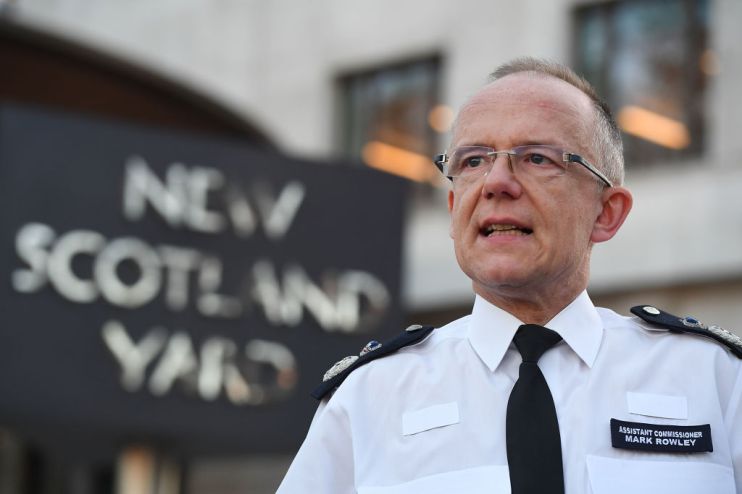
What can we learn from the failures of the Met? That in politics as well as in the police, we need people who do it for the calling, not for the thirst for power, writes Josh Williams
A few in society are handed power over the many. The recent revelations about Met Police officers – just the latest in a long and lamentable series – offer a stark reminder: those drawn to power are often those least fit to assume it.
While power attracts some for the opportunity to serve, it draws others for the chance to rule. One solution is to remove the question of attraction entirely. The precedent for doing so is as old as democracy itself. In Ancient Athens, public officials were chosen by ‘sortition’. Drawing from the admittedly small category of ‘free men’ (thereby excluding slaves, women and children), citizens were chosen at random to govern their communities and judge their fellow citizens.
Sortition lives on. Modern juries are, of course, selected in this way. Today we would think it odd and unfair to be judged by anyone other than twelve of our peers. More radically, organisations like the Sortition Foundation now call for wider applications of the approach. They propose tossing out the desiccated duffers in the House of Lords, for instance. Doing so would be no affront to democracy. Only China can boast of a larger chamber of unelected representatives than our peerages.
In Britain, when we choose our politicians, we like them to at least feign reluctance. There is a long-established expectation that, if asked about their desire to become Prime Minister, MPs will deny that the ambition is theirs. There was, of course, a notable exception in the ample shape of Boris Johnson. Asked the question in 2013, the then Mayor said: “if the ball came loose from the back of a scrum,” he would “have a crack at it.”
In this, he only said what others thought because true reluctance in politics is vanishingly rare. The pole is slippery and it takes some climbing. So again, it is to antiquity that we must turn for precedent. In Ancient Rome, Cincinnatus was the archetype of the reluctant ruler. His first dictatorship lasted 15 days. Once he’d saved the state, he handed back power and returned to his farm. Called to serve once again, he repeated the trick, this time holding power for just 21 days.
Johnson referred to Cincinnatus on the steps of 10 Downing Street on the day he left office. “I am returning to my plough,” he said then, full of ominous hints at a possible return. The comparison was otherwise anything but apt. For one thing, Johnson’s humble “plough” is the lucrative speaking circuit, where he is said to earn £250,000 per speech. For another, he did not “return” to anything; he was returned, kicking and screaming. Most importantly, Johnson and Cincinnatus had markedly different attitudes to power. The Roman wanted none of it. Johnson, as a boy, wanted to be “world king”.
If power accrues only to those who desire it, and believe it is their due, a certain cast recurs: those emboldened with the confidence of England’s public schools.
But politics is, like all public service, often a calling. There is much more to be done to ensure that everyone can hear the call. Civic Future, a new organisation founded by one of Johnson’s own former advisors, is doing just that, attracting a new generation, drawn from different backgrounds, to politics, and training them to serve.
The good news is that a shift does seem to be occurring in British politics. After Johnson’s showmanship, and Truss’s brief and clownish performance, our politics is taking a turn for the serious.
George Osborne noted recently that in Sunak, Hunt, Starmer and Reeves there are “two sets of people who are sensible and have integrity.” The political battle now is for competence, not showmanship. This is a time for administrators, not politicians. It is a time, perhaps, for those who will serve and not rule.
At the next election, expect voters to turn to those least likely to pursue politics for personal gain, and most likely to do so in the interests of others. It is a standard that we should set all of those we entrust with power over us, whether they assume high office or keep our streets safe.