Skip to content
Thursday 20 August 2026London --:--Frankfurt --:--Zurich --:--
NewslettersSearchEN · DE · FR
MorningWire

European business, markets and politics

FTSE 100
10,712.87
-0.28%
DAX
25,982.14
-0.42%
CAC 40
8,472.06
-0.35%
STOXX 50
6,426.72
-0.28%
  • Europe
  • Markets
  • Business
  • Economy
  • Regulation
  • Politics
  • Opinion
More
GermanyFranceEU InstitutionsCompetitionPublic AffairsBankingTechnologyEnergy
  • Germany
  • France
  • Europe
  • Markets
  • Business
  • Economy
  • Regulation
  • Politics
  • Opinion
  • DE
Wednesday 11 November 2015 9:40 am

Lessons in wine: To decant or not to decant, that is the question

By: isabel.palmer

Add as a preferred source on Google

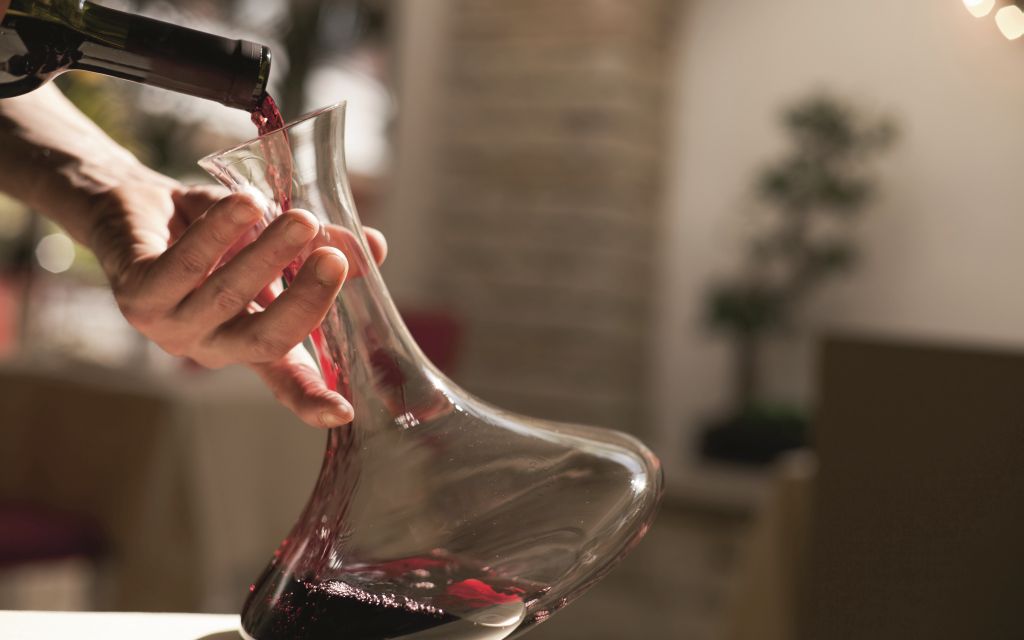
A decanter is a vessel to pour wine into; these are almost always glass or crystal and decanters come in wonderful shapes and sizes.

Deciding whether to decant, or how long to decant for is a difficult question, even for the most fervent wine enthusiast. So here are some thoughts which might help you decide.

The only real reason to decant a wine is to remove sediment from the bottle.

Read more: Don't be intimidated by fine wine, it's a fun journey

This separates the wine deposits from the wine, which can make the wine look duller. If you are not careful, this sediment can be poured into the glass, sometimes enough to make you a wine pariah at a dinner party.

This also qualifies in the wine world as a quasicriminal act, but that’s pushing it slightly. As a rule of thumb, if you think the wine will have sediment, decant it.

A top tip is hold the bottle to a lit bulb to view the sediment at the bottom; if there’s a lot there, get it out of the bottle.

Read more: When is the ideal drinking window?

The other reason to decant, which is more polemic, is to expose the wine to rapid oxidation from contact with air. Allowing a bottle to breath in a decanter allows the wine to release more aromatic compounds, allowing the texture of the wine to soften.

Decanting also appears to soften tannins in wine, although this is a subject of debate. The more subjective choice is which wines should be decanted and for how long.

Decanting for immediate drinking would be a waste of time, adding very little to the experience and creating washing up.

Traditionally, people focus on red wines, although some white wines can benefit from a short decant, as can champagne.

Tannic wines such as Bordeaux, Barolo, Port, Napa and Rhone wines are always candidates for decanting.

Grape variety can also be a good indication so if you know you are dealing with thick skin, tannic grapes such as Cabernet Sauvignon, Nebbiolo and Malbec, you should consider aeration.

Some say that decanting can be harmful to delicate grapes like Pinot Noir. However, 1er Cru and Grand Cru Burgundies, certainly when young, should be considered for a decant, although Burgundian tradition is not to.

The rule of thumb here is to think of whether the wine was made for long term ageing. How long to decant for is tricky.

Truly powerful young wines can benefit from up to two hours in a decanter. For example, if you really have to open a young grand cru Bordeaux, decanting will optimise the experience.

On the flip side, prolonged exposure to air can diffuse and dissipate aromas, a particular risk in older wines. As such, wines with lots of bottle age should be decanted and poured within 10-30 minutes.

Drinking a case of wine over several years will give you the empirical knowledge on how long to decant; it’s a great experiment and a lot of fun.

As with all things, experience is key: a good reason to try more wine.

[custom id="2"]

Share this article

  • Facebook
  • X
  • LinkedIn
  • WhatsApp
  • Email

Similarly tagged content:

Categories

  • Food
  • Life&Style

Trending Articles

  • Jobless Banquet: Youth unemployment surge ‘sends Neets to KFC’

  • City law firm sues prominent Emirati business family

  • Amanda Blanc has worked her magic at Aviva

  • As it happened: Miners fuel FTSE 100 recovery; oil jumps as Trump claims Strait of Hormuz

  • House prices in wealthy London boroughs fall by up to £300,000

More from Morning Wire

  • Why chilled red wine is the coolest thing to drink right now

    Wine
    Libby Brodie polling
  • Greek wine perfectly suits summer. These 5 bottles are the best

    Life&Style
    Two women smiling, one in blue holding white Greek wine, another in white holding red wine, under grapevines.
  • A tribute to wine legend Matthew Jukes by his friend Libby Brodie

    Life&Style
    Libby Brodie and Matthew Jukes raising a toast at a celebratory event, smiling and holding a glass, conveying joy and success
  • Humble Grape is up for two Toast the City Awards: Here’s why

    Toast the City
    Exterior view of Humble Grape Bow Lane showcasing its inviting entrance and rustic charm on a bustling London street.
  • We take a food and drink Odyssey through the Square Mile

    Life&Style
    Libby in a warrior costume with a helmet, holding a glass of red wine, with an ancient ship and people in background.
  • Humble Grape is a wine bar like no other: Here’s its origin story

    Toast the City
    Exterior view of Humble Grape Bow Lane showcasing its inviting entrance and rustic charm on a bustling London street.
  • For Albarino in the City, head to Humble Grape

    Toast the City
    Libby Albarino holding a bottle of Zarate wine and a glass by the ocean
  • Why lighter, chilled Claret is causing a stir

    Life&Style
    Claret wine bottles displayed on a wooden shelf, showcasing diverse labels and changing trends in the wine industry
MorningWire

Independent European business, markets and political news for decision-makers.

Morning Briefing

Europe

  • Germany
  • France
  • EU Institutions
  • Europe

Business

  • Markets
  • Business
  • Economy
  • Regulation
  • Competition
  • Public Affairs

Editorial

  • Opinion
  • Editorial Policy
  • Corrections
  • Contact

Company

  • About Morning Wire
  • Privacy Policy
  • Terms of Use
  • Cookie Policy
© 2026 Morning Wire Ltd · Published by Morning Wire Media, Bahnhofstrasse 65, 8001 Zürich, Switzerland
Privacy · Terms · Cookies · Facebook