Let’s be honest, not all small businesses are meant to survive

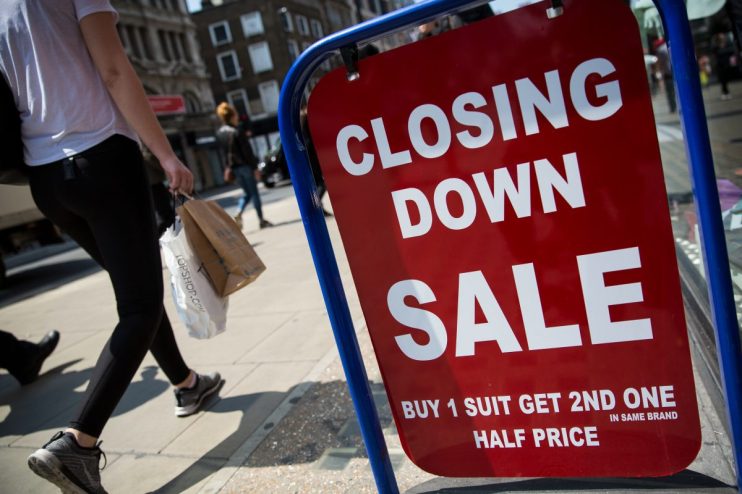
The fact that not every small business survives is far from a bad thing. In fact it’s the sign of a healthy economy, writes Alexandra Rosen
The truth is that not every small business is meant to survive. Some are built around an idea that never quite finds a sustainable demand. Some run into cost pressures, weak margins or an inability to keep up with competition or technology changes. And others exist simply to teach their founders personal and professional lessons that shape future success.
In a healthy economy, the fact that not every small business survives is not a bad sign about the state of entrepreneurship; quite the opposite. It is part of the natural business lifecycle and a strong signal of growing opportunity and community impact. This realisation warrants us to evolve our definition of small business success and how we view closures. We should think not just about the cost of starting, but about the return on failure.
Small businesses power local economies
GoDaddy’s Small Business Research Lab studies the economic impact of more than 600,000 small businesses in the UK, as well as the attitudes of their owners. It found that for every thousand people, each additional digital small business is associated with about five extra jobs in that area. In addition, a 10 per cent rise in digital small businesses is linked to an average pay increase of about £360 for full-time workers. These are besides contributions to the GDP. This is the wider context in which business creation and closure both play vital roles.
Our latest study found that 13 per cent of current UK small business owners previously set up a company that went under or ceased operating. Far from being shut out of entrepreneurship, these “go again” entrepreneurs are now outperforming their peers.
Almost one in four (24 per cent) of this demographic earns over £5,000 per month from their current business, compared to 19 per cent of entrepreneurs overall. Many of them have become portfolio entrepreneurs, with over a third (34 per cent) running multiple ventures at once. This shows how failure can lead to adaptation, as founders re-enter the market with sharper judgment and more grit.
Failure can spur on future success
The return on failure is still underestimated in British business debate. None of this takes away from how difficult it is when a business closes. We tend to count the closure and job losses and stop there. We pay much less attention to what follows: the founder who starts anew with different approaches to offerings, marketing, cost management, pricing and more. Experience does not guarantee success, but it often improves the quality of decisions made the next time around. In business, that matters a great deal.
The fact that 40 per cent of founders in our data who had experienced failure launched again with under £500 suggests that accessibility matters. A dynamic small business economy depends not just on encouraging people to start, but on making it possible for them to start again. The cost of starting has never been lower, particularly as more businesses launch and operate online using digital tools. Many entrepreneurs today can work from anywhere on their own terms, and flexibility is consistently one of the top three reasons people choose to start a business. Many want to stay small, too, as they are able to maintain their ideal lifestyle while making a living.
Britain needs more entrepreneurship – on that we can all agree. But if we want a stronger entrepreneurial culture, we need a more mature understanding of what success looks like. The vision is not an environment in which every business survives indefinitely. It is one in which founders can learn quickly, adapt decisively and re-enter the market with the odds now decidedly stacked in their favour.
Alexandra Rosen is an economist and global head of the GoDaddy Small Business Research Lab