Skip to content
Thursday 10 September 2026London --:--Frankfurt --:--Zurich --:--
NewslettersSearchEN · DE · FR
MorningWire

European business, markets and politics

FTSE 100
10,607.16
-0.59%
DAX
25,385.71
-0.75%
CAC 40
8,116.70
-0.49%
STOXX 50
6,271.15
-0.64%
  • Europe
  • Markets
  • Business
  • Economy
  • Regulation
  • Politics
  • Opinion
More
GermanyFranceEU InstitutionsCompetitionPublic AffairsBankingTechnologyEnergy
  • Germany
  • France
  • Europe
  • Markets
  • Business
  • Economy
  • Regulation
  • Politics
  • Opinion
  • DE
Thursday 17 November 2022 6:15 am  |  Updated:  Wednesday 16 November 2022 5:42 pm

Let’s be honest, we can’t blame today’s financial pain on Liz Truss’s mini budget

By: Matthew Lesh

Add as a preferred source on Google
New UK Prime Minister Rishi Sunak Takes Office
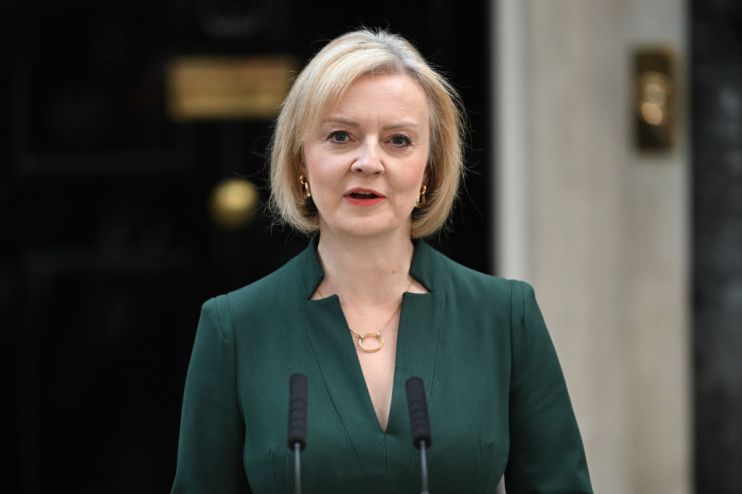
Liz Truss's short-lived term in office and her plan for growth is often blamed for the economic climate we find ourselves in today. (Photo by Leon Neal/Getty Images)

Chancellor Jeremy Hunt’s Autumn Statement is expected to contain a gloomy mixture of tax hikes and spending cuts. We will be told this is absolutely necessary to plug the fiscal hole left by the Truss government.

The latest estimate is that the government is looking for up to £60bn a year by 2027-28. Last weekend the Observer reported the “cost” of “Liz Truss’s disastrous mini-budget” is responsible for half that amount, at £30bn. This may appeal to their anti-Tory readers but it is a highly disingenuous claim.

To start it is worth noting that the “fiscal hole” does not represent the current budgetary deficit or public debt level. Instead, it is the gap between the projected public finances and the chancellor’s goal – in this case, debt falling as a share of GDP within five years. The figure is dependent on the uncertain, and often inaccurate, growth and revenue model from the Office for Budget Responsibility (OBR).

The single biggest driver of the expected hole is the gloomier-than-expected economic situation driven by spiralling inflation and energy costs. The OBR, in their last forecast in March, thought that economic growth would be 1.8 per cent next year, while more recent forecasts have the economy contracting by up to 0.6 per cent. A smaller economy means tens of billions of pounds less tax revenue.

The UK’s lacklustre growth cannot be blamed on Truss – whose supply-side reform policies had the explicit goal of reversing the UK’s woeful trajectory. In fact, Hunt’s decision to maintain the corporate tax hike is a key reason for less growth, at least according to analysts at Goldman Sachs.

The other reason for the hole is that the government is facing higher-than-expected outlays. Some of this is effectively automatic – like welfare payments increasing as people lose their jobs during a recession. There are also Hunt’s expected costly policy decisions, such as increasing pensions and welfare payments in line with inflation, that is running much higher than the OBR forecast in March (having reached 11 per cent versus the forecast 7 per cent). Again, none of this can be blamed on Truss.

There are only two plausible ways that the mini-budget can be blamed for the fiscal hole. The first is the cancellation of the national insurance hike and stamp duty cut. This will have a budgetary impact and will ultimately need to be funded. But it is also widely supported across Parliament, including by Labour, and the public. It is hardly a “disastrous” policy to not put up taxes on workers.

The other “cost” of Truss is, we have been told, higher interest payments on government borrowing. In the immediate aftermath of the mini-budget and the fire sale dynamic in pension funds yields jumped. But, after most of the measures were reversed, gilt yields have now fallen back to similar levels as before the mini-budget at around 3.5 per cent. This is higher than the OBR forecast in March (at around 1.5 per cent) but that has nothing to do with the mini-budget. It reflects higher inflation and interest rates across the US, Eurozone and UK.

It may be tempting to blame Truss’ premiership for our current predicament. But this distracts from the need to address the much deeper structural issues. Whether rushing to put up taxes and cut spending is the right answer, however, is much less clear.

Read more

Are Labour Chancellors really still blaming Liz Truss?

John Healey speaking at a podium with the UK Royal Coat of Arms, gesturing with his left hand during his speech.

Share this article

  • Facebook
  • X
  • LinkedIn
  • WhatsApp
  • Email

Similarly tagged content:

Sections

  • Opinion

Categories

  • Opinion

Trending Articles

  • Tesco and Boots lead 100,000 jobs pledge to tackle Neets crisis

  • Airport chaos latest: Heathrow, London City ‘starting to recover’ after air traffic control failure

  • Primark sales slip as owner dresses up retailer for demerger

  • Hedge fund billionaire Chris Rokos joins UK wealth exodus 

  • Crystal Palace owner Blitzer part of £1bn mega stadium redevelopment

More from Morning Wire

  • Are Labour Chancellors really still blaming Liz Truss?

    Opinion
    John Healey speaking at a podium with the UK Royal Coat of Arms, gesturing with his left hand during his speech.
  • Burnham refuses to rule out more borrowing and blames Tories for debt crisis

    Politics
    Andy Burnham, wearing a dark suit and glasses, speaks outdoors with trees in the background.
  • Andrew Griffith: Burnham ‘making up stories’ about my role in Truss Budget

    Politics
    Andrew Griffith speaking passionately, pointing his finger, in a formal parliamentary setting.
  • Government debt repayment ‘could rise to half’ of total taxes

    Economics
    UK public finances and sovereign debt crisis
  • Healey oversees unexpected rise in borrowing in first month as Chancellor 

    Economics
    Man in suit and red tie speaking at a podium to an audience in a modern building.
  • UK poised to pay highest borrowing costs since 1998

    Economics
    Treasury Department building with government bonds signage, representing financial management and bond issuance responsibi...
  • Badenoch bets on experience as Griffith and Tugendhat claim shadow cabinet top spots

    Politics
    Shadow business secretary Andrew Griffith has said he would make it easier for small businesses to open bank accounts. (Photo by Dan Kitwood/Getty Images)
  • Reform UK chiefs ask to meet gilt holders amid bond rout

    Markets
    Robert Jenrick speaking at a podium with BRITAIN NEEDS REFORM sign, delivering a speech.
MorningWire

Independent European business, markets and political news for decision-makers.

Morning Briefing

Europe

  • Germany
  • France
  • EU Institutions
  • Europe

Business

  • Markets
  • Business
  • Economy
  • Regulation
  • Competition
  • Public Affairs

Editorial

  • Opinion
  • Editorial Policy
  • Corrections
  • Contact

Company

  • About Morning Wire
  • Privacy Policy
  • Terms of Use
  • Cookie Policy
© 2026 Morning Wire Ltd · Published by Morning Wire Media, Bahnhofstrasse 65, 8001 Zürich, Switzerland
Privacy · Terms · Cookies · Facebook