Let’s be honest, we can’t keep blaming supermarkets for the sky-high food prices

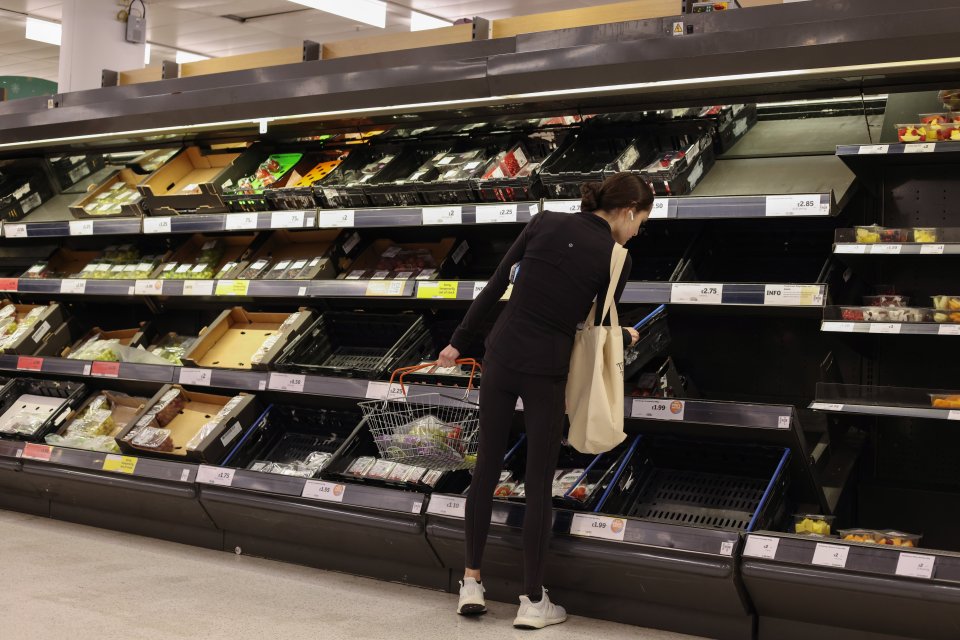
Supermarkets get all the blame for the sky-rocketing food prices. But they’ve tried to keep prices as low as possible against inflationary pressures and supply chains disruptions, writes Matthew Lesh
A supermarket visit may very well have changed the course of human history. In 1989, Russian President Boris Yeltsin went to Randall’s in Texas. He was shocked by the packed shelves and the diversity of choices, from fresh meat and fish to frozen puddings.
Yeltsin remarked that “there would be a revolution” if the Soviet people, who had to line up for meagre supplies, saw an American supermarket. He wrote in his biography that the experience shattered his belief in communism, contributing to reforms that turned the tide of the Cold War.
Supermarkets are nothing short of a modern miracle. Our forefathers were forced to survive on a small array of local produce and often suffered from malnourishment and regular famines. Today we can pick from thousands of goods from across the planet just down the street.
But as households struggle with the cost of living crisis, with wages failing to keep up with rising costs, anger is increasingly directed at supermarkets. It’s easy to understand why. Food inflation is at a 45-year high, up an astonishing 19 per cent year-on-year to March 2023. According to the Office for National Statistics, almost half (48 per cent) of Brits are buying fewer groceries.
In response, the Liberal Democrats are calling for a competition investigation into “supermarket profiteering” and rules against raising the price of essentials. There is concern that supermarkets are making “eye-watering” profits while households struggle.
These claims, however, should be taken with a large pinch of pink Himalayan rock salt (£4.50 in Waitrose).
British supermarkets did not suddenly become greedy and monopolistic in the last twelve months. In fact, they have made immense efforts to keep prices as low as possible, given free or discounted meals to children, and provided discounts to vulnerable groups. But they have faced higher wholesale costs following disruptions to global supply chains after the pandemic and the war in Ukraine. There is also the general inflationary pressure from loose monetary policy from central banks during the pandemic. The alternative to price rises would have been food shortages even worse than the empty tomatoes crate in the local Sainsbury’s.
Some have pointed out that prices remain high despite wholesale food costs falling in recent months. But we should be careful in jumping to conclusions. There is often a delay between retail prices reflecting changes in wholesale conditions. Supermarkets are stuck with longer-term contracts, signed when prices were higher. According to the industry, this leads to a three to nine-month lag in retail prices. There are also other production costs, such as electricity and labour, that have pushed up prices and remain elevated.
It’s notable that the latest financial results from supermarkets show precisely the opposite of profiteering. Sainsbury’s operating profits before tax were down 7 per cent in the final quarter of last year. Tesco has faced a fall of 6.3 per cent, Asda reported a 24 per cent fall, and Morrisons is down 15 per cent.
The complaint then appears to be that supermarkets are making any profit whatsoever. This is obviously absurd. Profit is the reward for providing a product to consumers that fulfils their needs; it’s a key motivator of investment, job creation and innovation. The alternative to profitable supermarkets is something closer to what Boris Yeltsin experienced back in the Soviet Union.