Liberty in transit: What the detention of David Miranda signifies for Britain

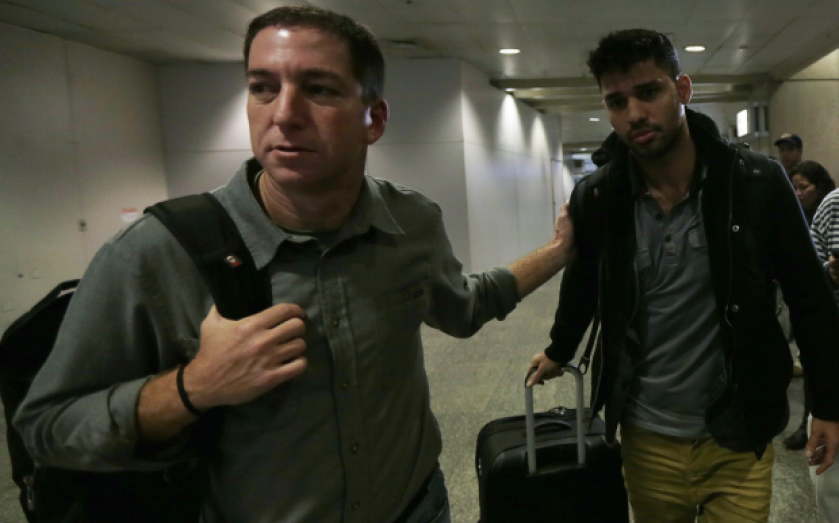
THE DETENTION and interrogation of David Miranda, partner of campaigning journalist Glenn Greenwald, on his way from Germany to Brazil has brought up some interesting facts – and attitudes. Views on such a cloudy subject vary, but two strong camps have emerged.
To hear one set of commentators, the Intelligence Services have magical powers of insight into the world and what constitutes national security, and are devoid of self-interest or error. They should be free to arrest and question who they like, however they like, and have any power they say they need. So what if the law is bent a bit? Who cares if bad people get hurt?
To others, hacks and hackers are automatically heroes. Just as there is a cult of the noble spy doing hard things to keep us safe (he or she is always George Smiley, never Tinker, Tailor, Soldier or Poorman), there is a histrionic cult of the investigative journalist. They too are supernaturally clever and moral. Whatever may happen to others, their investigations should be sacrosanct (unless they work for The Sun.) This group resorts to close reading of the law. “What was done to our man must be illegal!”
Both journalists and state agencies, of course, gather information that is supposed to be private, but on different scales. Spies and police use power, while journalists must persuade. It is telling, however, that both these claques are looking at status, and taking an a priori view on who – in a phrase you constantly hear on the lips of intelligence folk – the good guys are.
But we started to leave behind status-based law with villeinage and sumptuary. In a free and rational society, we shouldn’t tolerate people being punished or privileged on the basis of who they are presumed to be. We expect only to be accused on reasonable suspicion, with evidence and fair procedure. But the witchfinder is back, sniffing through data rather than examining bodies to find a mark. And the powers to probe your information shadow are often far from fair.
Miranda was in a legal black hole where he could be detained without the rights of an arrestee, and subject to question under compulsion. This was nothing to do with who he was, but where he was: at a border, in transit.
The Schedule 7 of the Terrorism Act power used against Miranda may have been obscure to most people before it made headline news. But it was not unknown, and it certainly wasn’t specially rolled out for this particular putative enemy of the state.
According to The Daily Telegraph on 13 July this year, “thousands of innocent holidaymakers and travellers are having their phones seized and personal data downloaded and stored by the police.” The paper reported that “officers use counter-terrorism laws to remove a mobile phone from any passenger they wish coming through UK air, sea and international rail ports and then scour their data. The blanket power is so broad they do not even have to show reasonable suspicion for seizing the device and can retain the information for ‘as long as is necessary’”.
That report suggested “up to 60,000” a year. Is it credible that 60,000 people passing through British borders a year are possible terrorists, or that (which is a nominal test) police actually think they might be? Actual convictions for all terrorist offences are between 10 and 20 annually.
Suspicion of travellers per se is deeply entrenched. Most big nations, including the UK, have for years demanded Passenger Name Record data for all flights, and kept or passed it on to intelligence or other governments as convenient. That means that all booking details of all your travels, and all people you travelled with, and who travelled with them, are collected. Elaborate and often highly personal information required for visas may also be secretly shared. Privacy is deemed voluntarily surrendered by us, in order to be kindly permitted to travel. Legal rights are seldom engaged at all.
This intrusion covers all private citizens who cross a border. It is all procedurally permitted, with few able to argue or sue. So “journalist or terrorist?” is the wrong question. Perhaps journalists do need protection of privacy from official blackmail and abuse of legal gaps – but so do the rest of us. It is fundamental to liberty that, whatever is casually alleged against us, and wherever we happen to be, we remain entitled to the same reasonable treatment. It is as invasive for a trip to Bergen to be minutely logged as one to Bognor.
Of course mass surveillance, fishing expeditions and arbitrary forced questioning can be made technically legal by providing boxes for officials to tick first. But doing so subtly destroys everyone’s liberty.
Guy Herbert is general secretary of NO2ID.