Skip to content
Wednesday 2 September 2026London --:--Frankfurt --:--Zurich --:--
NewslettersSearchEN · DE · FR
MorningWire

European business, markets and politics

FTSE 100
10,738.11
-0.47%
DAX
25,771.82
-0.76%
CAC 40
8,251.95
-0.60%
STOXX 50
6,341.64
-0.43%
  • Europe
  • Markets
  • Business
  • Economy
  • Regulation
  • Politics
  • Opinion
More
GermanyFranceEU InstitutionsCompetitionPublic AffairsBankingTechnologyEnergy
  • Germany
  • France
  • Europe
  • Markets
  • Business
  • Economy
  • Regulation
  • Politics
  • Opinion
  • DE
Tuesday 08 October 2019 4:15 am  |  Updated:  Monday 07 October 2019 6:15 pm

Londoners need homes – and a full review of green belt land

By: Jasmine Whitbread

Add as a preferred source on Google
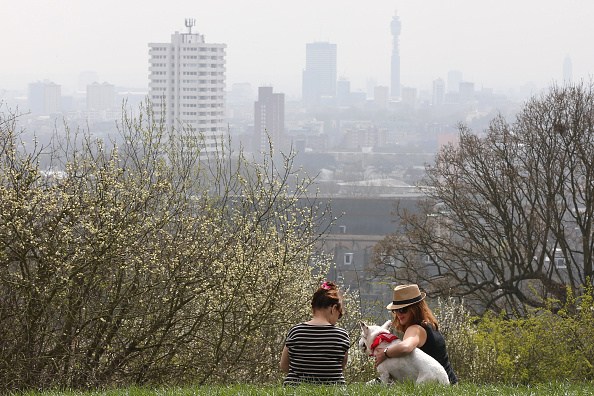
LONDON, ENGLAND - APRIL 10: Two women and a dog sit on Parliament Hill in Hampstead Heath overlooking an overcast Central London on April 10, 2015 in London, England. Air pollution and smog has blanketed much of central and Southern England today, posing a possible health risk to those suffering from respiratory diseases, older people and children, according to health charities. (Photo by Dan Kitwood/Getty Images)

Building more homes is not just common sense, but good business sense too.

London needs more homes to keep talent here and to maintain social cohesion and diverse communities.

This is not a controversial view. Londoners know that we are in the grip of a housing crisis: a YouGov survey commissioned by London First and Grosvenor last year showed that 74 per cent of Londoners agree that there is a shortage of homes in the capital. 

Our city needs to build an estimated 65,000 homes each year to meet demand, and while the solutions are at one level obvious – we need more money, more land, and better ways of building – they require a laser-like focus and strong political leadership to deliver.

At London First, we have long called for a review of London’s green belt to free up more land for high-quality new homes. Of course, we need to protect the capital’s green spaces, but much of the land that is currently safeguarded at all costs falls far short of the images of rolling green fields that are conjured up in people’s minds when the green belt is discussed. 

We are talking about brownfield land in accessible locations that happen to be in the green belt. There is nothing green and pleasant about a disused car-wash.

But that’s our view – and we wanted to know what Londoners felt. How do they view the green belt? What do they understand it to be? How do they feel about using a small portion of it to build more homes close to stations into London?

Originally designed to prevent urban sprawl, London’s green belt covers a range of uses and quality, from beautiful parks to derelict buildings, from farmland to car-washes and rubbish dumps. 

Politicians often raise the rallying cry of “no development on the green belt”, but we were keen to find out if that’s really the public attitude, so commissioned an independent “citizens’ jury” to find out. 

Read more

Let them build homes near stations, but let them be beautiful too

Two town planners examining a London monorail concept model with buildings and a proposed elevated train line.

A group of 12 Londoners, reflecting the capital’s population, were recruited to participate in a two-day intensive process. They explored the facts and heard from expert witnesses on both sides of the argument, including a local councillor and an MP, who spoke of the impact of housing in their communities, as well as representatives from the Campaign to Protect Rural England, who oppose any building on the green belt. 

At the start of the process, the jurors had a limited understanding of what the green belt is, the restrictions it imposes, and the land that falls within it. After hearing from witnesses over two days, they overwhelmingly backed locally-led reviews on development by 11 to one.

Interestingly, the jury had strong views on what those reviews should encompass. They were adamant that homes built on the green belt should be affordable and well-supported by infrastructure. They also backed the idea of “swaps”, allowing green spaces to be newly designated while taking out low-quality and brownfield sites. 

But overall, they were clear that the green belt rules are outdated, and that it is time to look again to see what role this land can play in tackling London’s housing shortage.

It should be possible to maintain the concept of the green belt around London, while taking a serious look at land within it to find the parts that are of poor environmental quality and of little or no public benefit but are well-connected to the city.

As a former mayor and a London MP, Boris Johnson knows the housing challenges facing those in the capital only too well. He has pledged to review all aspects of planning in order to boost housebuilding; this must include the green belt. 

Our research shows that the knee-jerk aversion to looking again at developing this land does not reflect what Londoners actually think. If we are to ensure that London is an affordable place for diverse communities to live and work for years to come, the green belt must not be overlooked.

Main image credit: Getty

Read more

Housebuilder shares soar on Burnham council housing plans

Construction worker on a new house roof, surrounded by scaffolding and building materials, illustrating housebuilding.

Share this article

  • Facebook
  • X
  • LinkedIn
  • WhatsApp
  • Email

Similarly tagged content:

Sections

  • News
  • Opinion

Categories

  • Opinion
  • Politics

Related Topics

  • London business

Trending Articles

  • Vodafone and Deliveroo look to patch up Reform ties after Yusuf prison threats

  • Trio of firms poised to quit London Stock Exchange as exodus gathers pace

  • Jaguar reveals the Type 01’s screen-free interior

  • Easyjet’s over-60s recruitment push is economically necessary

  • FCA ‘worked backwards’ to justify motor finance redress, say lenders

More from Morning Wire

  • Let them build homes near stations, but let them be beautiful too

    Opinion
    Two town planners examining a London monorail concept model with buildings and a proposed elevated train line.
  • Housebuilder shares soar on Burnham council housing plans

    Property
    Construction worker on a new house roof, surrounded by scaffolding and building materials, illustrating housebuilding.
  • Stealth taxes intensify London first time buyer struggle

    Property
    Row of classic London terraced houses with white facades and green doors, indicating UK property.
  • House prices suffer biggest August slump in eight years 

    Property
    Aerial view of colorful residential houses built on a hillside, nestled among green trees, representing housing markets
  • Mortgage rate hikes cost London homebuyers £35,000

    Property
    Street scene with historic London row houses, parked cars, crosswalk, and a red mailbox under a blue sky
  • Burnham to hand mayors power to overrule local councils’ planning decisions

    Politics
    Andy Burnham speaking at a press conference, wearing a suit and tie, addressing current political issues in Manchester.
  • Housebuilder Bellway calls for ‘immediate’ cut to stamp duty

    Property
    Barratt Redrow said it remained "confident" in its medium-term target of 22,000 homes a year.
  • Britain needs to start designing for drought

    Opinion
    London cityscape from Primrose Hill showing dry, brown grass during drought with River Thames and skyscrapers
MorningWire

Independent European business, markets and political news for decision-makers.

Morning Briefing

Europe

  • Germany
  • France
  • EU Institutions
  • Europe

Business

  • Markets
  • Business
  • Economy
  • Regulation
  • Competition
  • Public Affairs

Editorial

  • Opinion
  • Editorial Policy
  • Corrections
  • Contact

Company

  • About Morning Wire
  • Privacy Policy
  • Terms of Use
  • Cookie Policy
© 2026 Morning Wire Ltd · Published by Morning Wire Media, Bahnhofstrasse 65, 8001 Zürich, Switzerland
Privacy · Terms · Cookies · Facebook