LSE draws up ‘worst case scenario’ US listing flight risk

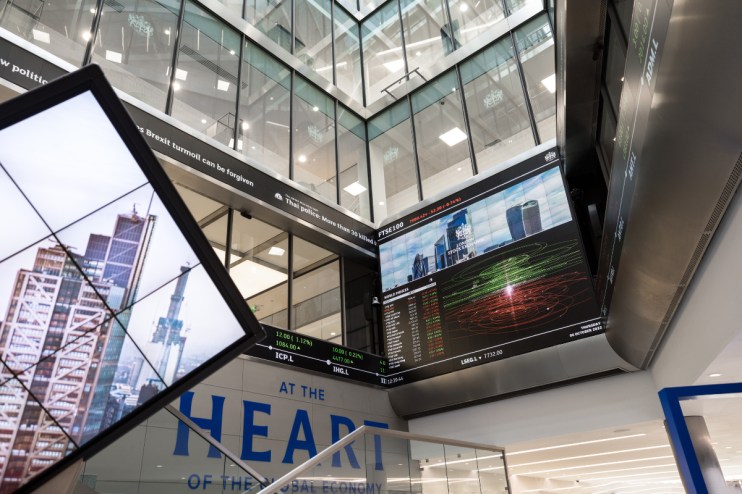
The London Stock Exchange is preparing for as many as 20 FTSE 100-listed companies to move their direct listings to New York, according to reports, in a move that would leave a £2bn gap in the Treasury’s earnings from stamp duty on share trades.
The exchange has drawn up a worst-case scenario plan in which blue-chip companies including HSBC, the London Stock Exchange’s largest firm, telecoms companies BT and Vodafone, and Guinness-maker Diageo all ditched their listings on the market, the Sunday Times reported.
The plans have been drawn up in response to pharmaceutical giant Astrazeneca announcing it was taking a direct US listing of ordinary shares on the New York Stock Exchange in September last year in a bid to give it “the flexibility to access the broadest possible available pool of capital.”
The direct listing replaced its existing Nasdaq listing of American Depositary Receipts (ADRs), a type of listing for trading overseas shares, which became effective in February this year.
AstraZeneca, which is currently valued at approximately £200bn, said its plans aimed to “harmonise” the trading of its shares between New York, Stockholm and London, which in turn downgraded the City’s role as the main trading venue for its shares.
The firm remains a FTSE 100 member but its share trading in London is no longer liable for stamp duty, which is estimated to have cost the Treasury £200m, and fears remain the firm’s direct listing move will see it permanently move to the US.
Other blue-chip firms in the LSE’s analysis which raise the same risk as AstraZeneca’s over their ADRs are oil giants BP and Shell and publishers Pearson and Relx.
Treasury takings may plunge £2bn
London’s market levies a 0.5 per cent stamp duty charge whenever shares are purchased. The LSE said that if all 20 companies in its analysis follow AstraZeneca’s move to take a direct listing in New York, the Treasury’s earnings could plunge by £2bn.
According to analysis by investment bank Peel Hunt, removing stamp duty would reduce the desire to consider relocation, and Charles Hall, the bank’s head of investment said there is “a clear risk” to the earnings from stamp duty “if more of our largest companies follow AstraZeneca’s lead in harmonising their listing”.
There have also been calls across the City for the fee to be scrapped altogether to prevent investors from looking overseas instead.
In February three quarters of investors said abolishing stamp duty on UK shares and trusts would encourage them to take more interest and potentially invest more, according to a poll from investment platform Interactive Investor.
UK investment U-turn
This follows the pharmaceutical firm in April making a surprise U-turn to plough £300m into its UK operations, only months after a feud with the UK government over drug pricing.
The company said it plans to revive a £200m investment into a Cambridge megalab and inject a further £100m into its site in Macclesfield, making it one of the largest investment moves in UK drugmaking history.