Maybe Sunak was right – we should change how we invest in poor rural areas

The government’s approach to investment focuses too much on poverty and not enough on opportunities. Rishi Sunak must find a way of making social mobility accessible, writes Adam Hawksbee
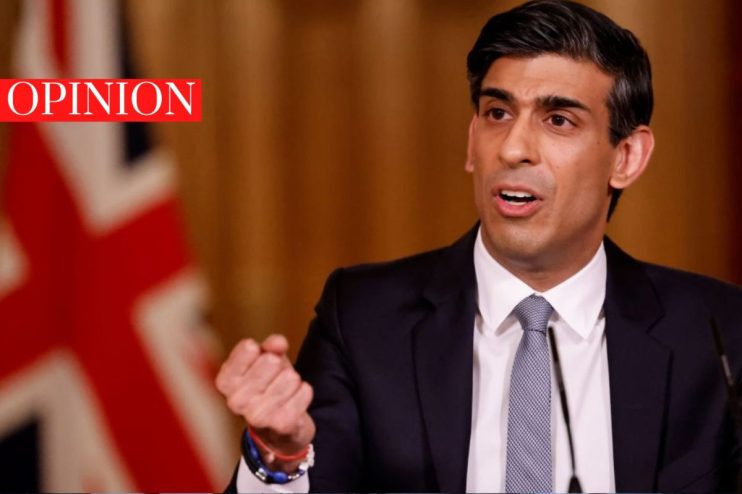
At the height of last summer’s Tory leadership election, Rishi Sunak seemed to slip up. In a leaked clip from a Tunbridge Wells garden party, the now Prime Minister described how he changed local government funding to divert investment away from “deprived urban areas”. Many were quick to criticise, but behind these poorly-worded comments is an important point. The government’s approach to investment focuses too much on poverty and not enough on opportunity. It was clumsy, but Sunak was right to call this out.
Last year, half of the students on free school meals in London went to university. That’s more than double the share of the poorest students going on to higher education in the South West or East Midlands; it’s also higher than the overall rate of university admission in every other part of the country. A child living in poverty in the capital has a greater chance of securing a degree than the average pupil in any other English region – including the mostly affluent South East. London might have some of the highest levels of deprivation, but it’s also an engine of social mobility. The poorest kids in the capital end up doing better than the poorest kids in the Midlands, even if the latter live in towns or suburbs that are more affluent overall.
Governments have not adjusted to this reality. According to new research released by Onward the formulas ministers use to target investment have not been overhauled in almost twenty years, and are based primarily on deprivation. That works for areas such as Blackpool, which sit at the bottom of the rankings for both deprivation and social mobility. But it misses areas like Newark in the East Midlands, which sits at the bottom of the social mobility rankings but has average levels of poverty. And it prioritises London boroughs like Hackney and Camden, which are more deprived overall but where the poorest young people have some of the best outcomes in England.
Reforms to London’s schools started by New Labour and continued by Michael Gove mean they are now some of the best in Europe: 92 per cent of secondary pupils in London attend a school rated good or outstanding by Ofsted, compared to around 75 per cent in the North West and North East. The capital’s social networks also have a greater mix of incomes and backgrounds. Harvard economist Raj Chetty identified this “economic connectedness” as a key component in upward mobility. The density of professional and managerial jobs in London also provides more room at the top for ambitious young people.
All of these factors are missing in many of England’s towns and rural areas. Schools tend to be of lower quality, struggling to recruit and retain teachers. Poverty is often concentrated in isolated pockets of otherwise affluent areas, with little social mixing. And the decline of traditional employment, whether in manufacturing or agriculture, has hollowed out paths to good jobs. It is in these areas – mainly in the Midlands and the North, or on England’s coast – that prospects for the poorest are most limited.
Alleviating poverty needs to be balanced with increasing opportunity – and, yes, that might mean rebalancing some funding away from inner-city areas and targeting smaller towns where social mobility is lowest. Councils could use the resources to reduce absenteeism and get young people re-engaged in education, partnering with youth workers, schools, colleges, and employers. Or they could commission community groups to provide wrap-around support to vulnerable families.
Alun Francis, the new Chair of the Social Mobility Commission, has argued that “the upward relative mobility of the few must be matched by the upward absolute mobility of the many”. This means less focus on routes to Russell Group universities or magic circle law firms, which often take talented young people away from their communities, and more on securing a broad-base of good jobs across the country.
The levelling up agenda was grounded in the belief that talent was spread equally but opportunity was not. But public investment is still not reaching the places where opportunities are scarce. Recalculating grants and redirecting investment will always generate political controversy – but if we really want each generation to do better than the last, it’s a fight worth having.