Skip to content
Friday 21 August 2026London --:--Frankfurt --:--Zurich --:--
NewslettersSearchEN · DE · FR
MorningWire

European business, markets and politics

FTSE 100
10,816.56
+0.64%
DAX
26,136.56
+0.59%
CAC 40
8,484.43
+0.37%
STOXX 50
6,462.22
+0.63%
  • Europe
  • Markets
  • Business
  • Economy
  • Regulation
  • Politics
  • Opinion
More
GermanyFranceEU InstitutionsCompetitionPublic AffairsBankingTechnologyEnergy
  • Germany
  • France
  • Europe
  • Markets
  • Business
  • Economy
  • Regulation
  • Politics
  • Opinion
  • DE
Tuesday 25 October 2022 6:15 am  |  Updated:  Monday 24 October 2022 4:59 pm

Meta will be forced to sell Giphy as the CMA falls for the dangerous myth of ‘big is bad’

By: Rachel Chiu

Add as a preferred source on Google
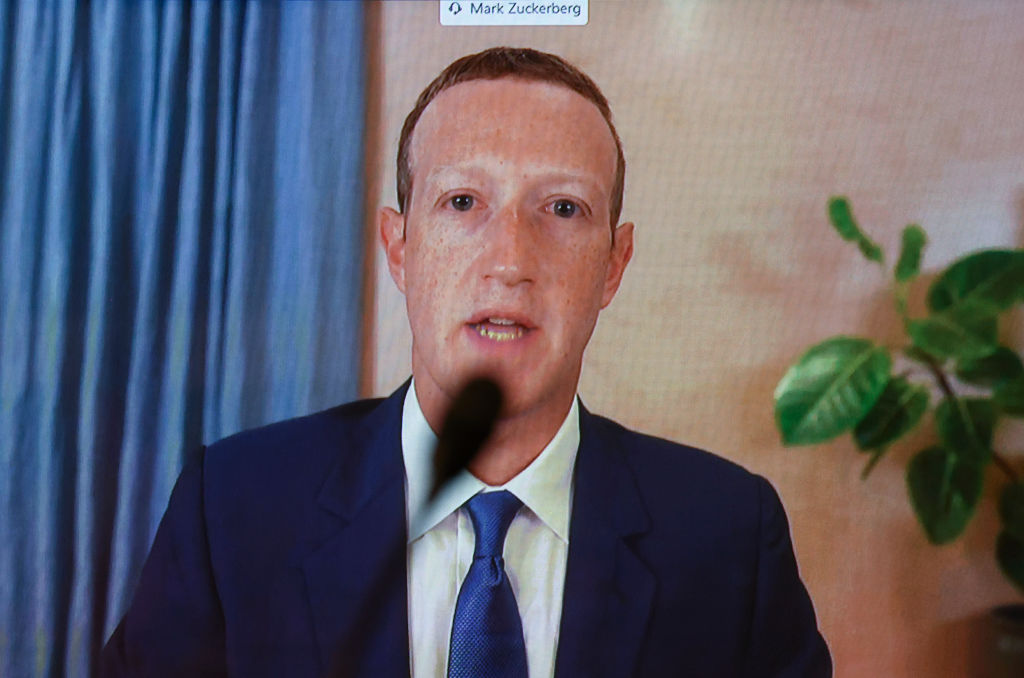
Tech CEO's Testify Remotely Before Senate Judiciary
Meta, owned by Mark Zuckerberg, will have to sell Giphy. (Photo by Hannah McKay-Pool/Getty Images)

As the Meta-Giphy saga concludes, it leaves behind a strong yet dangerous example for other countries looking to impose structural separation remedies.

The Competition and Markets Authority (CMA) ordered Meta to sell Giphy for a “final” time. After months of appeals, Meta acquiesced, ending a two-year battle between the department and the social media giant. This decision is groundbreaking for the world of antitrust: many countries have tried to address Big Tech’s perceived threat to competition, but the UK is the first to succeed. Regulators around the world are intent on breaking up the largest tech companies, and now they have a model that works — even if it’s dangerously detached from reality. 

Among other allegations, the competition regulator’s final report argues that post-merger Meta may “substantially lessen competition” in the display advertising market and that the company has a “strong incentive to foreclose its rivals from Giphy,” despite having no evidence that such outcomes would occur. It concludes that none of Meta’s proposed remedies are sufficient. According to the CMA, there is only “one effective remedy — the [full] divestiture of Giphy.”

This is the first time a regulator has upended a consummated Big Tech deal. The calls for structural separations are plentiful, but governments rarely act upon them. As noted by Yale University Professor Fiona Scott Morton, “‘breaking up’ large tech platforms is often not a good solution to the economic harms created by large firms in this sector… (because it can) harm consumers and workers and reduce innovation.” If the Meta-Giphy divestiture proceeds without substantial problems, it may serve as a precedent that such remedies are administrable. 

The CMA substantially differs from other competition agencies, but it will be hard for international regulators to ignore the UK’s win when they are working to replicate the same outcomes. The consequences are far-reaching, though particularly relevant for the US Federal Trade Commission, which is currently trying to block Meta’s acquisition of virtual reality company Within Unlimited. 

In a statement, Meta appeared to be disappointed but not dissuaded: “We will continue to evaluate opportunities — including through acquisition — to bring innovation and choice to more people in the UK and around the world.” This decision is unlikely to deter future deals substantially, but it will make merging parties think twice before signing on the dotted line.

As regulators exert more pressure, Big Tech companies must account for these risks. The costs will inevitably fall onto smaller firms. If this regulatory environment persists and obscures the pathway for acquisition, startups will lose one of their main exit strategies. Likewise, consumers will be deprived of what could have been, namely the development of new products and services.

Underlying the CMA’s decision is the increasingly popular belief that a company’s size is the primary determinant for antitrust scrutiny, without any regard for actual harm. If regulators in the UK and elsewhere continue to operate under the “big is bad” mantra, the technology sector will lose its ability to innovate and grow.

Read more

Sky and ITV mount defence of £1.6bn merger as regulators probe deal

Turnover at Sky increased in 2024.

Share this article

  • Facebook
  • X
  • LinkedIn
  • WhatsApp
  • Email

Similarly tagged content:

Sections

  • Opinion

Categories

  • Opinion

Trending Articles

  • House prices in wealthy London boroughs fall by up to £300,000

  • As it happened: Miners fuel FTSE 100 recovery; oil jumps as Trump claims Strait of Hormuz

  • City law firm sues prominent Emirati business family

  • Amanda Blanc has worked her magic at Aviva

  • As it happened: FTSE 100 rallies after JD Sports drags on blue chips; oil jumps again

More from Morning Wire

  • Sky and ITV mount defence of £1.6bn merger as regulators probe deal

    Media
    Turnover at Sky increased in 2024.
  • Meta trial risks reputational damage that ‘dwarfs’ financial hit

    Tech
    Mark Zuckerberg in a dark suit, looking intently with a red light blurred in the background
  • Meta glasses court ban sparks privacy warning for City businesses

    Legal
    Mark Zuckerberg smiling while adjusting smart glasses on his face, wearing a black shirt and two wristbands
  • Microsoft ‘back on track’, whilst Meta spending leaves investors ‘nervous’

    Tech
    Meta's Zuckerberg is leading the AI recruitment boom
  • ITV says ‘no guarantees’ on jobs after £1.6bn Sky deal

    Media
    Studios revenue rose three per cent to £893m, driven by an 11 per cent jump in external sales to streaming platforms.
  • Fulham sign up $15bn Silicon Valley tech and AI firm ClickHouse as front-of-shirt sponsor

    Sport Business
    No article content provided. Please provide the article content to generate relevant alt text.
  • ITV hands shareholders £100m returns after £1.6bn Sky deal

    Media
    Studios revenue rose three per cent to £893m, driven by an 11 per cent jump in external sales to streaming platforms.
  • Trainline and Virgin Atlantic face watchdog’s ‘drip pricing’ probe

    Transport & Infrastructure
    A ruling by the UK ad watchdog has raised questions over Virgin Atlantic's "groundbreaking" biofuel-powered flight across the Atlantic last November.
MorningWire

Independent European business, markets and political news for decision-makers.

Morning Briefing

Europe

  • Germany
  • France
  • EU Institutions
  • Europe

Business

  • Markets
  • Business
  • Economy
  • Regulation
  • Competition
  • Public Affairs

Editorial

  • Opinion
  • Editorial Policy
  • Corrections
  • Contact

Company

  • About Morning Wire
  • Privacy Policy
  • Terms of Use
  • Cookie Policy
© 2026 Morning Wire Ltd · Published by Morning Wire Media, Bahnhofstrasse 65, 8001 Zürich, Switzerland
Privacy · Terms · Cookies · Facebook