Skip to content
Friday 7 August 2026London --:--Frankfurt --:--Zurich --:--
NewslettersSearchEN · DE
MorningWire

European business, markets and politics

FTSE 100
10,912.55
+0.41%
DAX
26,364.99
+0.86%
CAC 40
8,732.64
+0.38%
STOXX 50
6,532.59
+0.46%
  • Europe
  • Markets
  • Business
  • Economy
  • Technology
  • Politics
  • Opinion
More
GermanyFranceBankingAIEnergyFintechPropertyCapital Markets
  • Germany
  • France
  • Europe
  • Markets
  • Business
  • Economy
  • Technology
  • Politics
  • Opinion
  • DE
Thursday 14 November 2024 2:48 pm

Monetary policy needs to be ‘more forceful’ as global economy becomes less stable

By: Chris Dorrell

Add as a preferred source on Google
Monetary policymakers need to take a "more forceful" approach to setting policy given increasing uncertainty in the global economy, a top Bank of England rate-setter has argued.
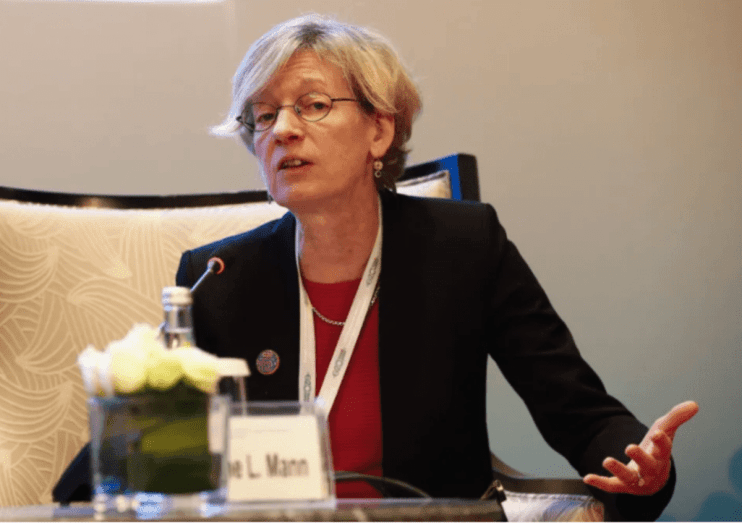
Mann was the only member of the Bank's rate-setting body who opposed the decision to lower interest rates last week.

Monetary policymakers need to take a “more forceful” approach to setting policy given increasing uncertainty in the global economy, a top Bank of England rate-setter has argued.

Bank official Catherine Mann suggested that the element of good luck that helped to create the relatively stable macroeconomic environment that existed between the 1980s and the global financial crisis, often known as the Great Moderation, might have “run out”.

“Over the next few years at least, volatility in macroeconomic variables likely will be elevated,” Mann said at the Annual Conference of the Society of Professional Economists in London today.

She suggested that uncertainty could come from a range of different sources, such as the impact of climate change, the more active use of fiscal policy or global trade fragmentation.

“If the Great Moderation had a heavy dose of good luck, we might need to reconsider some of the fundamentals of how we believe monetary policy works,” she said.  

Standard monetary policy theory suggests that gradualism is the preferable approach to policymaking. Minimising large changes in policy helps to promote stability, the argument goes.

But Mann suggested economic agents were less likely to be forward-looking in an environment with more frequent economic shocks and spillovers, which would make the gradualist approach less effective.

She also pointed out that greater macroeconomic uncertainty implied greater instability in financial markets, which can “blur the signal” policymakers wish to send through monetary policy.

“In such a world, I believe monetary policy actions and communications must be more forceful to cut through the noise,” she said.

Mann was the only member of the Bank’s rate-setting body who opposed the decision to lower interest rates last week. She has warned that underlying inflationary pressures might prove more persistent due to structural changes in the economy.

Although she has voted against cutting interest rates this year, she said that she would “move forcefully” and push for cuts when there was sufficient evidence of diminished inflationary pressure.

Read more

Bank of England may set the stage for interest rate hikes this year

Bank of England recession warning

Share this article

  • Facebook
  • X
  • LinkedIn
  • WhatsApp
  • Email

Similarly tagged content:

Sections

  • News

Categories

  • Economics

People & Organisations

  • Bank of England
  • Catherine Mann
  • UK inflation
  • UK Interest Rates

Related Topics

  • UK inflation
  • UK interest rates

Trending Articles

  • Revolut founder’s wealth set to balloon amid talks of share award at $500bn valuation

  • Rupert Lowe axes pensions triple lock and pledges tax cuts in economic plan

  • Liverpool owners tipped to sell – but not to Amazon boss Bezos – by former CEO

  • WPP slashes jobs as revenue continues to fall

  • As it happened: Stocks rise as oil fluctuates after Red Sea attack; US-Iran deal ‘being circulated’

More from Morning Wire

  • Bank of England may set the stage for interest rate hikes this year

    Economics
    Bank of England recession warning
  • Will Britain follow Japan’s great growth gamble?

    Opinion
    Japan Prime Minister Sanae Takaichi speaking at a press conference, highlighting her leadership and political agenda
  • How patient can the Bank of England be?

    AD
    Historic Royal Exchange building in London with modern skyscrapers behind, clear blue sky.
  • Bank of England holds interest rates but warns of rises to come

    Economics
    Bank of England headquarters in 2025, showcasing modern architecture and iconic London skyline in the background.
  • Interest rate cut is ‘off the table’, says Bank of England governor

    Economics
    Governor Andrew Bailey has launched a defence of the Federal Reserve's independence.
  • Bank of England to hold interest rates as oil price surge threatens UK economy

    Economics
    Bank of England building on Threadneedle Street, London, showcasing its historic architecture and financial significance
  • As it happened: FTSE 100 hits new high after interest rates held

    Markets
    Andrew Bailey, Governor of the Bank of England, in a suit and tie, looking thoughtful during a press conference.
  • ‘Door is open’ to interest rate hike as inflation fears return

    Economics
    Bank of England headquarters in 2025, showcasing modern architecture and iconic London skyline in the background.
MorningWire

Independent European business, markets and political news for decision-makers.

Morning Briefing

Europe

  • Germany
  • France
  • Europe
  • UK & Ireland

Business

  • Markets
  • Banking
  • Technology
  • Energy
  • Property
  • Fintech

Editorial

  • Opinion
  • Editorial Policy
  • Corrections
  • Contact

Company

  • About Morning Wire
  • Privacy Policy
  • Terms of Use
  • Cookie Policy
© 2026 Morning Wire Ltd · Published by Morning Wire Media, Bahnhofstrasse 65, 8001 Zürich, Switzerland
Privacy · Terms · Cookies · Facebook