The Bank of England has a lot to be cautious about

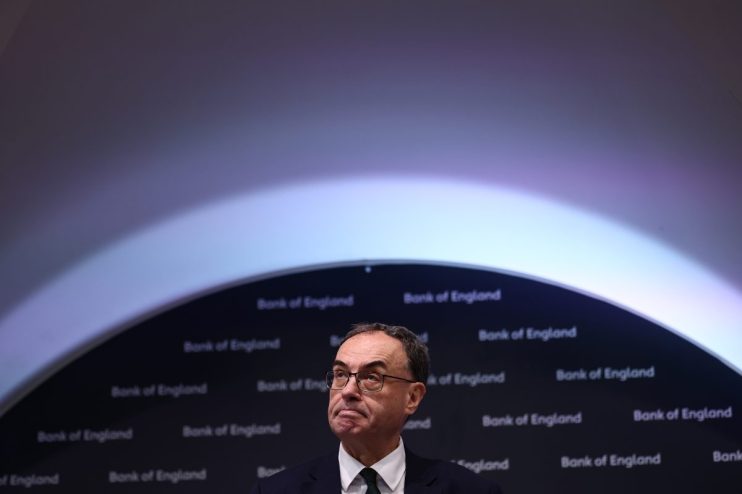
The Bank of England’s latest interest rate decision could hardly have come at a busier time.
Just over a week ago Chancellor Rachel Reeves delivered the new government’s first Budget, signalling a new direction in fiscal policy for the UK.
Then, earlier this week, Donald Trump was confirmed as the new president of the US, potentially ushering in a new age of protectionism.
There was, in short, a lot for policymakers at the Bank to be worrying about.
And yet rate-setters voted eight to one to cut interest rates to 4.75 per cent. For context, when the Bank first cut rates back in August, the vote split was five to four.
Moreover, there was nothing much in the Bank’s minutes to suggest they were unduly concerned about the broad direction of inflation.
The reason is quite simple. Over the past few months inflation has fallen much faster than policymakers had expected.
In September, inflation fell to its lowest level since April 2021. Services inflation – perhaps the most important single metric for the Bank – has come in well below expectations.
“The disinflation process not only continues but actually has been faster than we expected, and that’s good and encouraging,” Andrew Bailey, the Bank’s Governor said in a press conference following the rate cut announcement.
Again and again, Bailey stressed that the Bank would take a “gradual” approach to cutting rates, which is exactly what he said in September.
So what has changed?
The Bank of England’s latest forecasts, published alongside the rate decision, show that the measures announced in the Budget will push up inflation.
On their central projection, the headline rate will be 0.5 percentage points higher than it otherwise would have been. This will mean inflation peaks at 2.75 per cent in the middle of next year.
Growth will be around 0.75 per cent higher, which will mean the economy is essentially running at full capacity for the next couple of years.
These are meaningful changes to the Bank’s forecasts and will mean there is less scope for aggressive rate cuts.
But whether you think this is a big change or not depends on whether you thought aggressive rate cuts were ever likely in the first place. Bailey did not seem to think so.
“I don’t think that it’s sensible to conclude that the path of interest rates will be particularly different,” he said, noting that inflation returned to the two per cent target within the forecast period.
Of course the impact could be greater than the Bank of England’s central projection suggests.
It predicts there will only be a “small decrease in potential supply” and a “small upward impact on inflation”, but this depends on how firms deal with the tax hike.
Businesses could absorb the extra costs; they could pass them onto consumers; they could limit wage growth; or they could cut employment.
All of these have different implications for the impact on inflation. But Bank officials stressed that it was essentially impossible to tell at this stage.
A gradual approach to cutting rates would, Bailey argued, give the Bank “time to assess the impact” of the national insurance hikes.
And then, of course, there’s the potential risk to the inflation outlook from the election of Donald Trump.
Trump has threatened to impose tariffs of at least 10 per cent on foreign imports which could put up inflation and slow growth, particularly if the governments around the world impose retaliatory tariffs.
Forecasts from the National Institute of Economic and Social Research (NIESR) suggest UK inflation could be as much as three to four points higher, while interest rates could be two to three points higher as a result of the tariffs.
The Bank did not discuss the potential impact of these tariffs and Bailey was reluctant to be drawn on the question, saying it was “not useful or wise” to speculate on Trump’s likely policies.
Still, the impact is unlikely to be good.
“I do think we have to watch very carefully the fragmentation of the world economy. I will say that,” Bailey said.