Mushrooms could be a magic cure for depression, if our draconian drug regulations weren’t stuck in the past

It should come as no surprise that months of lockdown and social isolation has impacted our mental health.
Medical professionals are predicting a “tsunami” of mental illnesses relating Covid-19, while earlier this month, The Lancet published a study showing that young people and women’s mental health has been hit particularly hard during the pandemic.
What’s even worse is that for many of us, there’s no fix. Even before Covid-19, over a million adults were struggling with treatment-resistant depression. Progress in depression research has been stagnant for decades since clinical approval of the first selective serotonin reuptake inhibitors (SSRIs).
Now, Home Office red tape is holding back scientists from investigating one of the most promising areas of inquiry: psilocybin.
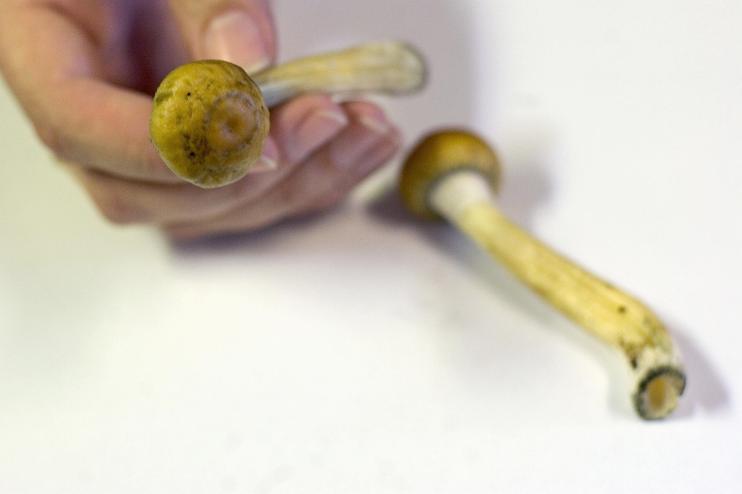
Pronounced “silo-sy-bin”, this molecule is better known as the active ingredient in magic mushrooms. When taken, users experience a “psychedelic trip” involving temporary alterations in mood, perception, and cognition. Evidence from contemporary, early-stage clinical trials suggests that psilocybin therapy — when administered in a controlled environment — may be a safe, effective treatment for PTSD, anxiety, and treatment-resistant depression. Patients are accompanied by a therapist and psychiatrist to help guide them through their experience, with medical care on hand if necessary.
Those who have undergone treatment, as documented in the excellent film Magic Medicine, often highlight a greater sense of connection to themselves and others, as well as moving from emotional avoidance to acceptance.
Psilocybin has the potential to revolutionise mental health treatment. It works differently from traditional antidepressants by directly decreasing activity and changing patterns of connectivity in brain regions associated with depression and anxiety.
Patients don’t seem to suffer from the dependence or severe side effects that are well-known among existing depression treatments, and they needn’t worry about the risk of relapse if they forget to take their medication.
There are also significant cost savings for the NHS on the table thanks to the limited number of follow-up treatments needed. This would prove especially welcome in present times, with heightened pressures on public finances from Covid-19 and the rise of mental health issues: depression alone is estimated to cost the UK economy £10bn.
Unfortunately, British scientists who want to conduct further research into psilocybin are severely hampered, thanks to a set of regulations known as “Schedule 1” under the 2001 Misuse of Drugs Regulations. In contrast to the more forgiving “Schedule 2” regulations, which cover drugs with far more long-term risks such as opiates, these restrictions make it more expensive and time-consuming to conduct clinical trials in myriad different ways, as attested to by many researchers.
Separate Schedule 1 licences, costing thousands of pounds each, are required by the Home Office at every stage of the drug supply chain. A mountain of confusing and illogical paperwork accompanies each licence application. Obtaining these licences can take months, or even years, and the stigma associated with Schedule 1 drugs increases the difficulty of academic collaborations, obtaining ethics approval, and securing institutional funding through research.
The oft-repeated justification for such heavy-handedness — that it’s necessary to prevent diversion to street use — starts to look nonsensical when you consider that much more common street drugs like heroin and fentanyl are in Schedule 2. A diversion from a research lab to street use seems even less likely with psilocybin, since it’s only administered under clinical supervision.
Put simply, scientists are struggling in their efforts to investigate psilocybin for no good reason — and in the meantime people are dying. Nearly one third of people with treatment-resistant depression attempt suicide at least once. We should be doing everything possible to save their lives.
That’s why a new paper from the Adam Smith Institute, alongside the Conservative Drug Policy Reform Group and top scientists, is calling for psilocybin to be moved to Schedule 2.
Such a move would follow Britain’s recent decision to take this step with cannabis products for medical use — which our current chief medical adviser, the national celebrity Professor Chris Whitty, described as “the single most important thing that could be done by the government” to support the development of an evidence base. Lifting the burdens on psilocybin research is a vital step towards enabling large-scale “phase 3” controlled clinical trials, which are necessary to generate more robust evidence on the efficacy of the drug.
Loosening restrictions on research would not affect existing legal controls on psilocybin for non-medical or non-scientific use. It wouldn’t lead to an increase in street use or addiction. All it would mean is that those suffering from treatment-resistant mental illness would be given a lifeline when all other options had failed.
By rescheduling psilocybin, we have the opportunity to become world leaders in cutting-edge mental health research. This government should jump on the opportunity to boost our life sciences sector by getting rid of unnecessary red tape.
One simple, sensible change could have profound consequences on the mental health of nations across the globe.
Main image credit: Getty