My advice for Rachel Reeves? Learn how to spin a yarn

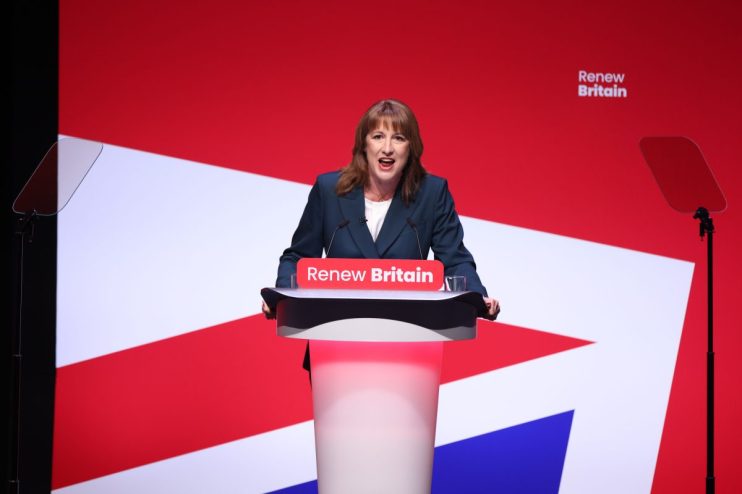
Economic history shows us the importance of a narrative. If Rachel Reeves wants to help the economy, she needs to learn how to tell a story, writes Paul Ormerod
Macroeconomists spend much of their lives immersed in highly mathematical models of the economy.
But at the top of the profession there is increasing interest in a much older tradition of what really drives the economy: namely, narratives – the story which people believe can be the key determinant of behaviour.
Everyday commentary on the economy recognises the importance of the concept. For example, at the start of this week the S&P Consumer Confidence Index fell sharply, and the press release referred to the “sense of unease which permeates across British households”. This unease will translate itself into a reluctance to spend.
The idea has been around for a long time.
Since the 1930s, Keynes has become associated with the idea that public spending is needed to revive an economy which is in a recession.
But, in a short but crucial passage of his major work, The General Theory, he argued that the positive boost would be undermined if the increase in public borrowing which it entailed had an adverse effect on “confidence”.
He conjured up the memorable phrase “animal spirits” to describe why, for example, entrepreneurs undertook ventures even though it is well known that most of them fail. He wrote of the “uncontrollable and disobedient psychology of the business world”. The text of his book is in fact littered with the words: “psychology” and “psychological”.
The leading modern proponent of narratives is the Nobel Laureate Robert Shiller, who published a paper in the American Economic Review in 2017 entitled, quite simply, “Narrative Economics”.
He argues that narratives are key to understanding major events in economic history such as the Great Depression of the 1930s, when one in four Americans were out of work, and the financial crisis of the late 2000s.
Narratives need to be convincing, not accurate
Narratives can gain traction even if their story is at odds with the objective situation.
For example, in the world of politics the concept has taken hold amongst the centre-left both in the UK and Europe that Zohran Mandani’s victory in the New York mayoral election shows the policy offer which is needed to win.
In fact, Mandani’s result was a very poor one for a Democrat in New York. He received just over 50 per cent of the vote in a city where the Democrat usually gets 65-70 per cent. His leftist policies were a hindrance rather than a help.
Narratives can also fail to connect even when governments put a lot of effort into trying to get them established.
After the UK general election in July last year, the government repeatedly tried to put the blame for everything on the previous Conservative administrations. The so-called £22bn black hole in the finances, the prisons, the small boats, almost everything. Ministers like David Lammy are still trying. But this story never caught on.
Most of the myriad failures of the Starmer government have their origins in an inability to construct a convincing narrative.
Previous Labour Prime Ministers managed it. In 1945, Clem Attlee promoted a new vision of the NHS and the welfare state. In 1964, Harold Wilson had “the white heat of the technological revolution” and in 1997 Tony Blair’s “Cool Britannia” convinced the nation.
Starmer does not even seem to recognise that one is needed.
The Chancellor Rachel Reeves has managed to allow a negative and damaging narrative to spread. I first wrote in October 2024 that this in itself would depress the economy. Subsequent events have only reinforced the point.
The Chancellor used to boast of her prowess as an economist. She would do well to catch up with her reading and look up what Keynes wrote about “animal spirits”. That is what we need: a positive narrative which boosts animal spirits.
Paul Ormerod is an honorary professor at the Alliance Business School at the University of Manchester and author of Against the Grain: Insights of an Economic Contrarian