Nationalising British Steel – again? Look where it got us the first time

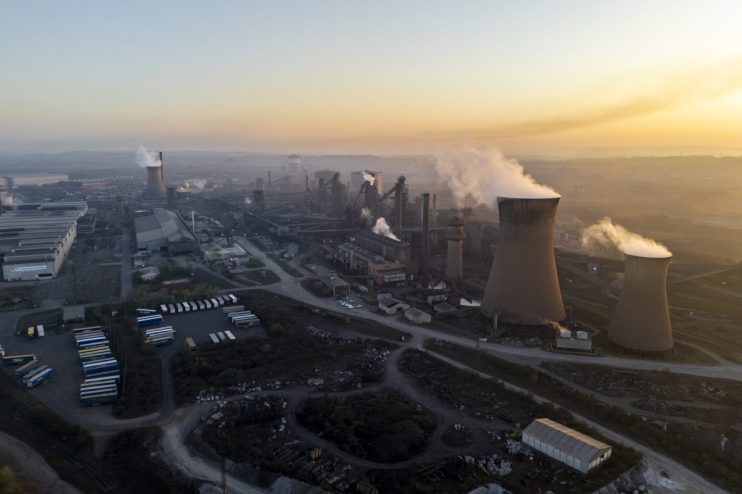
Nationalising British Steel is a story we already know the ending to. Repeating it is the definition of insanity, writes James Price
Labour has already led the public to question the government’s sanity on more than one occasion this term. But now it feels like the government is literally testing the time-honoured definition of insanity: doing the same thing again and again and expecting different results.
That is because it has, at short notice, just voted to nationalise British Steel. Again.
A short history of British Steel
We know how this story ends. British steel was nationalised for the first time in 1967. Needless to say, it led to more and more inefficiencies, not least because employment was prioritised over any kind of productivity gains. This led to an inability to compete against global innovators, and was privatised by Margaret Thatcher in the 1980s.
After years of increasing regulations and taxes affecting the bottom line, it was then inexplicably sold to a Chinese company in 2020. This was in full awareness of the dumping tactics the CCP was using to destroy Western steel-making capacity.
An argument that many will be sympathetic with, myself included, is the preservation of the domestic capacity to produce steel in Britain, precisely because of the threat of an aggressive China. But this is where the desire for what I’m sure the beleaguered Chancellor would still call ‘securonomics’ fails.
Steel production will also require the reopening of domestic mines, or at least near-shoring supply chains away from China, and a slew of other policy changes to create conditions for a viable industry. British Steel largely failed because of the net zero fanaticism peddled from all parties.
With energy input costs as high as they were, and a slew of other restrictions on production, it was impossible to make the business sustainable. Those structural problems don’t disappear just because they have waved the nationalisation magic wand. Quite the opposite.
Nationalisation doesn’t solve the problem
Nationalisation means that the taxpayer will now be on the hook for the losses caused by Chinese mismanagement and the state’s own suicidal ‘green’ policies. This looks like £700,000 a day. Over a year, this amounts to over £250m, the cost of around 8,000 nurses.
Without addressing the reasons for British Steel’s terrible present condition, these costs will grow, and we will be back in the death spiral of the 1970s – more subsidies leading to more inflation and more losses and the company falling further behind competitors.
British Steel’s furnaces are almost a century old, and now investment for upgrades will also come from public coffers that should be spent on core state functions, like schools and hospitals. This is the sort of investment that could and should have come from a thriving private sector – the self-same private sector that has been pummelled into oblivion by regulations and green taxes.
I used to be one of those rabid free marketeers who thought that if China wanted to provide us with cheap steel, subsidised by their own taxpayers, that was just a good economic deal. I have woken up to how infantile a stance that was.
Equally, if Trump continues to erect more trade barriers, we will need to think seriously about domestic capacity in a whole range of areas, just as we did during the pandemic. This shouldn’t lead to a rejection of free trade or international investment, far from it. It should, though, make us seriously consider a number of strategic industries and what the state’s role should be in securing them for our future security and prosperity.
But nationalisation is not the answer to British Steel’s woes. Nor will it be the answer the next time this government’s destructive policies cripple another business. Protecting us from the rapacious CCP is one thing, coddling British industry in the cloying arms of the state is something totally different. And it would be the definition of insanity to try it.