Net zero hopes are a fantasy without serious grid reform

The government’s fresh attempts to revive the UK’s North Sea oil and gas industry have fuelled debate across Westminster over the balance between energy security and climate commitments.
Politicians and industry leaders are again at loggerheads over continued fossil fuel production and the growing role of renewables in the country’s energy mix.
Yet the most significant policy proposals currently on the table have little to do with how to develop energy – but how to move it around.
Days after the much-ballyhooed announcement of new North Sea oil and gas licences, Nick Winser, electricity networks commissioner and former chief executive of the National Grid, handed in his report on the state of the country’s electricity grid.
His findings exposed the historical challenge ahead for the government and wider energy sector and urging serious grid reform.
‘Grid reform’ may sound dry.
But it is a hugely significant factor in the clean energy race with practical consequences that will be felt by every household – affecting everything from cheaper bills to how many pylons people see out their window.
Grid connections stall developer’s dreams
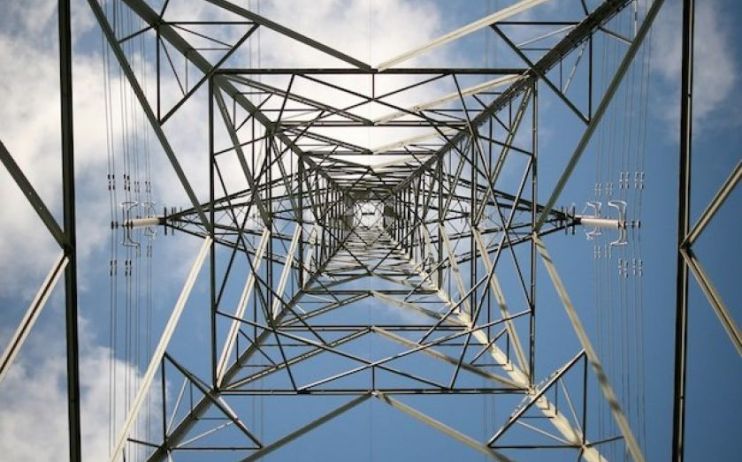
Green energy goals are often defined by the wind turbines and nuclear power stations that could power them, but the reality is they are part of a huge re-industrialisation project requiring vast cabling underground, massive overhead pylons that can fill the skyline, and substations for transmitting power.
This requires hundreds of miles of digging, construction and likely, severe disruption for communities across Britain as the country looks to hook up wind turbines from the North Sea and nuclear power from Somerset to the country’s energy grid.
However, such plans for reindustrialisation remains well behind schedule, with Winser highlighting that it currently takes on average 12 to 14 years for energy projects to shift from the initial conception stage to securing a grid connection.
For context, that is around double the seven-year development and construction period for offshore wind projects.
This is a real complication for the government’s targets of 50GW of offshore wind by 2030, 70GW of solar generation by 2035, and 24GW of nuclear power over the next three decades – alongside ambitions to decarbonise the electricity grid by 2035.
It means that, regardless of whatever private investment is unlocked and the scale of the ambitions the government is set, cutting down carbon emissions with green energy projects is a nearly impassable obstacle for the country.
His plan is for the government to cut connection times to seven years – in line with the average development time for projects, to avoid demand being constrained by consistent logjams.
Westminster, take note: Local opposition to energy projects will not go away quietly
To achieve this, Winser is calling for the planning to be streamlined with a carrot and stick approach of lump sum payments to households, in exchange for a quicker approval process with fewer hurdles for developers from local government.
If this is accomplished, then connections would keep up with development times for projects – a fundamental factor for improving investor sentiment in the UK.
National Grid operates a queueing system for new projects seeking connections, which effectively operates on a first-come first-serve basis.
It is extremely congested, with more than 230GW of generation waiting hook ups to the country’s electricity network, compared to 80GW of generation connected so far – with renewable energy developers receiving connection offers for the 2030s, putting plans for a green energy transition way behind schedule.
The group recognises the problem, and has unveiled a five-point plan including an amnesty for unviable projects in the queue, so they are no longer fined when they pull out, and has launched a consultation on permitting developers to make their own connections to the grid.
But these moves will mean little if local opposition to new projects cannot be quenched.
The lump sums mooted are yet to be defined but the reality is that people’s dislike of pylons tends to extend beyond financial considerations, which could easily be construed by sceptical locals as de-facto bribes.
However, polling still from Survation shows that nearly two-thirds of people (64 per cent) support the development of new electricity grid infrastructure to boost energy security, while only five per cent oppose it.
With such intransigent opposition, the government will have to risk severe political capital and goodwill from constituencies across the UK to support the wider needs of people living in this country – who deserve cheaper, cleaner energy bills from a government not dependent on overseas fossil fuels to meet supply needs.
Net zero can only work if it is presented as a real upgrade in people’s living standards, and it will only be achieved if the government is prepared to make initially unpopular choices, such as reforming planning.
Otherwise, the country’s energy security and climate goals are little more than a fantasy.