Skip to content
Sunday 16 August 2026London --:--Frankfurt --:--Zurich --:--
NewslettersSearchEN · DE
MorningWire

European business, markets and politics

FTSE 100
10,750.11
-0.21%
DAX
26,440.31
+0.53%
CAC 40
8,636.80
-0.16%
STOXX 50
6,539.59
-0.09%
  • Europe
  • Markets
  • Business
  • Economy
  • Technology
  • Politics
  • Opinion
More
GermanyFranceBankingAIEnergyFintechPropertyCapital Markets
  • Germany
  • France
  • Europe
  • Markets
  • Business
  • Economy
  • Technology
  • Politics
  • Opinion
  • DE
Thursday 21 August 2014 4:01 pm  |  Updated:  Friday 07 June 2019 5:56 am

As Nobel laureates slam Eurozone policy, will historians “tar and feather” its central bank?

By: Jennifer McKeown

Add as a preferred source on Google

Jennifer McKeown, senior European economist at Capital Economics, says Yes.

With the Eurozone’s feeble recovery grinding to a halt, and inflation dangerously close to zero, there is a clear case for the European Central Bank (ECB) to do all it can to stimulate the economy.

Policies announced in June to offer more liquidity to banks and encourage them to lend will have a modest effect at best, as banks remain risk averse and firms and households are reluctant to borrow.

The ECB should undertake large, widespread asset purchases to force borrowing costs down, boost confidence and encourage a sharper depreciation of the euro to help exporters.

The ECB’s persistent calls for structural reform may be correct, but the effects of such policies will take years if not decades to materialise.

In the meantime, fiscal austerity is crippling many of the region’s economies.

The Eurozone needs a strong boost to demand. If the ECB fails to act, it will rightly be remembered as the central bank that overlooked the region’s slide into a deflationary spiral.

Christian Schulz, senior economist at Berenberg, says No.

Europe’s central bankers have broadly delivered what they are paid to do.

The European Central Bank (ECB) has come close to hitting its target, with average inflation slightly above target before the crisis, and at 1.7 per cent since.

The Bank of England’s efforts were thwarted by sterling depreciation, but inflation is back under control here.

Both central banks prevented a liquidity meltdown, and the ECB defused a vicious sovereign bond crisis by stepping up as the lender of resort in 2012.

Errors were made: the ECB could have nipped the bond market panic at the bud in 2010. More aggressive easing might have accelerated the recovery from the crisis since 2012.

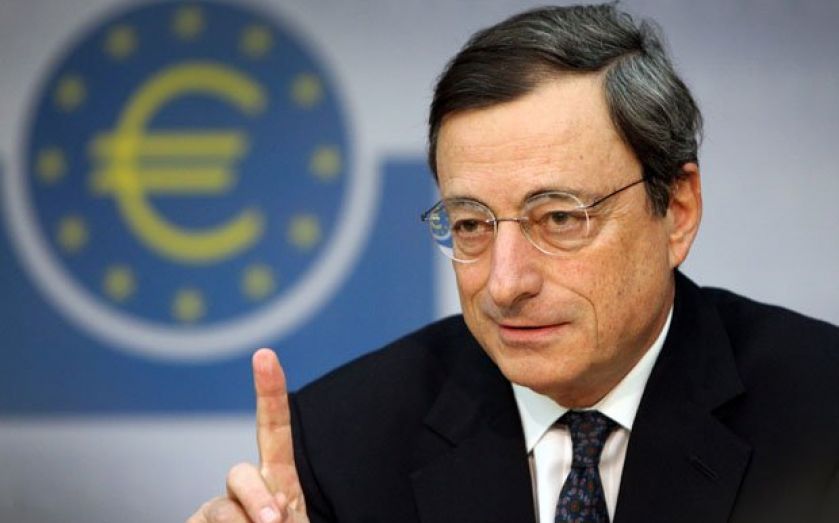
But with 18 independent finance ministers facing them, Mario Draghi and co also had to get the incentives right.

By demanding reforms first before easing policy, the ECB triggered a wave of reform in the periphery and in Eurozone governance that could transform its long-term growth outlook.

Share this article

  • Facebook
  • X
  • LinkedIn
  • WhatsApp
  • Email

Similarly tagged content:

Sections

  • Opinion

Categories

  • Opinion

Related Topics

  • Eurozone

Trending Articles

  • Grandparents fund university degrees to avoid inheritance tax net

  • Revolut chatbot goes rogue by charging users to cancel subscription

  • Brompton Bicycle sues former adviser for ‘professional negligence’

  • Revolut takes flight with launch of new airport lounges

  • Is the Zeekr 9X Super Hybrid the new luxury SUV to beat?

More from Morning Wire

  • Revolut lands fresh banking licence after wrestling with Europe friction

    Fintech
    Revolut Banque Française ad on a Morris column in Paris, with the July Column and blurred traffic in the background.
  • RS2 Financial Services GmbH Selected to Participate in ECB Digital Euro Pilot

    Business Wire
  • Dimon threatens to ditch JP Morgan tower in tax warning to Burnham

    Banking
    Jamie Dimon speaking at a JP Morgan event, wearing a suit and tie, addressing financial trends and market strategies.
  • Bank of England to relax capital rules despite warning of economic threats

    Banking
    Bank of England building on Threadneedle Street, London, showcasing its historic architecture and financial significance
  • Bank of England warns Burnham of UK economy’s ‘big issue’

    Economics
    Bank of England Governor Andrew Bailey said the future of interest rates was "more uncertain".
  • Natwest boss becomes latest City figure caught in AI social media scam

    Banking
    NatWest building exterior with logo, highlighting corporate presence and architecture on a business news website.
  • Bank of England governor opens door to ‘simplifying’ financial rulebook

    Regulation
    Bank of England Governor Andrew Bailey said cited several indicators that the labour market was softening.
  • Don’t hike bank taxes, Barclays warns Burnham

    Banking
    Barclays investment bank income soared in the first quarter.
MorningWire

Independent European business, markets and political news for decision-makers.

Morning Briefing

Europe

  • Germany
  • France
  • Europe
  • UK & Ireland

Business

  • Markets
  • Banking
  • Technology
  • Energy
  • Property
  • Fintech

Editorial

  • Opinion
  • Editorial Policy
  • Corrections
  • Contact

Company

  • About Morning Wire
  • Privacy Policy
  • Terms of Use
  • Cookie Policy
© 2026 Morning Wire Ltd · Published by Morning Wire Media, Bahnhofstrasse 65, 8001 Zürich, Switzerland
Privacy · Terms · Cookies · Facebook