Skip to content
Thursday 20 August 2026London --:--Frankfurt --:--Zurich --:--
NewslettersSearchEN · DE · FR
MorningWire

European business, markets and politics

FTSE 100
10,721.23
-0.21%
DAX
26,007.67
-0.32%
CAC 40
8,505.90
+0.05%
STOXX 50
6,444.41
0.00%
  • Europe
  • Markets
  • Business
  • Economy
  • Regulation
  • Politics
  • Opinion
More
GermanyFranceEU InstitutionsCompetitionPublic AffairsBankingTechnologyEnergy
  • Germany
  • France
  • Europe
  • Markets
  • Business
  • Economy
  • Regulation
  • Politics
  • Opinion
  • DE
Sunday 04 September 2022 12:51 pm  |  Updated:  Sunday 04 September 2022 12:52 pm

OEUK: UK must double wind turbine installation rates to meet energy targets

By: Nicholas Earl

Add as a preferred source on Google
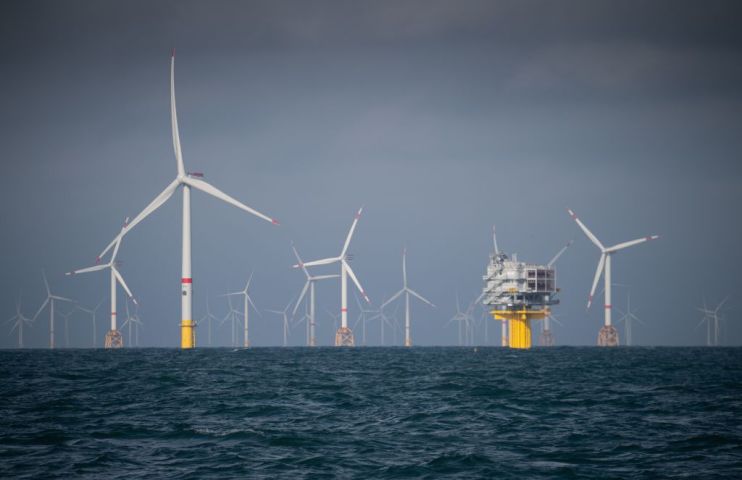
The UK government will need to spend £48bn on installing new wind turbines, double what it spend last decade, if it is to reach its target of 40 gigawatts of offshore wind power by 2030.
Greencoat has maintained its ambitious acquisition plan with fresh assets in Germany, Ireland and Finland.

The Government will have to at least double the rate of offshore wind turbine installations to meet its energy security targets, warned one of the country’s leading energy bodies.

In its upcoming Economic Report – set to be published next week – Offshore Energies UK (OEUK) has called on the next Prime Minister to reform the development process, so that the industry can boost offshore wind from 12GW to 50GW by the end of the decade, in line with Downing Street ambitions.

OEUK has urged the Government to cut planning consent times from four years to one, streamline the environmental assessment process, create a fast-track process for non-controversial projects, and cut red tape with an Offshore Wind Acceleration Task Force to oversee developments.

While green group RenewableUK has recently forecast that a whopping 86GW of offshore wind projects are in various stages of the development pipeline, OEUK argued the vast majority are not in line for completion this decade.

Ross Dornan, lead author of OEUK’s Economic Report, revealed that OEUK was aware of 40 projects intended for completion through to 2030, but that 46 per cent (almost 18.5 GW) remained at concept stage.

Such projects typically take 13-plus years to move from concept to operation, many far longer – largely due to delays in government planning and approval processes.

Dornan argued that the UK’s offshore industry could achieve many of the government’s targets – and could even speed up new turbines three-fold over the coming.

However, this depended on the proposed changes being implemented as soon as possible.

He said: “History shows that it takes around 13 years to progress from concept and application stage through to operations. This means that the UK’s 50 GW ambitions will only be achieved if this can be sped up.”

Read more

Britain should back the North Sea if it wants energy security and net zero

Oil prices have risen as Israel and Iran tensions escalated.

OEUK has outlined that to meet Government targets, the country will need to install an estimated 3,200 new wind turbines by 2030 – roughly three every two days.

The world’s largest onshore wind farm Hornsea 2 was completed last week, 55 miles off the Yorkshire coast, providing enough electricity to power 1.3m homes.

Other mega-projects in the North Sea include Seagreen and Dogger Bank, which are both being overseen by legacy oil and gas companies.

Tory leadership contender and Foreign Secretary Liz Truss is widely expected to be named Prime Minister by Conservative Party members tomorrow.

During the campaign, she has called for production to be ramped up to meet the country’s energy needs.

A spokesperson said: “Liz is dedicated to boosting our energy supply and doing so quickly – to help bring down the cost of energy and make us less vulnerable to global energy price spikes and malign foreign actors. She understands the need to get our infrastructure up and running quicker, and if elected will work in Government to this end.”

Last week, Liz Truss backer Jacob Rees-Mogg meet with oil and gas companies to discuss ramping up supplies this winter. – as first reported by Morning Wire

Meanwhile, OEUK has recently also called for climate compatibility checkpoints to be clarified for North Sea oil and gas exploration, as part of its wider push to speed up projects.

Separately, Renewable UK and Greenpeace have both called for planning reforms to ramp up onshore wind developments.

Read more

Sizewell B granted 20-year life extension

Sizewell B nuclear power station in Norfolk with clear skies and surrounding landscape, highlighting energy infrastructure.

Share this article

  • Facebook
  • X
  • LinkedIn
  • WhatsApp
  • Email

Similarly tagged content:

Sections

  • News

Categories

  • Business

Related Topics

  • Energy
  • Green energy

Trending Articles

  • Jobless Banquet: Youth unemployment surge ‘sends Neets to KFC’

  • City law firm sues prominent Emirati business family

  • Amanda Blanc has worked her magic at Aviva

  • As it happened: Miners fuel FTSE 100 recovery; oil jumps as Trump claims Strait of Hormuz

  • House prices in wealthy London boroughs fall by up to £300,000

More from Morning Wire

  • Britain should back the North Sea if it wants energy security and net zero

    Opinion
    Oil prices have risen as Israel and Iran tensions escalated.
  • Sizewell B granted 20-year life extension

    Energy
    Sizewell B nuclear power station in Norfolk with clear skies and surrounding landscape, highlighting energy infrastructure.
  • KKR to Acquire a 50% Stake in a Portfolio of Developed Renewable Assets from TotalEnergies Across Europe

    Business Wire
  • Wind Point Partners Announces Final Close of Oversubscribed Fund XI at $3.2 Billion

    Business Wire
  • Rehlko Announces €12 Million Expansion of Power Control & Distribution Manufacturing Facility in Cholet, France

    Business Wire
  • Lehman Brothers Treasury Considers Sale and Final Wind-Down

    Business Wire
  • Grid operator issues fresh heatwave warning over power supplies

    Energy
    Air conditioning vents in a grid pattern, illustrating cooling solutions during a heatwave
  • Energy operator ‘flying blind’ as net zero push threatens hiked bills and blackouts

    Energy
    Energy prices are high due to a range of factors including volatile gas prices and high net zero levies.
MorningWire

Independent European business, markets and political news for decision-makers.

Morning Briefing

Europe

  • Germany
  • France
  • EU Institutions
  • Europe

Business

  • Markets
  • Business
  • Economy
  • Regulation
  • Competition
  • Public Affairs

Editorial

  • Opinion
  • Editorial Policy
  • Corrections
  • Contact

Company

  • About Morning Wire
  • Privacy Policy
  • Terms of Use
  • Cookie Policy
© 2026 Morning Wire Ltd · Published by Morning Wire Media, Bahnhofstrasse 65, 8001 Zürich, Switzerland
Privacy · Terms · Cookies · Facebook