Oil firms have a hill to climb to justify a voice at climate summits

Perfect may be the enemy of the good, but oil giants need to match words with action if they are to earn their seat at the table, writes Steve Sedgwick
Inevitable? Maybe. After 27 annual United Nations COP meetings, Big Oil has finally made it into the Big Tent at the 28th time of trying.
“Perfect cannot be the enemy of the good,” they say. Almost apologetically, Voltaire was quoted all over the inner sanctum of the climate summit as hatchets with the hydrocarbon industry were buried. But what can the industry deliver to justify its inclusion?
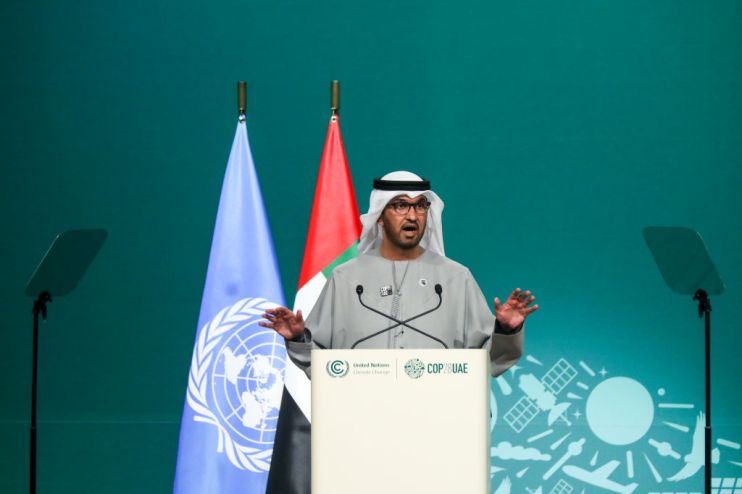
For many, the seat at the table for Exxon, BP, Shell and their ilk was a betrayal. Let alone the fact that the event is being held in the hydrocarbon-rich UAE and led by Adnoc executive Dr Sultan-Al-Jaber. Back in Davos, in January, Greta Thunberg said it was “completely ridiculous” to have an oil executive in charge of Cop28. That was before we even knew who else would be on the guest list.
But the energy industry has long campaigned to have a voice at the summit. Bob Dudley, chair of the Oil and Gas Climate Initiative and former chief executive of BP, told me: “I am so pleased that finally Cop has allowed energy companies to attend as there is no way we are going to solve the energy transition without the energy, the capital, the engineering and the vast knowledge of the energy companies to bring the emissions down.”
“Oil and gas companies want to be part of the solution rather than part of the problem about climate change,” Dudley’s predecessor at BP, Lord John Browne, now chairman of Beyond Net Zero, told me. “They really need to do the things they can do short term, and participate in long term solutions, such as limited (carbon) abatement.”
To add to the case for energy company inclusion, many Cop critics point to years of underachievement since the Kyoto Protocol was signed last century, blaming a lack of realism and naivety in excluding one of the most important industries in the whole climate debate.
Global warming is up, greenhouse gas emissions are up and most 2030-2050 targets are way off. But can holding a pivotal Cop in an oil-rich state, letting it be led by a senior oil industry executive and inviting the biggest industry emitters on the planet be the right reboot?
Dr Sultan-Al-Jaber bristles at the accusations that he is just there to look after his country’s oil interests. He has come out hard and can point to, on paper at least, some big achievements since the meeting started in late November, including so far, a landmark pledge by some 50 big oil and gas companies on 2nd December on methane reduction. This could cut a vast amount of the nastiest greenhouse gases from the atmosphere if acted upon.
We have also seen the signing of the Oil and Gas Decarbonization Charter (OGDC), whereby for the first time both private and national oil companies have pledged to reduce GHG emissions from their operations and to achieve net zero by 2050.
One important shift was from Exxon, the US energy giant. Previously, oil firms from the US have been detached from their European peers. Exxon has broken this trend, and was a signatory to both the OGDC and methane pledge. Darren Woods, the chief executive, was adamant that a complete dismantling of the industry was not the way forward.
“I don’t think there is a one size fits all,” he told me.
Critics – among them the International Energy Agency – argue that the pledges on methane and decarbonization do nothing to mitigate the emissions created by their products by the ultimate users of energy, the so-called Scope 3 emission. Neither do they amount to a promise to ‘phase out’ hydrocarbon production.
Ultimately, the contribution of the oil and gas at Cop talks will be judged on action not words. Some will never agree with Voltaire, and see it only a cynical tactical ploy to keep the wells pumping for longer. For others it’s a long overdue dose of realism in the long road to net zero.