On this day: Margaret Thatcher’s 100th birthday

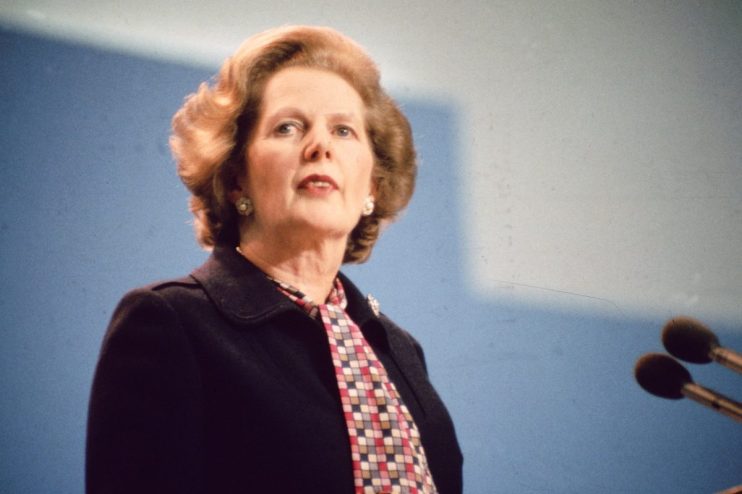
Britain owes everything to the woman who saved it from socialism, says Rainer Zitelmann
Margaret Thatcher would have been 100 years old today. She served as Prime Minister of the United Kingdom for nearly 12 years, making her the longest-serving Prime Minister of the 20th century. No other political leader has ever implemented tax cuts, deregulation, and privatisation to reform a developed welfare state as radically as she did. Today, with many European countries facing similar challenges, the question arises: What conditions allowed Thatcher to implement such far-reaching reforms?
To lay the foundations for significant market economy reforms, three key conditions must be met: Firstly, the situation must have become dire for large sections of the population. Secondly, the intellectual groundwork must already have been laid – the right ideas must have been disseminated by opinion leaders over a period of many years. And only then – thirdly – does a charismatic politician have a chance. This was the case in Argentina before Javier Milei was elected and it was the same in the UK during Thatcher’s rise to power.
The socialist experiment
Before Thatcher took office, an experiment at “democratic socialism” had nearly driven the country to the edge of the abyss. Inflation had soared to 27 per cent, the tax rate for the highest earners had reached 83 per cent, and those with significant capital incomes were slammed with a top tax rate of 98 per cent. Some 30 per cent of employees worked in state-owned enterprises. While productivity stagnated, the national debt continued to rise. In 1979, government subsidies for mostly unprofitable industries, such as mining, amounted to £4.6bn (equivalent to £29bn today). Ultimately, the UK government was forced to go cap in hand for help from the International Monetary Fund (IMF), an organization that typically provides help to developing countries. This was a humiliation for the proud British. Radical, communist-dominated trade unions held the country firmly in their grip. In the 1970s, more than 2,000 strikes took place every year, costing an average of almost 13m working days and rising to almost 30m in 1979.
Thatcher understood that her mission extended beyond a handful of reforms – she was engaged in a battle of ideas. Her biographer Charles Moore writes, “She did not have an intellectually orderly mind, nor did she have an original one. Rather than developing her own ideas, she was a sort of ‘stage-door Johnny’ for the ideas of others.” As a student, she had been impressed by Friedrich August von Hayek’s reckoning with socialism, Road to Serfdom. Pro-capitalist think tanks, such as the Centre for Policy Studies, the Adam Smith Institute, and the Institute of Economic Affairs (IEA), played a crucial role in shaping her ideas. As the leader of the opposition from 1975 to 1979, Thatcher frequently attended IEA events and read the think tank’s publications. It was also through the IEA that she became personally acquainted with Hayek and Milton Friedman. After her first election victory in 1979, she credited the IEA with creating “the climate of opinion which made our victory possible.” The Adam Smith Institute, and its president Madsen Pirie, provided the blueprint for her reforms, including her extensive program of privatization.
It was these two preconditions, the economic environment and the intellectual groundwork laid by the think tanks, that opened the door for Thatcher’s rise to power. Her major contribution was an ability to absorb and effectively communicate the right ideas. In addition, like Ronald Reagan and Milei, she excelled in public relations and self-promotion. The only other public figure in the UK who dealt with photographers and the press as skillfully as Margaret Thatcher was Princess Diana.
The only other public figure in the UK who dealt with photographers and the press as skillfully as Margaret Thatcher was Princess Diana
Privatisation played a decisive role in her second term of office. British Telecom, a company with 250,000 employees, was listed on the stock exchange. This was the IPO in the world at the time, and two million Britons, nearly half of whom had never owned shares before, bought shares in BT. Under Thatcher’s government, the percentage of Britons who owned shares increased from 7 to 25 per cent.
Social rental housing units were offered for sale by local municipalities to tenants. This policy turned 1m renters into homeowners. In this case, however, it might have been better to sell these state-owned dwellings to professionally managed private housing companies or to float them on the stock exchange. The success of privatisation in the UK was so resounding that it became a powerful example for other countries and triggered a global wave of privatizations.
In her autobiography, Thatcher admitted that she would have liked to privatize even more companies, but added: “Britain under my premiership was the first country to reverse the onward march of socialism. By the time I left office, the state-owned sector of industry had been reduced by some 60 per cent. Around one in four of the population owned shares. Over six hundred thousand jobs had passed from the public to the private sector.”
She could also take much of the credit for the 3.32m new jobs created in the UK between March 1983 and March 1990. In 1976, the UK had been on the verge of national bankruptcy; by 1978, the country’s budget deficit was 4.4 per cent of gross national product (compared to 2.4 per cent in Germany at the time). Ten years later, in 1989, the UK posted a budget surplus of 1.6 per cent. The national debt, 54.6 per cent of GDP in 1980, had fallen to 40.1 per cent by 1989.
Rainer Zitelmann is the author of the book The Power of Capitalism https://the-power-of-capitalism.com/