Skip to content
Sunday 13 September 2026London --:--Frankfurt --:--Zurich --:--
NewslettersSearchEN · DE · FR
MorningWire

European business, markets and politics

FTSE 100
10,650.44
+0.39%
DAX
25,568.56
+0.82%
CAC 40
8,179.77
+0.78%
STOXX 50
6,325.13
+0.90%
  • Europe
  • Markets
  • Business
  • Economy
  • Regulation
  • Politics
  • Opinion
More
GermanyFranceEU InstitutionsCompetitionPublic AffairsBankingTechnologyEnergy
  • Germany
  • France
  • Europe
  • Markets
  • Business
  • Economy
  • Regulation
  • Politics
  • Opinion
  • DE
Wednesday 24 November 2021 6:15 am  |  Updated:  Tuesday 23 November 2021 5:28 pm

Think petrol panic buying was bad? Wait til you see what’s (not) in store this Christmas

By: Paul Ormerod

Add as a preferred source on Google
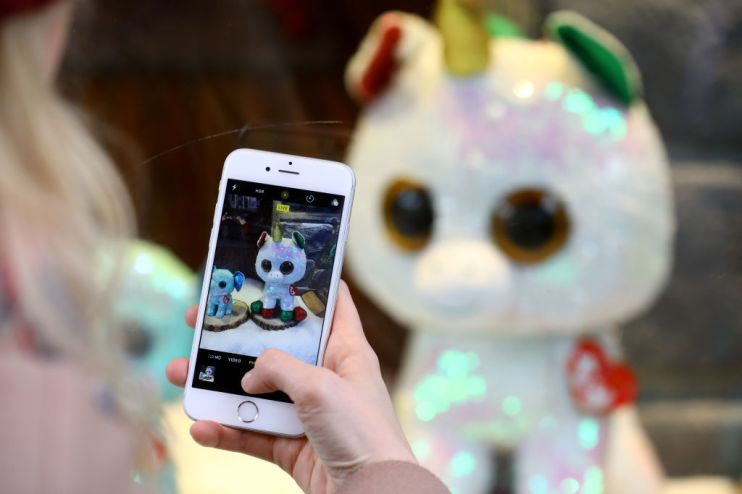
Hamleys Unveil Christmas Window
LONDON, ENGLAND - NOVEMBER 01: The oldest toy shop in the world, Hamleys has kicked off the festive season by unveiling its 2019 Christmas window on November 1st in London, England. (Photo by Tim P. Whitby/Tim Whitby/Getty Images for Hamleys )

It is that time of year again: ice skating, cold, clear blue skies, fairy lights decorating Oxford Street, and fears about having enough Christmas toys on the shelves.

There are two key themes to this year’s scare stories. First, supply problems could lead to a deluge of children missing out on the most popular toys. Second, even if you get your hands on what your toddler wants: get ready to pay through the nose for it.

Often the two are combined, with retailers being accused of price gouging, or of taking advantage of shortages.

There is a kernel of truth in both the price increases and shortages; there are very real challenges in the global supply chain, which are not just confined to the UK.  

But we have been here before. In fact, we are here almost every Christmas.

The prices of the most popular toys, particularly on sites such as eBay, rocket, as parents desperately try to acquire whatever has become the ne plus ultra of the moment.

Four years ago, so-called Grinch bots were accused of stealing Christmas by gobbling up stock of the most sought after toys before selling them on at inflated prices.

That year, the Fingerlings toy monkey was a favourite. Leading retailers ran out of stock completely, and the list price of £14.99 was stratospherically passed on eBay, with deals being struck for £200.

Way back in 2002, it was reported that six of the top ten most wanted toys that year were in short supply, with no prospect of further deliveries from manufacturers across Asia. That time, one piece in The Times claimed this had happened for the last seven consecutive years.

Read more

SNP slammed for ‘mind-boggling’ food price cap plans

Bald man in glasses and dark suit with a purple tie and Scottish flag pin, looking to the left.

These stories praying on parents’ worst fears of being empty-handed on December 25 have become a yearly occurrence as traditional as the tree and the pudding.

Like the decorations, every year will have its own set of new features. But the regularity of the shortages must mean there is an underlying explanation.

The key feature of the Christmas toy dilemma is that demand is not primarily determined by the prices or quality of the alternatives on offer. What really matters is popularity; every child wants the toy of the moment.

In 1973, the polymath and economic Nobel Laureate Thomas Schelling developed a theoretical model on markets such as these. His paper had the splendid title, “Hockey helmets, concealed weapons and daylight saving” .  It was inspired, as many of the best things are, by misadventure.

This time, a star ice hockey player had suffered serious head injuries from a flying puck. Neither he, nor his teammates were wearing helmets. When asked, in the aftermath of the accident, why none of them wore more protection, even when they knew the risks, one answered: “I don’t because the other guys don’t”.

Schelling crystallised this into a mathematical concept he called “binary choice with externalities”. The choice facing an individual is binary: either you wear a helmet or you don’t but your choice affects how other people in your peer group make their choices.  

We’ve seen this cycle repeated in the worst of the panic buying of the pandemic and petrol crisis. One person buys a little more, and another, who sees the queues at the station, does too.

In other words, there’s no need to panic about Christmas shortages. They’re a part of the festive calendar as regular as the Boxing Day hangover. No amount of complaining or regulation will ever change that. 

Read more

Poundland owners rush to sell discount retailer before Christmas

Poundland storefront with shoppers entering and exiting, showcasing the brands logo and discount signage in a bustling str...

Share this article

  • Facebook
  • X
  • LinkedIn
  • WhatsApp
  • Email

Similarly tagged content:

Sections

  • Opinion

Categories

  • Opinion

Trending Articles

  • Wetherspoon boss: ‘Not up to Burnham’ to choose who is on the high street 

  • Badger Beer maker Hall & Woodhouse doubles profit ahead of tie-up with James May

  • Four interest rate hikes loom despite surprise economic growth

  • Primark sales slip as owner dresses up retailer for demerger

  • Lotus, Porsche and Corvette: the best sports cars to buy in 2026

More from Morning Wire

  • SNP slammed for ‘mind-boggling’ food price cap plans

    Retail
    Bald man in glasses and dark suit with a purple tie and Scottish flag pin, looking to the left.
  • Poundland owners rush to sell discount retailer before Christmas

    Retail
    Poundland storefront with shoppers entering and exiting, showcasing the brands logo and discount signage in a bustling str...
  • Food inflation set to surge next year as Iran war ramps up supply costs

    Retail
    Shopper places produce into a cart in a grocery store aisle with mostly empty shelves, indicating supply shortages.
  • Soaring energy bills set to fuel inflation spike

    Economics
    Smartphone displaying an energy bill notification with British coins and a banknote nearby.
  • Back Joseph’s Enceladus to beat Father’s Christmas

    Sport
    Bay racehorse with jockey in blue and white silks, number 10, galloping on a track during a horse race.
  • Gen-Z toymaker Jellycat pursues Home Bargains in latest copyright claim

    Retail
    JellyCat plush toys showcased in a vibrant retail display, highlighting their variety and appeal in the general merchandis...
  • New Circularity Data: Nine Out of Ten Returned Items Lose Value for Retailers

    Business Wire
  • Inside Cristiano Ronaldo’s £20m car collection

    Life&Style
    Cristiano Ronaldo in a white suit and shorts, leaning on a black Brabus G-Wagon luxury SUV.
MorningWire

Independent European business, markets and political news for decision-makers.

Morning Briefing

Europe

  • Germany
  • France
  • EU Institutions
  • Europe

Business

  • Markets
  • Business
  • Economy
  • Regulation
  • Competition
  • Public Affairs

Editorial

  • Opinion
  • Editorial Policy
  • Corrections
  • Contact

Company

  • About Morning Wire
  • Privacy Policy
  • Terms of Use
  • Cookie Policy
© 2026 Morning Wire Ltd · Published by Morning Wire Media, Bahnhofstrasse 65, 8001 Zürich, Switzerland
Privacy · Terms · Cookies · Facebook