Skip to content
Saturday 8 August 2026London --:--Frankfurt --:--Zurich --:--
NewslettersSearchEN · DE
MorningWire

European business, markets and politics

FTSE 100
10,901.09
+0.31%
DAX
26,319.45
+0.69%
CAC 40
8,714.93
+0.17%
STOXX 50
6,523.86
+0.33%
  • Europe
  • Markets
  • Business
  • Economy
  • Technology
  • Politics
  • Opinion
More
GermanyFranceBankingAIEnergyFintechPropertyCapital Markets
  • Germany
  • France
  • Europe
  • Markets
  • Business
  • Economy
  • Technology
  • Politics
  • Opinion
  • DE
Thursday 05 September 2024 5:52 am  |  Updated:  Wednesday 04 September 2024 11:25 am

Playing nice with trade unions won’t fix public services

By: Matthew Lesh

Add as a preferred source on Google
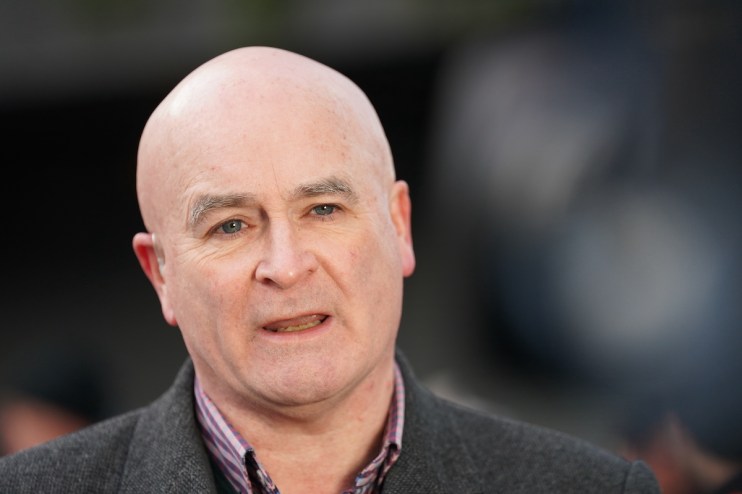
The Rail, Maritime and Transport union (RMT ) said there was understaffing at a number of stations on the West Coast mainline served by Avanti.

With trade unions promising further strike action despite generous pay settlements, Labour have found themselves in a bind of their own making, say Matthew Lesh

Throughout the election campaign, Keir Starmer repeatedly pledged to end strikes by engaging in constructive dialogue with the unions. This always sounded like a pretty hollow promise. How could simply talking to the unions – something the Conservatives have been doing for years – solve the problem? What would they actually do about the lack of public funds and exaggerated pay demands?

Then, miraculously, things changed. At the end of July, the junior doctors appeared willing to accept a new offer of a 22 per cent pay rise – a hefty increase, albeit still short of their original 35 per cent demand. Then the government made a new offer to train drivers, including a 15 per cent increase over three years, and accepted recommendations for above-inflation pay rises of 5.5 per cent for other public sector workers. This came with a staggering £11.6bn price tag. 

So, with a bit more cash now on the table, have we entered a new era of industrial harmony? It would appear not.

A leaked message from a junior doctors’ union leader warned that despite the generous offer, the plan would be to undertake further strikes “when Labour’s honeymoon period ends”. Then less than 48 hours after the government’s pay deal offer, the train drivers’ union Aslef announced three more months of strikes. Last month, reports indicated that the union movement will push for backdated, above-inflation pay increases for its members across the public sector.

The new government has found itself in a bind of its own creation. Labour is founded on and receives significant donations from the union movement. Much of their core electoral coalition, particularly from the white collar public sector, are union members. Notably, while just 12 per cent of private sector workers are part of a union, half of those in the public sector are card-carrying members.

The damage of strike action

In the public sector, the unions only have to negotiate with a single employer. They can cause significant damage through strike action. The government’s decision to abolish rules regarding minimum service levels during strikes will only weaken their negotiating hand. This all makes it difficult for Labour to fight the union demands. 

The goal of a union, rationally, is to get the highest wages for the minimum possible work. Inevitably, however, this comes at the expense of someone else. Unions have been known to reject modern work practices, lowering the productivity in their sector, pushing up prices for consumers and depressing everyone else’s wages. 

Just take one example. Much of the tube, particularly the new Elizabeth line, could operate without drivers. Sydney has just opened the first parts of a new driverless metro system. It appears like a modern miracle, until you remember we have had the same with the DLR in London for decades. But there is no way Britain’s train unions would ever agree to new driverless trains. That adds significant cost, for no apparent reason, to a train system that’s already extremely expensive. Labour’s botched attempt to get to a deal with the train drivers’ union went even further by giving up on earlier demands to improve work practices.

Labour came into power expecting a much easier ride than the Tories when it came to negotiating with the unions. They are rapidly finding out that things are never so simple. Unions have their own interests and receive lots of legal protections for their actions. Public services are costing more than ever before and yet outcomes across the system are often mediocre. Simply sitting down in a friendly atmosphere and talking to the unions may not be enough to get taxpayers what we deserve.

Matthew Lesh is a Public Policy Fellow at the Institute of Economic Affairs

Read more

Fifa accused of bullying in attempt to kill off multi-billion class action claim

Getty Images news-related image depicting a significant event or person, suitable for general news and business contexts.

Share this article

  • Facebook
  • X
  • LinkedIn
  • WhatsApp
  • Email

Similarly tagged content:

Sections

  • Opinion

Categories

  • Opinion

People & Organisations

  • Aslef
  • Junior doctors
  • Keir Starmer
  • Labour
  • Labour Party
  • strikes
  • trade union
  • Trade Union Congress

Related Topics

  • NHS

Trending Articles

  • Why the Loire Valley is about so much more than fairytale castles

  • Why HMRC is huge Premier League transfer window tax headache

  • Thames Water faces fresh threat to survival after pensions regulation breach

  • Back to basics: Sainsbury’s gradual retreat from the British high street

  • Thunder Call set to Strike in Shergar Cup Sprint

More from Morning Wire

  • Fifa accused of bullying in attempt to kill off multi-billion class action claim

    Sport Business
    Getty Images news-related image depicting a significant event or person, suitable for general news and business contexts.
  • Three ways Andy Burnham can avoid Keir Starmer’s mistakes

    Opinion
    Andy Burnham, Mayor of Greater Manchester, speaking at an event
  • ‘Pro-business’ Burnham eyes Reynolds return to top business job

    Business
    Jonathan Reynolds addressing the SMMT's annual International Automotive Summit (image courtesy of SMMT)
  • Remembering Norman Tebbit

    Opinion
    Norman Tebbit and Margaret Thatcher discussing political strategy at a conference, highlighting Conservative leadership dy...
  • Burnham to approve North Sea oil and gas drilling in policy blitz

    Politics
    North Sea oil terminal with storage tanks and docking facilities under a clear sky, highlighting energy infrastructure.
  • Jonathan Reynolds’ industrial strategy is straight out of the 60s

    Opinion
    Labour's Jonathan Reynolds unveiled the industrial strategy in June.
  • ‘That’s reality’: Burnham will have to focus on international affairs, Starmer warns

    Politics
    Business conference attendees networking at a corporate event with banners and presentation screens in the background
  • The Debate: Should political donations be capped at £100,000?

    Opinion
    Nigel Farage delivering a speech in July 2026, wearing a suit, addressing an audience at a political event.
MorningWire

Independent European business, markets and political news for decision-makers.

Morning Briefing

Europe

  • Germany
  • France
  • Europe
  • UK & Ireland

Business

  • Markets
  • Banking
  • Technology
  • Energy
  • Property
  • Fintech

Editorial

  • Opinion
  • Editorial Policy
  • Corrections
  • Contact

Company

  • About Morning Wire
  • Privacy Policy
  • Terms of Use
  • Cookie Policy
© 2026 Morning Wire Ltd · Published by Morning Wire Media, Bahnhofstrasse 65, 8001 Zürich, Switzerland
Privacy · Terms · Cookies · Facebook