Police Scotland wants to teach the Met a lesson in understanding its racist cops

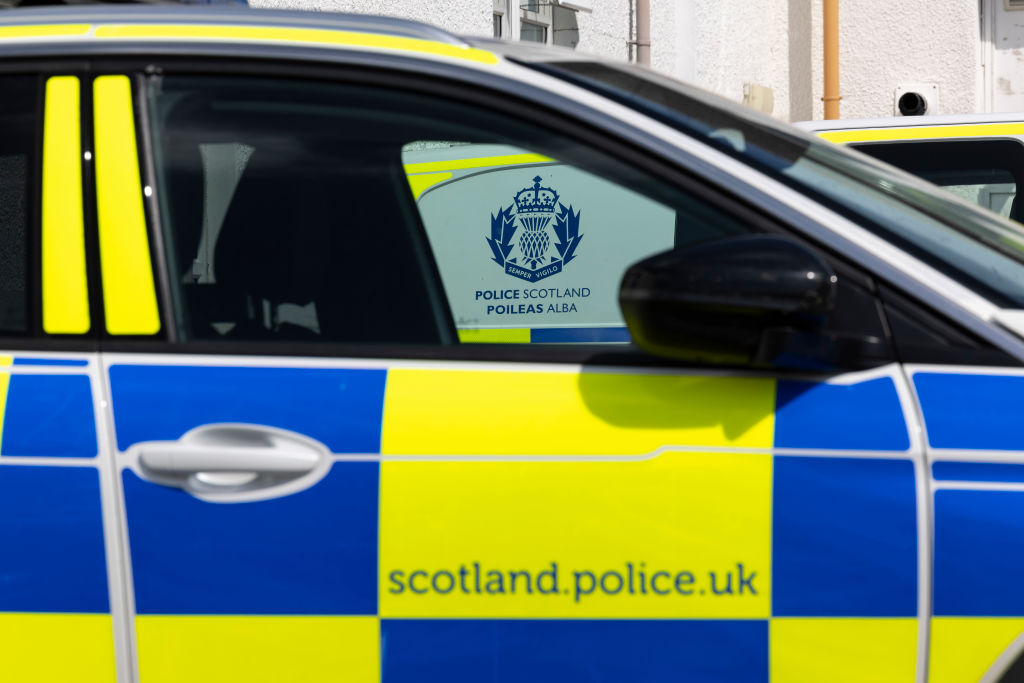
The outgoing boss of the Police Scotland has labelled the force ‘institutionally racist’, but the Met police won’t admit the same failing, writes Eliot Wilson
There is widespread misconduct, bad behaviour and prejudice, a culture which discourages those who would speak out and, eventually, an admission by the leadership of “institutional racism, sexism, misogyny and discrimination”. But this is not the Metropolitan Police. This is the conclusion of the Chief Constable of Police Scotland, Sir Iain Livingstone, who made this announcement to the Scottish Police Authority, the public oversight body, last week.
Cynical hacks, of whom there are many in Scotland, will note, quite accurately, that Sir Iain will retire from his position on 10 August this year, so this is something of a death-bed confession which many will think has been long overdue. It is also the case that Police Scotland—created in 2013 by merging the eight regional forces—has been under Sir Iain’s leadership for a little over half its life, so it is not unreasonable to look to the chief constable to assume a degree of responsibility for its culture and procedures.
The admission has immediate relevance. There is an ongoing public inquiry, established by First Minister Humza Yousaf when he was justice secretary, to examine the death in custody of Sheku Bayoh, a Sierra Leonean trainee gas engineer who was arrested in May 2015 after assaulting a female police officer in Kirkcaldy. Bayoh died having taken MDMA and Flakka, but also had facial injuries, a broken rib and bruising to his body. Lord Bracadale, a former judge of the Court of Session, is chairing the inquiry which began taking evidence last May and is expected to continue into 2024. Livingstone’s admission of institutional racism will be examined carefully by the inquiry.
There is an obvious echo of the challenges facing the Metropolitan Police. The Met is twice as large as Police Scotland and serves a larger population, but anyone who has followed the crisis upon crisis in London’s policing will recognise the issues which Sir Iain Livingstone has identified: sexism, casual belittling of female officers, a culture of racism and discrimination, and a lack of trust among ethnic minority communities.
There is obviously a huge difference in the demographic make-up of Scotland compared to London. The former is more than 95 per cent white, while the capital is less than 54 per cent white, and only 36.8 per cent white British. That does not, of course, make any kind of wrongdoing acceptable or even forgivable, but it does set the scene against which they must be considered.
The concept of “institutional racism” was popularised by Sir William Macpherson in his 1999 report on the Metropolitan Police’s investigation into the death of Stephen Lawrence. It was felt then that the admission by a figure wholly representative of “the Establishment” was a huge step forward, and the First Minister has called Sir Iain’s admission “historic” and “monumental”. But it is only the first step. The burning question is: what next?
Baroness Casey of Blackstock’s review of the Met, published in March, showed that, in the quarter-century since the Macpherson Report, little had been achieved. London’s police was still institutionally racist and riddled with discrimination and misconduct. The police is affected by implicit racial bias, which is difficult and time-consuming to address; tackling toxic “canteen culture” and diversifying recruitment will not be enough. What is required is to identify biases, demonstrate their effect with hard data and carry out thorough training to allow officers to understand and overcome their implicit bias.
It is easy to be despondent about the cultural challenges within policing. They are real, they are serious and they are urgent. It seems unlikely that the Met and Police Scotland are the only forces affected, though between them they represent something like a quarter of UK police officers. What we need, in fact, is wholesale retraining and acculturation as well as the robust elimination of officers unfit to serve; and this will have to apply to all of our 45 territorial and three special forces.
The task is discouragingly huge. Other reforms will be needed too. But unnamed voices from the past and present tell us there is no other choice.