Political scraps over public or private ownership are a distraction to solving Britain’s railway woes

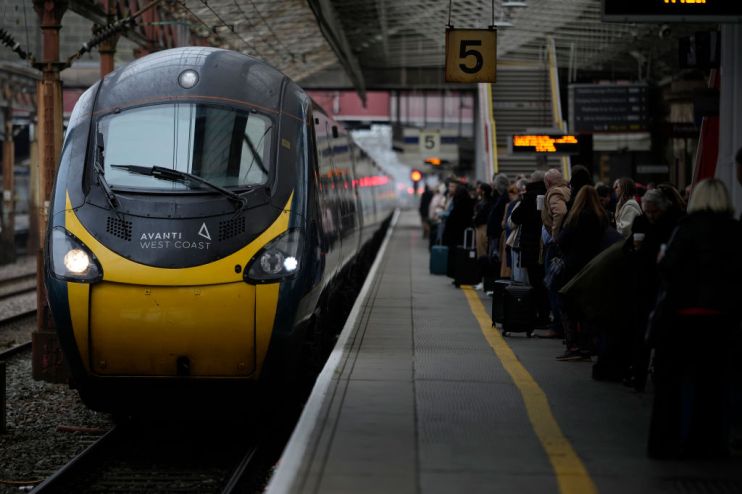
Delays, cancellations and strikes – the UK’s railways are in a mess. But both parties’ solutions for fixing the nation’s rail network are flawed, argues Guy Taylor
The debate over how to fix Britain’s railways will play a critical role in the upcoming general election.
There is unanimous agreement that change is a matter of urgency. Delays and cancellations are rife across the network and the industrial dispute still drags on after nearly two years of disruption.
The sector can’t solve the issues due to the ongoing financial struggles of the post-Covid era, caused in part by a dearth in commuting numbers and restrictive government contracts.
Labour are proposing re-nationalising the UK’s struggling train companies, a major shift back to the pre John Major days, when British Rail ran the tracks.
The current government meanwhile has put its faith in Great British Rail (GBR), a plan to solve fragmentation by creating a unifying ‘guiding mind’ to manage infrastructure, timetabling and fares.
The long-delayed legislation has yet to get off the ground though, while Labour’s approach has sparked backlash from transport giants such as Firstgroup, the operator of Avanti, Great Western and South Western Railway.
But the age-old debate, to nationalise or not to nationalise, has become a distraction.
Looking abroad, there are numerous countries operating privatised or state-owned networks far more successfully than Britain’s public-private partnership model.
Take Switzerland. The country’s national provider Swiss Federal Railways saw 92.5 per cent of trains arrive on time in 2023, compared with a British figure of 67.4 per cent.
On the other end of the spectrum is Japan. The privatisation of the country’s railways in 1987 has been a remarkable suuccess and its rail system is lauded for its punctuality, profitability and scale.
Two top level rail industry executives interviewed by Morning Wire have said that Britain must look east to solve its issues; the head of TransportUK (formerly Abellio), Dominic Booth, and Hong Kong-based MTR Corporation’s former UK chief Steve Murphy, who helped lead the delivery of the Elizabeth Line.
What should we be focussing on, then? Forget political grandstanding with headline grabbing policies like nationalisation, British rail needs a far more nuanced approach.
There is so much scope for creativity. In Hong Kong, MTR is renowned for using so-called “air rights,” which help it pocket extra revenue by building stations with mixed-use commercial, residential and retail properties on top.
Japan’s JR East nets around a third of its revenue from non-transportation activities, while JR Kyushi is even higher at 60 per cent.
Swiss rail meanwhile has managed to top European rankings due to the investment it puts into maintaining its railroad infrastructure. Virtually 100 per cent of its extensive 5,200km network is electrified, well ahead of the UK’s 38 per cent.
Increasing innovation will play a critical role and some new approaches are showing promise closer to home. Network Rail, the body which manages the UK’s rail infrastructure, is starting to use artificial intelligence to predict when and where track faults and overhead cable failures may occur.
Given incidents have plagued the West Coast Mainline in and out of London this year, the tech has the potential to save countless hours of delay and disruption.
One could also look at the open-access model, in which operator’s take full commercial risk and are not subject to the typical franchising fees. It is increasingly boosting competition and reducing ticket fares in the UK, despite its small scale.
A number of new routes have been granted the regulatory go-ahead in recent months and Firstgroup has cited its open access subsidiaries Lumo and Hull as a key driver of growth.
Of course, these are just a few examples and none will solve broader issues such as the steep decline in business travel.
Policies such as GBR are also widely backed by the industry and will be critical in tackling fragmentation, providing accountability and ending pesky ministerial meddling.
But voters should be careful not to be drawn in by broad political promises, while forgetting the nuance involved in running a truly successful railway system.