Political stasis on energy policy will throw us further into the Dark Ages

The foundations of our energy policy in Britain have been thrown into the spotlight as countries around the world look to unwind their reliance on Russia. Reducing oil dependency is a step in the right direction. But as the human, environmental and geopolitical costs spiral, what the UK needs now is a decisive commitment towards developing and scaling low-carbon technologies. Decisive being the operating word. Cabinet, however, is at loggerheads over how to get there, and the release of a plan for our future energy dependence has once again been delayed.
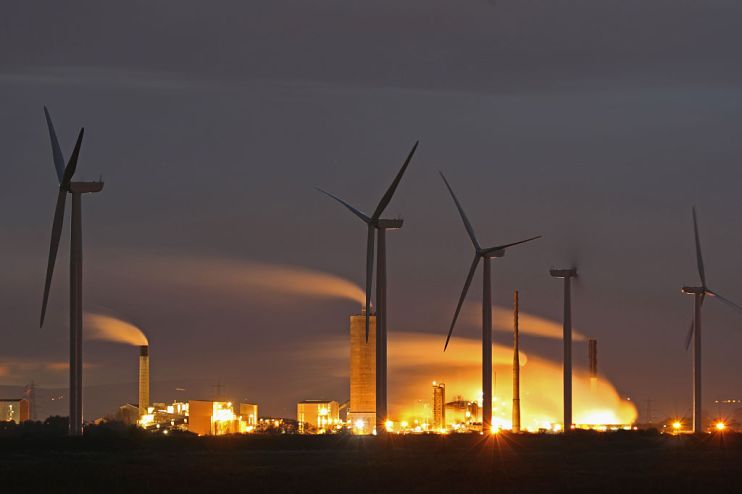
Offshore wind is a UK success story to be proud of. But to date that success has been the exception rather than the rule. It has been fostered by stable policy and enduring cross-party commitment that has been absent for the majority of critical technologies that offer us the potential to take control of our energy bills and avert catastrophic climate change. We need to learn the lessons fast.
The past 20 years have seen the offshore wind industry flourish. From two small wind turbines off the coast of Northumberland to over two thousand turbines dotted along the North Sea coast – providing thirteen per cent of the UK’s electricity needs – the pace of change has been extraordinary. The UK, which only accounts for around 1 per cent of total global electricity demand, is a world-leader in terms of installed offshore wind capacity, punching well above its weight and only recently overtaken by China.
And it’s a similar story in terms of technology cost. Offshore wind started out around three to four times more expensive than gas, but it was cost-competitive by 2019, and is now significantly cheaper thanks to the recent unprecedented hike in gas prices, which have risen 13-fold year-on-year.
But this triumph is almost unique in UK climate policy. It stands out as the only low-carbon technology that has received consistent government support. And so it’s not surprising that offshore wind deployment has surged ahead of other technologies.
This offshore wind success has come at a time when deployment of other low-carbon technologies across the UK has stuttered, and as a consequence we are left reliant on increasingly expensive gas to fill the gaps when the wind isn’t blowing.
Hinkley Point C, currently under construction in Somerset and due to come online in the late 2020s, will be the first new UK nuclear power station in over 30 years. Onshore wind and solar power deployment has faltered in recent years following the decision of David Cameron’s government to pull support in 2016. And carbon capture and storage technology has twice suffered from the government pulling competition funding at the last minute.
Blowing hot and cold on these low-carbon technologies has real long-term impacts on deployment, supply chain development, and jobs. Alarming data published last month by the Office for National Statistics revealed that there were 28,000 fewer people employed in green sectors in 2020 than there were in 2014. The most significant decline in jobs has been seen in the energy efficiency sector, where the government’s decision to “cut the green crap” in 2013 triggered a collapse in activity that has proved difficult to rebuild.
The removal of the zero-carbon home standard, subsidies for onshore wind, and spending on energy-efficiency measures has added £2.5bn to UK energy bills – equivalent to £40 per household, and that is expected to rise to £60 per household next winter, according to analysis by Carbon Brief. We’re watching it happen all over again now with the government’s decision to scrap the £1.5bnGreen Homes Grant after only 6 months.
The current energy crisis, with household bills soaring due to record-high gas prices and now the costs of Russia declaring war on Ukraine, only intensifies the need to accelerate the transition away from fossil fuels. Offshore wind capacity will need to increase at least four-fold to meet the government’s 2030 target. And to decarbonise buildings, annual heat-pump installations will need to jump from 35,000 today to 600,000 by 2028 to meet the government’s target, or one million by 2030 to meet the Committee on Climate Change (CCC)’s recommendation.
These targets are certainly challenging, and together they represent the biggest infrastructure overhaul since the Industrial Revolution. And time is short.
The transition can be achieved on time and it can rescue billpayers from unprecedented fossil fuel prices. But it will only happen if we learn the lessons of Britain’s success in offshore wind. We cannot afford to repeat the mistakes of the past.