
Q&A: will the gold price surge continue?

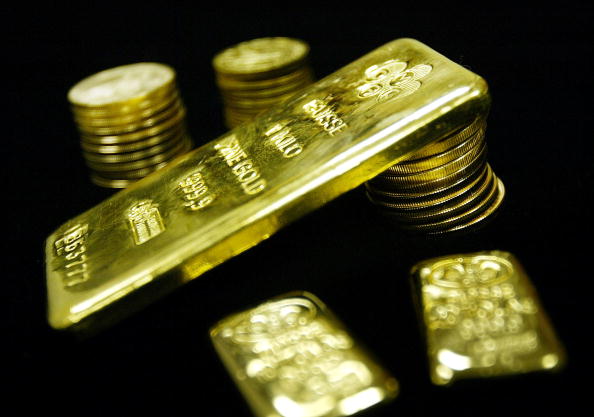
James Luke explains the effect that Russian sanctions and Fed rate rises are having on gold, and what may lie ahead for the precious metal.
Gold prices have been on an upward trend since mid-January, accelerating sharply upon Russia’s shocking invasion of Ukraine towards the end of February as investors flocked to perceived safe haven assets.
We spoke to James Luke, Commodities Fund Manager, to find out more about what’s happening with gold and what may lie ahead.
What effect are sanctions having on the demand and supply of gold?
“I don’t think sanctions on specific Russian individuals or companies will have much of an impact on demand for gold. You could argue that some portion of oligarch wealth might shift into gold, or that Russian gold producers – who are quite sizeable as a share of global production – might struggle to sell gold into Western markets. But I think those impacts are quite marginal in a global context.
“What could be more significant in the medium-term is the knock-on effects of the unprecedented sanctioning of the Russian central bank’s foreign exchange reserves. These are an economy’s “rainy day fund”, its economic security blanket and if Russia can no longer rely on these reserves, in the long run other central banks may well also reconsider what a “safe” reserve asset allocation is.
“Broadly speaking, many emerging market central banks hold less than 5% of their total foreign currency reserve holdings in gold – they mostly hold US dollars and other major currencies. The big question is whether a portion of those reserves could find their way into the gold market as central banks look to diversify. If countries like China, Saudi Arabia, the UAE, Brazil and others began to move their allocation towards the 20% market that large holders like Russia already have, the impact on the gold market would be very significant. Gold is a small market at current prices.
“Overall though, the real story in gold has been that we were already seeing a significant turnaround in private investment demand for gold, particularly from North America and Europe, before the invasion. We expect that to continue. So we now have a much higher probability of a scenario in which you have both strong private and public (central bank) demand for gold.”
How much of this rising private demand has to do with investors moving into perceived safe assets as a result of the war in Ukraine? And how much has it to do with the possible consequences of the Fed’s rate hiking cycle?
“There has been a very large increase in the total known holdings of physically-backed gold exchange-traded funds (ETFs) since the end of January, which accelerated after the Ukraine invasion.
“So it’s fair to say that the invasion itself probably triggered some of those flows but I think it’s also fair to say that many of those flows were already in progress. In general, when you get these kinds of geopolitical shocks, gold prices tend to ‘pop’ but this isn’t usually sustained.
“I think it’s more likely that the most sizeable shifts in the gold market from the private sector will almost all be related to huge uncertainties around the Fed’s hiking cycle given the risks of unintended consequences for economic growth or financial markets. In response to the Covid pandemic, authorities undertook unprecedented monetary and fiscal stimulus. But recall that since 2008, each time the Fed has tried to remove monetary stimulus the market has forced it to change course. We doubt it will be different this time. It’s a crude analogy but the economy is like a patient who has been given huge amounts of drugs to get it through a crisis period. If you suddenly remove those drugs, you can expect the withdrawal symptoms to be pretty severe.”
Discover more by visiting Schroders’ insights or click the links below:
– Follow: Live blog: what does Russia’s invasion of Ukraine mean for markets
– Listen: Sanctions or the Fed: what’s driving demand for gold?
– Learn: Will the world economy avoid an inflationary bust?
It’s been suggested the Fed could raise rates eight times in 2022 alone. Do you think it can do that?
“If inflation stays strong, which it should do, and employment is still robust in the US, then the Fed’s decision is quite easy – fight inflation. So we probably will see rate rises coming through in the short term which is what the market is already pricing in, as you say. Where we are sceptical is that the Fed can do this without creating significant negative feedback loops in interest rate-sensitive parts of the economy such as the housing market.
“We are also worried by reports of poor liquidity conditions in Treasury markets emerging before the Fed has even begun to sell down its own Treasury holdings (which were built up through quantitative easing programmes). These are supposed to be the deepest and most liquid markets in the world.
“The question is whether the Fed can step away from Treasuries without triggering disorderly market conditions. We think the probability that this will happen is much higher than the market believes. This is a very counter-consensus and unfashionable view.”
Do central banks still have the right tools to fight inflation?
“They don’t have the tools to control a commodity supply shock or to control the un-jamming of global supply chains, that’s for sure. So “stagflationary” forces are clearly difficult to manage. Stagflation is an economic condition in which growth is low while inflation is high.
“However, they definitely do have the tools to reduce aggregate demand in the economy. If the Fed were to raise rates to, say 5%, very quickly, inflation could be reduced very quickly because anything bought on credit (which is huge swathes of the consumer economy) would suddenly be much less affordable and demand would drop. The question is whether they could do that without triggering very significant asset price deflation, without pushing the economy into a very severe recession. We think the answer is almost certainly no.
“So it’s not that they don’t have the tools to control inflation. It’s more a question of whether central banks are brave enough to act and whether they can control the unintended consequences of a sudden tightening in monetary policy.”
So what about gold equities? How have they been performing against this backdrop?
“They’ve been doing pretty well. The best example of their relative strength has been during the recent correction in the gold price. Initially gold prices moved up above $2,000/oz earlier this month but then corrected around 8%. Usually, if the gold price corrects by this much we’d expect to see gold equities correct somewhere between 10% and 15%. This time around, gold equities actually outperformed the gold price even though gold prices declined, which is very interesting.
“I think this speaks to both how badly beaten up gold equities have become over the last 18 months, and it speaks to the fact we were already seeing signs of interest creeping back into the gold equity space.”
Some Russian miners have been removed from the FTSE 100. Has that had any impact on sentiment towards miners at all?
“Certainly not that you can see in share price performance. The broad index of gold mining stocks is probably up 13% or so, year-to-date and within that you’ve got the Russian producers down more than 90% in some cases.
“I think their removal has probably increased demand for gold miners with operations in other emerging markets. For example, I think it’s benefited South African- and South American-listed producers.
“But certainly in terms of aggregate appetite, there’s been no noticeable impact.”
Can you foresee any negative shocks on the horizon for gold?
“The most obvious negative shock for gold would be much tighter-than-expected monetary policy in the short term, a real “Paul Volcker” moment. Volcker was Fed chair in the 1970s when in a drastic move, he tried to contain inflation by increasing interest rates to 20%.
“Another negative shock would be if Russia’s economy completely collapsed and it needed to (and was able to) monetise gold reserves.
“Both scenarios are, to my mind, low probability right now.”
This was taken from an interview with James Luke on the Investor Download. You can subscribe to the Investor Download from wherever you get your podcasts. New shows drop every Thursday at 1700 BST.
Topics:
Important Information: This communication is marketing material. The views and opinions contained herein are those of the author(s) on this page, and may not necessarily represent views expressed or reflected in other Schroders communications, strategies or funds. This material is intended to be for information purposes only and is not intended as promotional material in any respect. The material is not intended as an offer or solicitation for the purchase or sale of any financial instrument. It is not intended to provide and should not be relied on for accounting, legal or tax advice, or investment recommendations. Reliance should not be placed on the views and information in this document when taking individual investment and/or strategic decisions. Past performance is not a reliable indicator of future results. The value of an investment can go down as well as up and is not guaranteed. All investments involve risks including the risk of possible loss of principal. Information herein is believed to be reliable but Schroders does not warrant its completeness or accuracy. Some information quoted was obtained from external sources we consider to be reliable. No responsibility can be accepted for errors of fact obtained from third parties, and this data may change with market conditions. This does not exclude any duty or liability that Schroders has to its customers under any regulatory system. Regions/ sectors shown for illustrative purposes only and should not be viewed as a recommendation to buy/sell. The opinions in this material include some forecasted views. We believe we are basing our expectations and beliefs on reasonable assumptions within the bounds of what we currently know. However, there is no guarantee than any forecasts or opinions will be realised. These views and opinions may change. To the extent that you are in North America, this content is issued by Schroder Investment Management North America Inc., an indirect wholly owned subsidiary of Schroders plc and SEC registered adviser providing asset management products and services to clients in the US and Canada. For all other users, this content is issued by Schroder Investment Management Limited, 1 London Wall Place, London EC2Y 5AU. Registered No. 1893220 England. Authorised and regulated by the Financial Conduct Authority.