How sevens and Olympics can be commercial rugby lifeline

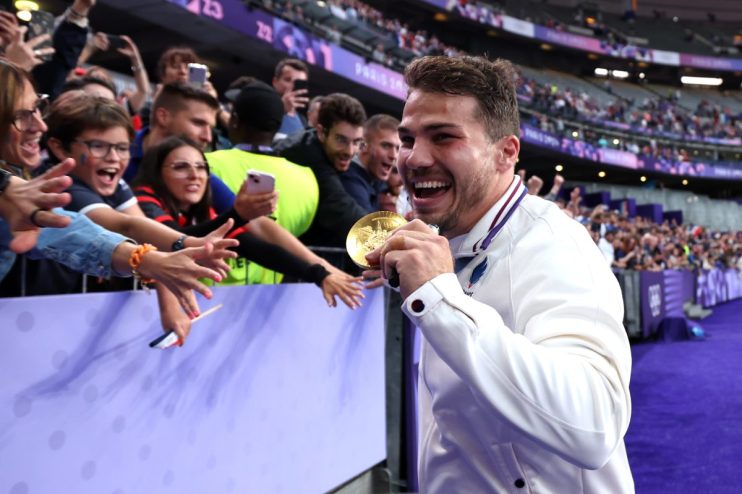
Dan James argues that rugby sevens is a developmental step for some of the best players, and that can be a boon for a struggling sport.
The rugby rumour mill has been turning again, as reports have circulated over the last fortnight that some of England’s young stars – Henry Pollock, Marcus Smith, Tommy Freeman, Henry Arundell and Noah Caluori – could make the switch to sevens before the 2028 Olympics.
Boxing promoter Eddie Hearn’s now-viral suggestion that Pollock “needs to win the Olympics and the World Cup” is again proving that sensationalism is like rocket fuel. It’s an exciting prospect. But also, on current evidence, a fantasy.
Great Britain’s sevens story since Rio 2016 silver has been one of poor investment: fourth in Tokyo and missing out on Paris altogether. Along the way, the programme has been “remodelled” more than once, moving from full-time contracts to a camp-and-competition model, largely because GB sevens receives no central Olympic funding.
You cannot budget your way to a podium finish. Parachuting in five recognisable names for the Olympics themselves, however talented, will not paper over years of structural underinvestment. If GB is serious about LA, it needs a properly resourced, multi-year programme, not a headline-grabbing raid on the Six Nations squad two years out.
Sevens heaven
It gets shakier still on the calendar. The top four qualification spots for LA28 are decided by the Svns World Championship and World Rugby’s own Championship window falls from April to June, precisely when Premiership and URC titles are being decided.
Asking clubs to release title-chasing players for an Olympic qualifier at the sharpest end of their domestic season isn’t a scheduling issue to iron out later, it’s the whole crossover problem in microcosm.
Miss the top four and you’re left with the European qualifiers in June 2027, which clashes with Rugby World Cup preparations. Even then if you don’t win in Europe, GB’s last chance is to finish runners-up and go on to the final repechage in Monaco.
So maybe the real story here isn’t the five superstars at all. It’s whether English, Welsh and Scottish rugby wants to give GB sevens a real crack. Currently sevens and XVs largely exist in different worlds in Great Britain.
Perhaps clubs could work collaboratively with GB sevens by providing non-international Premiership and URC talent for GB camps throughout the season, not just as a favour pre-Olympics. Yes, this isn’t as sexy as Antoine Dupont committing to France sevens, but they were pre-qualified as hosts of the last Olympics.
Development key
This shouldn’t be taken as an argument that we shouldn’t parachute some top-flight talent into sevens. The Olympics is still rugby’s greatest shop window outside of its traditional audience, and its best bet to convert a fan who wouldn’t normally watch a Six Nations weekend.
But this is a call to put real thought into making sevens a viable part of the picture, not hanging our hat on five names who, as it stands, won’t get the opportunity to walk through that door.
Which brings me back to the Square Mile. Caluori, one of the five named England talents tipped to make the swap, pulled on a Saracens shirt at London City 7s last year.
In doing so he proved two things: that Caluori is a generational talent, and that a sevens platform can sit alongside a player’s development rather than compete with it. If we want to build a GB squad that can go for gold, it starts at home. One can dream.
Dan James is founder of the London City 7s, returning to the Honorary Artillery Club on 17 September 2026.