Skip to content
Tuesday 25 August 2026London --:--Frankfurt --:--Zurich --:--
NewslettersSearchEN · DE · FR
MorningWire

European business, markets and politics

FTSE 100
10,854.32
+0.35%
DAX
26,106.60
-0.11%
CAC 40
8,453.01
0.00%
STOXX 50
6,447.98
-0.22%
  • Europe
  • Markets
  • Business
  • Economy
  • Regulation
  • Politics
  • Opinion
More
GermanyFranceEU InstitutionsCompetitionPublic AffairsBankingTechnologyEnergy
  • Germany
  • France
  • Europe
  • Markets
  • Business
  • Economy
  • Regulation
  • Politics
  • Opinion
  • DE
Thursday 06 March 2025 4:39 pm

Rate-setter calls on Bank of England to adopt ‘activist’ approach to rates

By: Ali Lyon

Add as a preferred source on Google
A new paper by the free-market think tank IEA demands the Treasury to broaden its focus from inflation to total spending in the economy – which would account for both economic growth and inflation.
The Bank will be keenly looking over inflation before changing interest rates.

The Bank of England should adopt a more activist approach to setting interest rates in order to deal with the “substantial volatility” affecting geopolitics and financial markets, a rate-setter has said.

Catherine Mann, an external member of the Bank’s Monetary Policy Committee (MPC), argued that rate-setters should be more willing to vote for more radical shifts to monetary policy if its to keep inflation anchored at its two per cent target in the near future.

Speaking to the Reserve Bank of New Zealand, she said: “International spillovers have dominated the signals from UK domestic data and monetary policy actions.

“With substantial volatility coming from financial markets, especially from cross-border spillovers, the founding premise for a gradualist approach to monetary policy is no longer valid.”

At its most recent interest rate vote, the MPC voted to cut the Bank Rate – the UK’s main interest rate which influences almost all other lending in the UK economy – by 25 basis points despite inflation having ticked up to three per cent a few days earlier.

But Mann shocked central bank watchers when she voted for a bumper 50 basis point rate cut having been one of the MPC’s most hawkish members in previous votes. The move was an attempt to “cut through the noise” and send a signal to markets, she previously said.

And in her speech on Thursday she further outlined the rationale behind her decision, saying that while short-term data justified holding rates, longer-term, leading indicators – like the labour market and future consumption – pointed to the need for a hefty 0.5 per cent cut.

“I need to look six to nine months ahead for sources of inflationary pressures,” she said. “Incoming data evidences more extensive weakness in market sector output and consumer demand.”

Mann added that sluggish consumer demand will be a downward force on inflation despite cost pressures being faced by firms. Upcoming policy changes like the hike to employer national insurance contributions and an above-inflation rise to minimum wage in April have led some economists to predict an unwelcome return to steeper price rises.

Recent price shocks to energy and food will also lead to “near-term inflation hump”, she said. But even with all this and the prospect of inflationary tariffs adding barriers to trade, the Bank of England rate-setter argued that weak consumption readings meant firms are “likely to have to absorb the inflation hump rather than pass it through hat is the evidence”.

“These judgements are the rationale for a Bank Rate cut and time will tell whether they are borne out,” she added.

Read more

How patient can the Bank of England be?

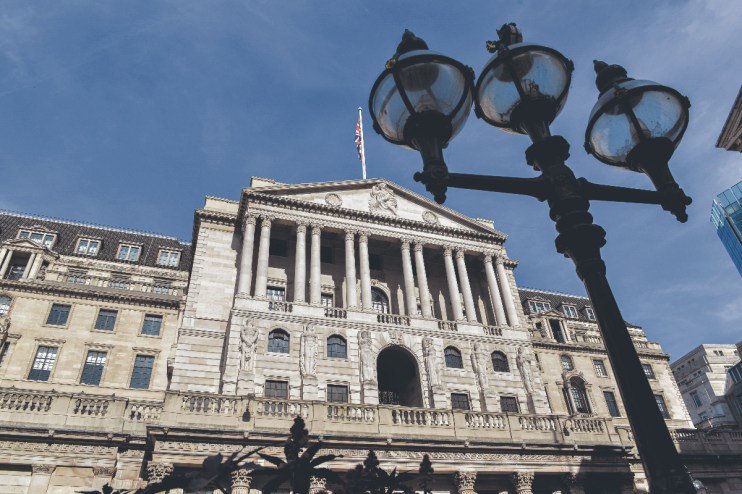
Historic Royal Exchange building in London with modern skyscrapers behind, clear blue sky.

Share this article

  • Facebook
  • X
  • LinkedIn
  • WhatsApp
  • Email

Similarly tagged content:

Sections

  • News

Categories

  • Business

People & Organisations

  • Bank of England
  • Catherine Mann
  • central banking
  • central banks
  • interest rates
  • Monetary policy committee

Trending Articles

  • Can debt-ridden Morrisons become a Big Four supermarket again?

  • Ratcliffe’s Ineos saves Runcorn plant

  • As it happened: Stocks rally; US to unveil ‘economic D-Day’ Iran sanctions

  • Amazon says it buys books in bulk to ‘improve products’

  • HMRC mansion tax inspectors to target homes for property valuations

More from Morning Wire

  • How patient can the Bank of England be?

    AD
    Historic Royal Exchange building in London with modern skyscrapers behind, clear blue sky.
  • Inflation leaps to 2.9 per cent in blow to Burnham 

    Economics
    Burnham cityscape showcasing modern architecture, bustling streets, and vibrant community life in a thriving urban setting
  • El Nino heatwaves to ‘fuel inflation next year’

    Economics
    Firefighter in helmet and uniform watching a blazing forest fire at night, red glow in the sky
  • Rupert Lowe axes pensions triple lock and pledges tax cuts in economic plan

    Politics
    Rupert Lowe, former Southampton FC chairman, smiles while holding files on a city street, wearing a suit and pink tie
  • JP Morgan boss issues bank tax warning to John Healey

    Banking
    JPMorgan Chase CEO Jamie Dimon
  • Lord O’Neill declines job in Burnham government

    Economics
    Jim ONeill, economist and former Goldman Sachs chairman, sitting on a yellow sofa in front of large windows.
  • Labour backbencher adds to criticism of stamp duty on shares

    Politics
    Callum Anderson, a smiling business professional in a navy suit and striped tie against a gray background.
  • UK economy’s rebound fails to stem two years of mass job losses 

    Economics
    LONDON, UNITED KINGDOM - JANUARY 31: The Shard is seen on the horizon as commuters cross London Bridge during the morning rush hour on January 31, 2023 in London, United Kingdom. The IMF reports that the UK economy will contract by 0.6% in 2023, as opposed to the previous prediction it might grow, and will perform worse than many other advanced economies, including Russia.The cost of living continues to hit households with grocery inflation for the first four weeks of 2023 rising to 16.7% which would add a further £788 per year to family food bills. (Photo by Leon Neal/Getty Images)
MorningWire

Independent European business, markets and political news for decision-makers.

Morning Briefing

Europe

  • Germany
  • France
  • EU Institutions
  • Europe

Business

  • Markets
  • Business
  • Economy
  • Regulation
  • Competition
  • Public Affairs

Editorial

  • Opinion
  • Editorial Policy
  • Corrections
  • Contact

Company

  • About Morning Wire
  • Privacy Policy
  • Terms of Use
  • Cookie Policy
© 2026 Morning Wire Ltd · Published by Morning Wire Media, Bahnhofstrasse 65, 8001 Zürich, Switzerland
Privacy · Terms · Cookies · Facebook