Skip to content
Saturday 12 September 2026London --:--Frankfurt --:--Zurich --:--
NewslettersSearchEN · DE · FR
MorningWire

European business, markets and politics

FTSE 100
10,650.44
+0.39%
DAX
25,568.56
+0.82%
CAC 40
8,179.77
+0.78%
STOXX 50
6,325.13
+0.90%
  • Europe
  • Markets
  • Business
  • Economy
  • Regulation
  • Politics
  • Opinion
More
GermanyFranceEU InstitutionsCompetitionPublic AffairsBankingTechnologyEnergy
  • Germany
  • France
  • Europe
  • Markets
  • Business
  • Economy
  • Regulation
  • Politics
  • Opinion
  • DE
Monday 25 April 2022 6:00 am  |  Updated:  Friday 22 April 2022 4:39 pm

Red Wall Conservative voters will abandon Johnson if he backs down on net zero

By: James Blagden

Add as a preferred source on Google
COP26 Summit - Day Three
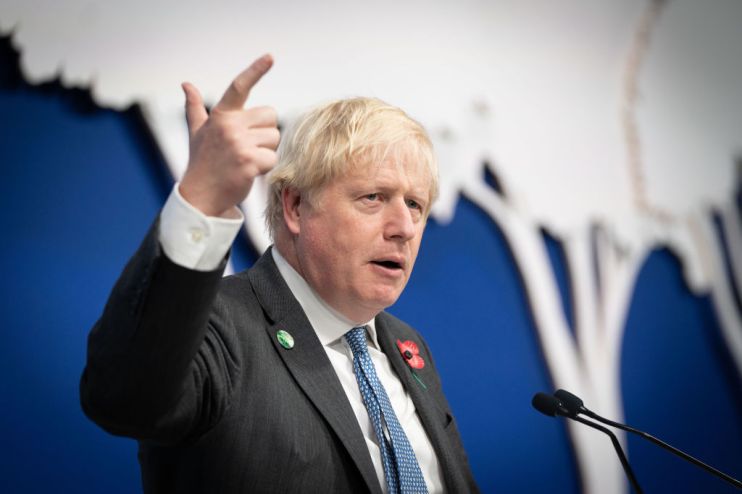
Boris Johnson has been insisting on serious net zero pledges. Breaking the promises the government has made would mean losing voters gained at the last election. (Photo by Stefan Rousseau - Pool / Getty Images)

Barely two years have passed since Parliament unanimously introduced the world’s first legal commitment to deliver net zero carbon emissions by 2050. But with energy prices rising and cost of living pressures tightening, some on the right wing of politics – from Nigel Farage to Steve Baker – are leading a rearguard action to overturn that pledge.

Their argument is twofold: they profess that net zero is pushing up costs on households and that public support for environmentalism is soft. But it turns out these claims are both bogus. Renewables investment over the last decade has actually cut consumer bills, according to previous research done by Onward. But this scepticism towards net zero is also completely out of touch with public opinion.

As Boris Johnson faces down calls to scrap green levies on electricity bills, he is right to stand steadfast against what he called “the prejudice against the green agenda”.

In fact, net zero is so popular that ditching it would cost the Conservatives votes at the next election. Two-in-five 2019 Conservative voters would be less likely to vote for them again if they moved away from the policy. Altogether, we estimate a loss of over 1.3m voters from their 2019 coalition if the party scraps its net zero pledges.

After the last election, Boris Johnson acknowledged that many “lent” their votes to the Conservatives for the first time in their lives. If the government wants to hold onto its majority, it must keep these voters on-side. Yet if the party ran with a promise to remove the net zero target, only 36 per cent of these first-time Conservatives would vote Tory again. In essence, a u-turn on this promise would be a serious electoral misjudgement.

Any assumption that the Conservatives’ working class voters are particularly sceptical about the benefits of net zero is unfounded. Working-class Tories are actually more supportive of investing in renewable energy and more optimistic about new jobs in manufacturing than affluent middle-class Tories. They are also more optimistic that the UK can lead the world in the science and technology needed to reach net zero.

Ministers need to remember that governments are rarely rewarded for breaking their promises. The Conservatives stood at the last election on a net zero platform, as did every other mainstream party. The public would see ditching this platform as “typical” politician behaviour – condemning a government who changes its mind and buckles under pressure.

The recent energy crisis is partly caused by our overexposure to global gas prices. We won’t fix this problem by doubling down on fossil fuels.

Energy security is high on the agenda: the most popular solution is investing in renewables like offshore wind and solar, supported by 68 per cent of people. Additionally, by two-to-one, the public think the conflict in Ukraine means we should move faster rather than slower on net zero. And 68 per cent think that the UK should restrict the import of Russian gas even if it makes bills more expensive.

It’s true, voters are willing to pay to protect the environment, but they don’t want net zero to make them poorer. Investing in renewables, electric vehicles and more energy efficient homes is incredibly popular but, when it comes with a specific price tag, support tends to drop.

Talk is cheap and the concern over cost is valid. But there is a road to net zero that minimises the financial impact on individuals and families, and we need policies that pursue that. Either way, the political case is crystal clear: if Conservatives go back on their promise, they’ll pay the electoral consequences.

Read more

Britain should back the North Sea if it wants energy security and net zero

Oil prices have risen as Israel and Iran tensions escalated.

Share this article

  • Facebook
  • X
  • LinkedIn
  • WhatsApp
  • Email

Similarly tagged content:

Sections

  • Opinion

Categories

  • Opinion

Trending Articles

  • Wetherspoon boss: ‘Not up to Burnham’ to choose who is on the high street 

  • Primark sales slip as owner dresses up retailer for demerger

  • Badger Beer maker Hall & Woodhouse doubles profit ahead of tie-up with James May

  • Crystal Palace owner Blitzer part of £1bn mega stadium redevelopment

  • Barclays faces legal scrutiny over role in £90m ‘Ponzi scheme within a Ponzi scheme’

More from Morning Wire

  • Britain should back the North Sea if it wants energy security and net zero

    Opinion
    Oil prices have risen as Israel and Iran tensions escalated.
  • Burnham will fail unless he pivots on net zero

    Opinion
    Miatta Fahnbulleh speaking at a conference podium with a backdrop of international flags and an attentive audience
  • Net zero and DEI targets cut from procurement rules as firms pressed to raise pay and hire NEETs

    Politics
    Louise Haigh, Andy Burnham, and another man smiling in front of a dark door with 10 visible.
  • Richard Tice: A Reform government would scrap EV mandate to save Jaguar Land Rover

    Opinion
    Reform UK deputy Richard Tice has called for government to have more of a say on interest rates decisions made by the Bank of England.
  • Badenoch bets on experience as Griffith and Tugendhat claim shadow cabinet top spots

    Politics
    Shadow business secretary Andrew Griffith has said he would make it easier for small businesses to open bank accounts. (Photo by Dan Kitwood/Getty Images)
  • Tories say households could save £540 a year by scrapping net zero

    Energy
    Kemi Badenoch speaks, gesturing with hands, while Claire Coutinho listens intently at a table with coffee cups.
  • Khan demands Burnham block Heathrow expansion over net zero

    Aviation
    Sadiq Khan, Mayor of London, in a white shirt, observing plants in a greenhouse or garden, surrounded by foliage.
  • Are Labour Chancellors really still blaming Liz Truss?

    Opinion
    John Healey speaking at a podium with the UK Royal Coat of Arms, gesturing with his left hand during his speech.
MorningWire

Independent European business, markets and political news for decision-makers.

Morning Briefing

Europe

  • Germany
  • France
  • EU Institutions
  • Europe

Business

  • Markets
  • Business
  • Economy
  • Regulation
  • Competition
  • Public Affairs

Editorial

  • Opinion
  • Editorial Policy
  • Corrections
  • Contact

Company

  • About Morning Wire
  • Privacy Policy
  • Terms of Use
  • Cookie Policy
© 2026 Morning Wire Ltd · Published by Morning Wire Media, Bahnhofstrasse 65, 8001 Zürich, Switzerland
Privacy · Terms · Cookies · Facebook