Reducing net migration has superseded the other four of the Prime Minister’s five key pledges

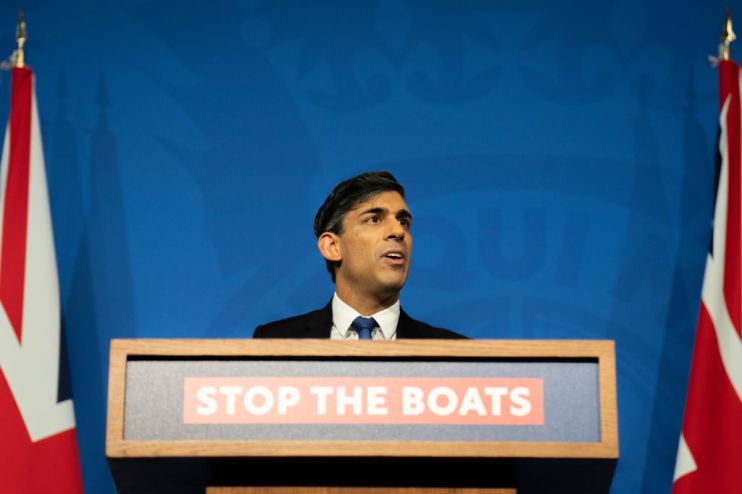
At the beginning of this year Rishi Sunak made five pledges to the country. His government would halve inflation, grow the economy, reduce debt, cut NHS waiting lists and pass laws to stop small boat crossings. But his new plans to curb net migration may end up undermining all of them.
Responding to figures that revealed net annual migration has increased by 745,000, the Prime Minister and home secretary, James Cleverly, unveiled policies that they hope will cut the number of people who qualify for work, student and family visas to just 300,000 per year.
Among the announcements, the Home Secretary promised to increase the minimum earnings to sponsor an overseas spouse’s visa from £18,600 to £38,700. That policy was quickly watered down this week, but the other big change remains. The minimum salary that skilled overseas workers must earn to qualify for a visa will rise from £26,200 to £38,700.
The Home Office exists to control immigration and is entitled to flex policy and manage immigration numbers. Even so, this feels like the tail wagging the dog. The Home Office is good at consulting with employers and finding a solution together that can balance migration objectives against economic objectives. But this didn’t happen here – the changes are being made with no consultation, irrespective of the economic cost.
If the government wants jobs to go to UK workers, it should work with businesses to find and train those workers
We mustn’t forget that employers only sponsor workers when they absolutely have to, because they can’t find the skills, experience or talent locally. The UK’s immigration system is well run but very expensive. Most firms prefer to recruit people already in the UK, but those people must exist, have the skills required and be available. If the government wants jobs to go to UK workers, it should work with businesses to find and train those workers. This new policy won’t mean that vacancies that would have gone to overseas workers will now go to locals; instead, it means that employers will either artificially increase salaries or deal with vacancies going unfilled.
Inevitably, pushing up the cost of skills and labour is likely to have an impact on plans to cut inflation, grow the economy and reduce debt. The government should aspire to increase wages, but this sudden and sharp increase will in some cases mean the costs of producing goods and providing services rise. Higher costs mean higher inflation and, if some employers are priced out of sponsoring foreign workers, they – and consequently the economy more broadly – will find it harder to grow. Debt cannot be reduced without lower inflation or growth. Overseas workers are a relatively small part of the overall economy, but they still matter.
The changes won’t help the government’s commitment to the NHS either. The salary increase won’t apply to health workers (an inconsistency not unnoticed by business leaders), but these crucial NHS staffers will be prevented from bringing partners or children to the UK. Lower NHS waiting lists will mean some people in hospitals are moved to care homes. The policy will make it harder to fill vacancies in those care homes by reducing the pool of candidates that can be hired to single people, or those willing to live away from their family for years on end.
And what of that fifth totemic pledge that the Prime Minister gave? Stopping the boats should mean that ministers are focused on asylum, but instead their red boxes will be full of letters from employers worried about unfilled vacancies and inflation.
Nobody can doubt the Prime Minister’s commitment to his five priorities, but this new policy has just made it even harder to deliver them.
Ian Robinson is a partner with Vialto Partners