Reform surge has reshaped the political landscape

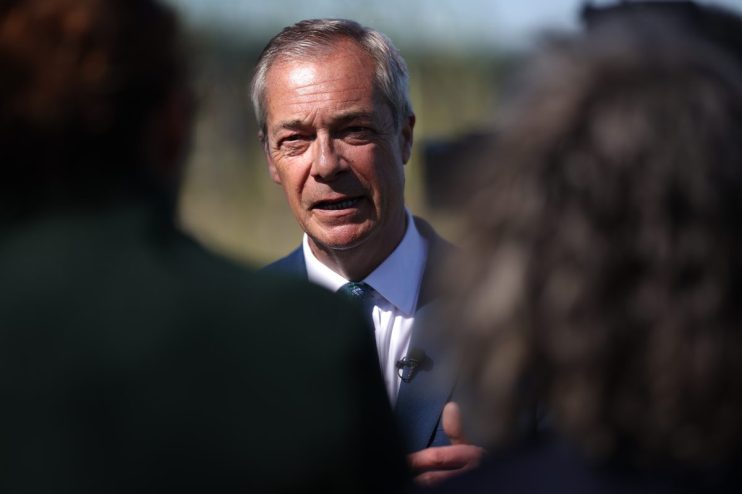
Reform successfully capitalised on voter frustration to achieve success at the local elections. How they handle the levers of power – and how the Conservatives respond – will define politics for years to come, says Brandon Lewis
A few months ago I wrote about how Reform UK’s rise would reshape the political landscape. At the time, their streak of national poll-topping performances was seen as a harbinger for the end of the two-party stronghold, the existential threat of which had not yet fully crystalised. Now, who could have guessed that Reform’s threatening burst onto the political stage would be announced, emphatically, by just six votes?
Reform’s local election success this past Friday saw the fledgling party haul in 677 council seats, four mayoralities, one Member of Parliament, and control of 10 local councils. It confirmed that a seismic shift in politics is well underway; shifting from the two-party system towards a plurality of untested voices, brought to power by people who want change today, not yesterday, nor promised tomorrow.
In this new landscape, politicians will have to contend with the fact that no party, Prime Minster, local councilor, or entrenched leader can take their position for granted. Third-party players are winning votes in ways they haven’t in the past. Uninhibited by connections to a national party’s complicated past, they have become tabla rasas unto which a near-endless array of possible futures may be written.
Nigel Farage’s child-like glee
The much discussed Runcorn and Helbsy byelection saw Labour drop 14.2 per cent of the vote share (from a 52.9 per cent high less than a year ago) to lose by an astoundingly close six votes. The surprising result had Reform leader Nigel Farage perform with child-like glee to the press pool gathered at his feet, six fingers raised for the cameras.
Labour’s response has been to roll out its Prime Minister to assure voters that he and the party “get it”. Rest assured, they say, that frustrations with NHS waiting times, immigration and failing local services are valid but give them more time to deliver. Hardly a confidence-boosting pledge to a voting bloc which has just said that the party’s time is already up.
For Conservatives, the issue runs deeper and is more existential. Already out of power, voter frustration with the party this time around was carried by a form of long-term fatigue. It’s a fact that current leader Kemi Badenoch recognises, writing in the Telegraph that the past decade and a half of Tory control has “sapped morale and resources”. Much will be needed as the country heads into another round of elections and campaigning in 2026. London will see its 32 councils up for election, and the next Scottish and Welsh parliaments will be decided as will those local elections postponed due to local government reorganisation. Already, Reform is showing strong numbers which could lead to even bigger wins next year. In this next stretch, the party must remain focused on reconnecting with voters, rebuilding trust, listening to and answering voters’ frustrations.
In the meantime, May’s recent elections will have real results. The vested authority in councils over housing policy will impact what can be built, when it can, and where. As the housing crisis spreads across the country and the potential impact of US tariffs on materials remains unknown, the situation could worsen if not properly managed.
For now, Reform has made a good showing. The party has made use of the lingering frustrations with Conservatives and of Labour’s unforced errors (see the winter fuel allowance debacle) to their advantage. As they come into contact with the levers of government and operate as a party, rather than a five-member rock band, they will have to make hard decisions. How Reform manages this, and how the Conservative Party reshapes its image, will do much to determine the shape of our political landscape for years to come.
Brandon Lewis is a former chairman of the Conservative Party