Rishi in Grazia and Keir in Vogue: How politicians fell in love with the glossies

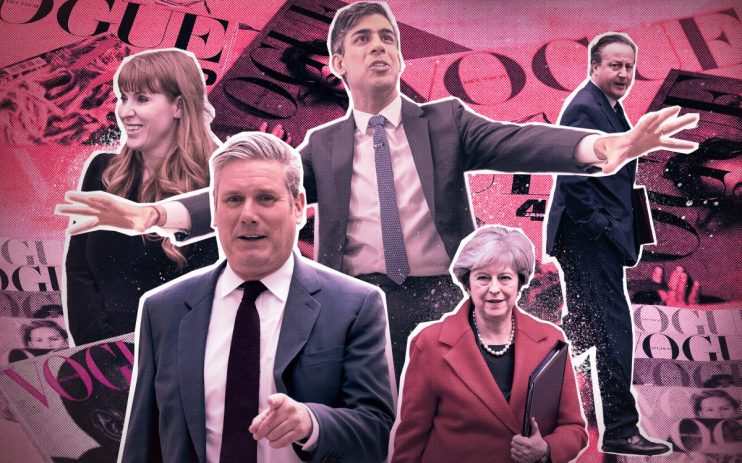
Politicians may love Vogue, but mastering the ‘soft-focus’ feature is a delicate balancing act between relatability and authenticity, writes Anna Moloney
Allow me to take you back to 2006, the heyday of the iPod shuffle, Chico and bootleg jeans. Taylor Swift had just released her first album while X, then known as Twitter, was but a crying babe. And on Youtube, barely two years old, Webcameron had just launched.
Keen to reach out to younger voters, then-leader of the opposition David Cameron began a series of vlog-style online videos. Often filmed from his home, DC would casually drop political slogans while doing the washing up. After all, it was the early dawn of the influencer age where relatability would become a hot commodity – and political PRs would be damned if it were only girl-next-door country singers who were going to profit from it.
While personality politics is nothing new – Labour prime minister Harold Wilson affected a pipe-smoking habit to make him appear more relatable to the public (in private he smoked cigars) – the dawn of the digital age has allowed for a whole new level of intimacy through online media: hence Cameron’s early venture as a lifestyle vlogger. But in this new era it has become all too easy to confuse relatability with authenticity.
Take Rishi Sunak’s foray into Grazia a few weeks ago, where he and his wife Akshata Murty were interviewed on ‘who does the chores’ for International Women’s Day. The Instagram feature, presumably intended to make the multimillionaire couple appear more ‘relatable’ to Grazia’s readership of millennial women, was not well received. Indeed, for once in social media land, unity could be found, with the comments on Grazia’s post coming to a roaring consensus: the interview was tone deaf, out of touch and the fact that the Prime Minister makes his own bed didn’t make him a man of the people.
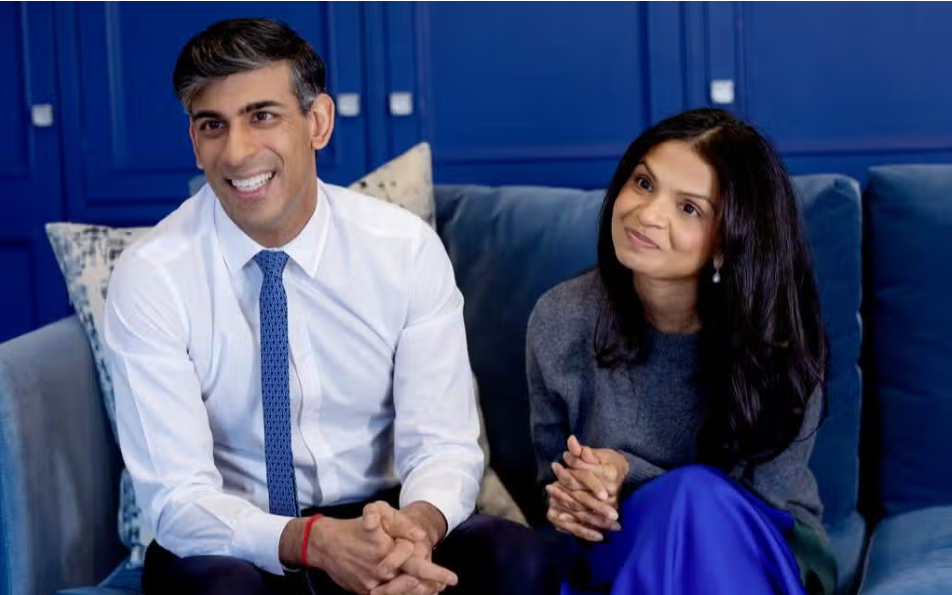
Grazia, which lost almost 1,000 followers after posting the video, later updated the online piece to match the print addition, which included the pointed caveat that the millionaire couple were discussing “how they juggle it, albeit under phenomenally different circumstances to the rest of us: one of them is running the country and their combined wealth of more than £700m no doubt affords them help”. Relatable? Not so much.
But while the media was keen to write the exercise off as an unequivocal failure, Giles Kenningham, the man responsible for running David Cameron’s comms during his time in office, was more enthusiastic. “It may have had some backlash, but it definitely has reached a much bigger audience,” he told me, and that’s what matters during election season.
Sunak is by no means the first politician, or even Prime Minister, to court the glossies, but the focus has shifted noticeably from aspirational to relatable. Vogue has traditionally been a favourite (Margaret Thatcher in 1985 and Theresa May in 2017) but humbler titles have more recently had a look in (David Cameron rejected Vogue but did agree to a spectacular series of video interviews for Heat magazine, including one titled ‘David Cameron on stripping off and wrestling a rat!’, in 2016).
These soft-focus stunts serve as a useful way to round out perceptions of politicians in a way that may appeal to people who might not otherwise closely follow politics. But such pieces can actually be far riskier than straight political interviews, Kenningham, who now runs PR firm Trafalgar Strategy, tells me.
“They’re high-wire acts because they’re more unpredictable,” he says. “You can predict around 95 per cent of the questions which are going to come up in a political interview but you can be caught off guard in these interviews, and they can be some of the most illuminating because of that.” For that reason, of course, they can also be high reward, as its the candid moments that help humanise politicians for voters, who ultimately vote with their hearts not their heads, Kenningham says.
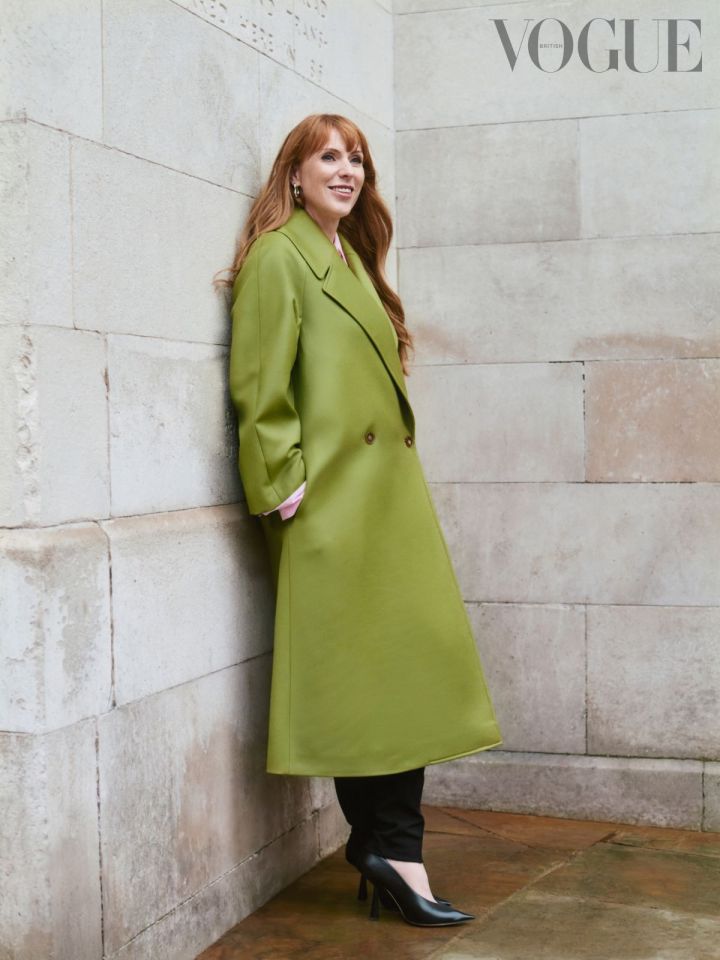
But, while relatability may be in vogue, it’s harder to find in actual Vogue, and that’s been a problem for politicians in search of down-to-earth profiles in its sheeny pages. “A Vogue appearance is rarely anything but controversial for women in politics, but the invitation remains apparently irresistible,” as Guardian fashion editor Jess Cartner-Morley notes. This was certainly the case for Angela Rayner, slammed for her £3,570 outfit in Vogue, while Theresa May’s £1,000 leather trousers for her feature for The Sunday Times Magazine also earned her the expected ‘out of touch’ lambasting.
Dialling down the glamour may seem the obvious solution, but as Kamala Harris proved, that’s not quite satisfactory either. Indeed, Harris’s cover for American Vogue in 2021, pictured in a slouchy pair of Converse, was slammed for being too “casual” for a Vice US President. The consensus was that a political Vogue cover should embody power and statesmanship, not authenticity and approachability, which were the reasons cited by Vogue for choosing the image over a more formal headshot.
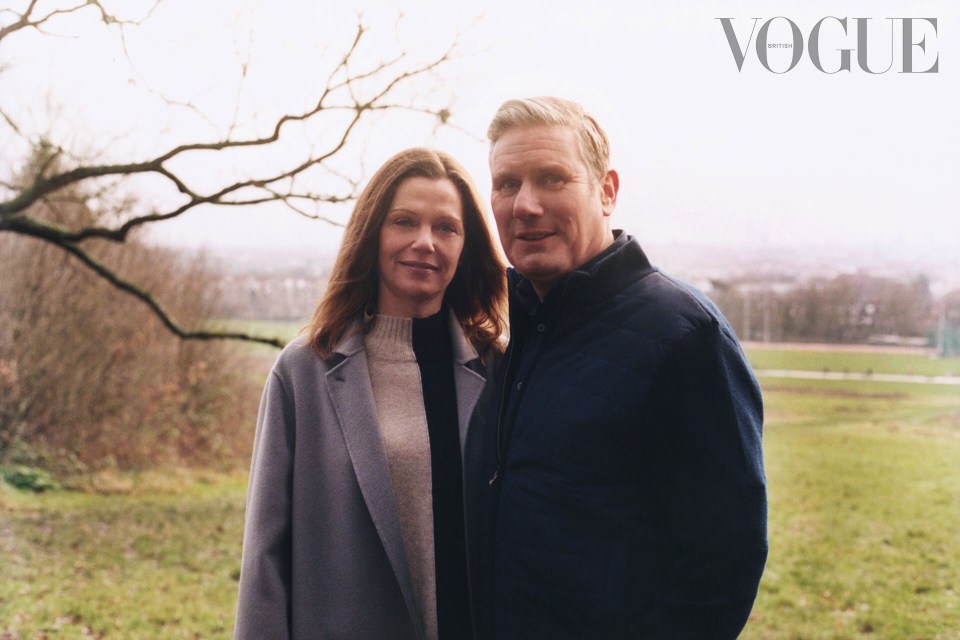
How to make a Vogue shoot down to earth then? Keir Starmer struck a good middle ground. In his recent interview, he swerved the haute couture and opted for a photoshoot of him and his wife wearing anoraks looking wistful atop Parliament Hill near his home in north London. It may have been anodyne but at least it was authentic. And it is this element that proves vital.
When Rishi Sunak tries to convince us he’s doing the washing up and walking the dog just like us, it falls flat, because we know Rishi Sunak is not like us and no one likes being lied to. Relatability may make for a sure sell, but in the digital age it’s got to be genuine or you’ll be caught out: there’s no way Harold Wilson would be able to hoodwink Gen Z into believing he was a pipe smoker. Inauthenticity is fatal in today’s world, and Sunak would do well to remember it.