Rishi Sunak admits Brits face ‘challenging and uncertain’ times after Spring Budget

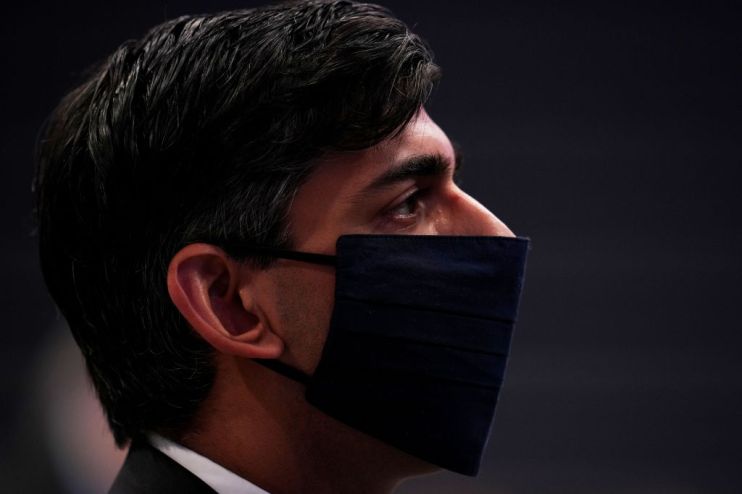
Chancellor Rishi Sunak has said the country is facing “challenging and uncertain” times after official forecasters predicted the biggest fall in living standards on record.
Following his spring statement on Wednesday, the Chancellor insisted the Government was “on the side of hard-working families”.
But Labour said that he had done nothing to tackle the cost-of-living crisis facing households up and down the country.
In his Commons statement, Sunak announced a 5p cut in fuel duty and an increase in the threshold at which people pay national insurance contributions.
Appearing on an LBC radio phone-in on Wednesday evening, Mr Sunak said 70% of people would be better off as a result – despite an impending increase in national insurance rates to pay for the NHS and social care.
“We have got some uncertain and challenging times ahead.”
Rishi Sunak
“This Government is on the side of hard-working British families and we will get through these next challenges together.”
With the war in Ukraine forcing the Office for Budget Responsibility (OBR) to sharply downgrade its forecasts for growth, his deputy, Simon Clarke, denied the country was heading for “austerity 2.0”.
However, he warned public sector workers could not expect pay rises to keep up with rising inflation, which the OBR is predicting will hit a 40-year high before the end of the year.
“We are not freezing public sector pay,” Clarke told ITV’s Peston programme.
“There will be pay increases, but we are not in position where we can start paying out eight, 10, 12%. It would be wildly unrealistic to expect us to do that.”
Clarke also gave a clear signal ministers intend to issue more licences for North Sea oil and gas production as Europe seeks to move away from reliance on supplies from Russia.
“We are determined to unlock more production in the North Sea,” he told BBC2’s Newsnight.
For Labour, shadow chancellor Rachel Reeves said the Government had done nothing to address the immediate crisis and she called on ministers to scrap VAT on domestic energy bills.
“The key thing is to get a grip of inflation,” she told the Peston programme.
“Why are workers on the public and the private sector asking for higher pay? We need to tackle that inflation.”
The OBR downgraded growth in gross domestic product – a measure of the size of the economy – from the 6% forecast for this year at the time of the Budget in October to 3.8%.
Inflation
Inflation is forecast to hit 8.7% in the fourth quarter of 2022 and to average 7.4% over the year, with wages failing to keep pace with rising prices.
The OBR said higher prices – combined with rising taxes – will “weigh heavily on living standards in the coming 12 months”.
Despite a £6 billion cut in national insurance and a previously announced £9 billion package to help with energy bills, “real household disposable incomes per person will fall by 2.2% in 2022-23”, the biggest hit in a single year since records began in 1956-57.
The cost-of-living crisis, driven by fuel and energy prices which were rising even before Vladimir Putin’s invasion of Ukraine, will be exacerbated in April by the 1.25 percentage point hike in national insurance to fund the NHS and social care.
But Sunak unveiled a plan to increase the threshold at which people start paying national insurance contributions (NICs) by £3,000 to £12,570 from July, benefitting around 30 million workers with a tax cut worth more than £330.
He promised further support in 2024 with a pledge to cut the basic rate of income tax from 20p in the pound to 19p – “a £5 billion tax cut for over 30 million people”.
Paul Johnson, director of the Institute for Fiscal Studies, said the Chancellor’s refusal to revise his spending plans would mean less money in real terms for public services due to the impact of inflation.
He said there was little help for “the very poorest” in society who rely on benefits.
“Their benefits will rise by just 3.1 per cent for the coming financial year. Their cost of living could well rise by 10 per cent.”
Paul Johnson, director of the Institute for Fiscal Studies
According to the Resolution Foundation, a living standards think tank, the Chancellor’s measures represented a “big but poorly targeted policy package” which do not do enough to ease the families who have been hit the hardest by the cost-of-living crisis.
The organisation’s chief executive Torsten Bell said this left 1.3 million Britons on the verge of falling into absolute poverty.
He said: “The decision not to target support at those hardest hit by rising prices will leave low-and-middle income households painfully exposed, with 1.3 million people, including half a million children, set to fall below the poverty line this coming year.
“And despite the eye-catching 1p cut to income tax, the reality is that the Chancellor’s tax changes mean that seven-in-eight workers will see their tax bills rise.”
However, Clarke insisted the Government had limited room to manoeuvre and that the additional “headroom” in the Chancellor’s spending plans could quickly disappear.
“We have to be really conscious of the volatility of the situation,” he told the Peston programme.
“We have very little margin for error here. Roughly a 1.3% increase in the cost of borrowing could wipe out all of that headroom.”