Rishi Sunak’s cost-of-living hand out is a classic example of short-term, overburdened Treasury brain

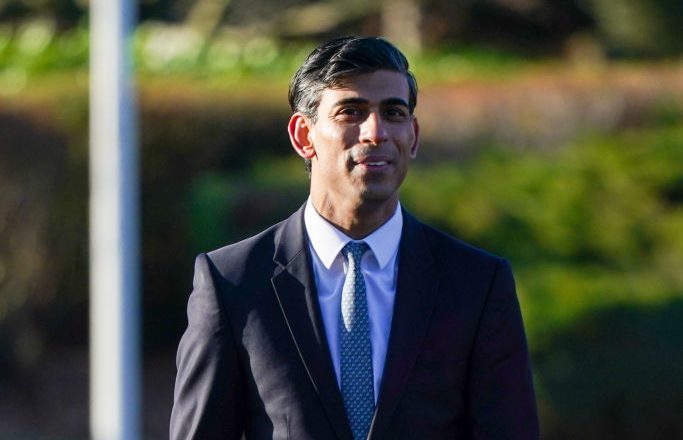
Last week, as the cake crumbs were cleared away and the fizz went out of the champagne, there was a serious announcement from the chancellor, Rishi Sunak. There had been an energy crisis looming, prices set to soar, and the government knew that this would feed into a damaging narrative that the cost of living was too high.
As the energy regulator Ofgem declared that the energy price cap would rise in April to £1,971, meaning an extra £693 for the average household, the chancellor acted to alleviate the pain and give households £350 towards the cost. All direct customers will receive an upfront “grant” of £200, to be repaid in £40 increments over the next five years, and there is to be a £150 rebate on council tax.
The opposition quickly seized on the weakness of this assistance. Most of it was a loan, leading the chair of the public accounts committee, Dame Meg Hillier, to display unusual wit and dub Sunak “the Klarna chancellor”, his policy reduced to “buy now, pay later”. For Sunak, it was a calculated risk. A cost of living crisis will hit key Conservative voters hard, but he runs the risk of looking like he is only able to make short-term knee-jerk responses.
The problem is deeper than that. Sunak is displaying the symptoms of “Treasury brain”, a malady which affects most chancellors but is endemic in this Treasury. The UK is notable for combining almost all economic and fiscal functions in one powerful ministry, and the political chief of that department essentially acts as a valve or bottleneck, depending on perspective, of public spending.
Symptoms of Treasury brain include instinctive parsimony, distrust of large-scale spending projects, a deeply possessive attitude towards taxpayers’ money and, most importantly in this case, appalling short-termism. The response of the Treasury to this sudden hike in the cost of living was to give a moderately generous sum but to make it a loan on strict terms of repayment.
There have been attempts to break the stranglehold of the Treasury on economic and fiscal policy and therefore reduce the impact of Treasury brain. In 1964, Harold Wilson created the Department of Economic Affairs to take charge of long-term planning of the economy and industry, then much in vogue, while the Treasury was left with short-term revenue raising and financial management. The experiment failed: the first secretary of state, the brilliant but drink-sodden George Brown, moved to the Foreign Office after less than two years, and his successors could not match the chancellor of the exchequer for political weight. The DEA was wound up in 1969.
Another attempt was mooted in 2003 by Tony Blair and Peter Mandelson. Codenamed Operation Teddy Bear, this plan was designed to clip Gordon Brown’s wings by separating the Treasury into a much-reduced finance ministry, dealing with macroeconomics, and something along the lines of the US Office of Management and Budget, dealing with departmental spending. It would have been the most radical machinery of government change since the days of Wilson, but Blair stayed his hand and left Brown in place.
Still the “Treasury problem” remains. It simply does too much. Giving one cabinet minister control over economic and fiscal policy as well as departmental spending makes other departments mere fiefs, and the prime minister’s office a kind of non-executive chairman. So long as the Treasury giveth and taketh away, it will be parsimonious to a fault. And its elite status is reflected in the lure it presents for able civil servants; it is also the only department which regularly has two of its ministers in cabinet.
Here is not the place for a detailed schema for reorganising government functions. But while the Treasury squats at the centre of Whitehall like Smaug on his hoard of gold and jewels, we should not expect imaginative or long-term policies to emerge from Great George Street. Most chancellors are tight-fisted unless the political wind is particularly opportune—for example the popularity Rishi Sunak himself built up with furlough and other Covid grants—and Sunak is a very Treasury-brained chancellor.
This is a problem as old as modern government itself. But its solution will come only with hard work and political capital. There is little chance that Boris Johnson or his successor is willing to expend either of those on such an abstruse project.