Rishi Sunak’s fate is cursed by 13 years of the Conservatives’ electoral success

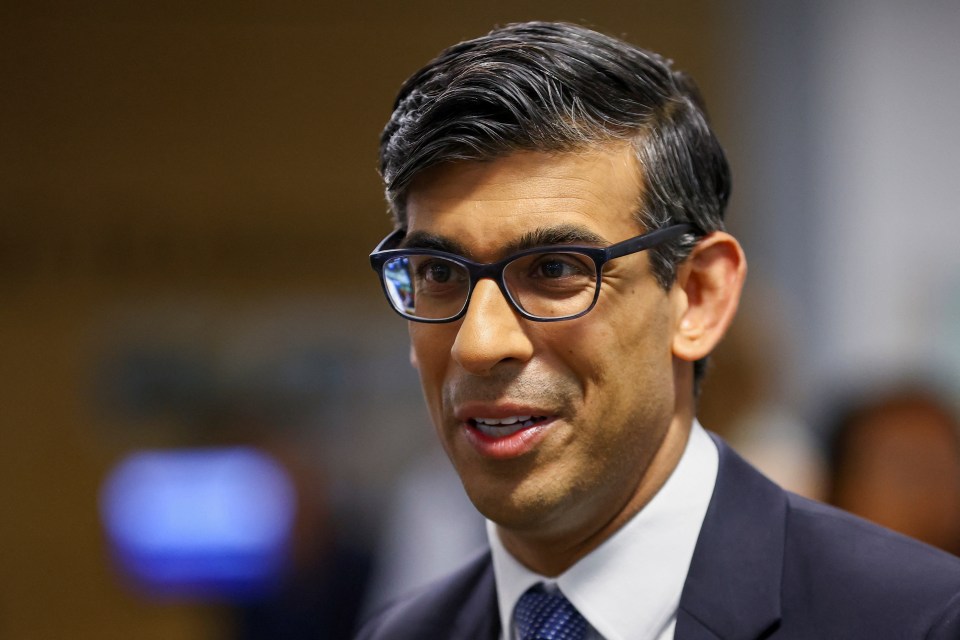
Local elections results are never a prediction for a general election, but still is not Keir Starmer who needs a miracle to find himself in Downing Street pretty soon, it’s Rishi Sunak, writes Will Cooling
Last week much of England went to the polls in what may well end up being the last major test of public opinion before the next general election. On raw numbers, it was a disaster for the Tories, who lost over a thousand individual councillors and ceded control of 48 councils.
You could reasonably conclude that a set of elections which put Labour as the largest party in local government since 2003 would be a triumph for the party. But instead, John Curtice and Michael Thrasher, widely regarded as the country’s top election analysts, used statistical games to suggest that if you instead analyse a sample of council wards to reflect the entirety of the UK, Labour is projected to still fall short of an overall majority at a general election.
Let’s be quite clear – this is nonsense built on stilts. Such projections are useful for seeing how parties’ performance has changed from one local election to another, but local elections cannot accurately predict how people would vote in a general election, nor how such votes would translate into seats. This is because the political dynamics in councils are simply too varied and peculiar to match the two-party race for Downing Street, with minor parties or independents having long done better at local elections. The best evidence for this is that nobody genuinely believes that over a third of the electorate is going to vote for parties other than Labour or the Tories at the next general election, as both Curtice and Thrasher have projected.
This tendency to give the Conservatives more credit than they are due, is based on a flawed assumption that the massive majority won in 2019 would take some kind of miracle to overturn. Much of the chatter around the next election, while acknowledging Labour’s current advantage, still assumes Starmer, like David Cameron, would need a coalition as a staging post for their next government. Only this week, rumours of a pact with the Lib Dems sent the tabloids into a feeding frenzy.
But British politics is no stranger to the type of sudden change in fortune needed to turn Jeremy Corbyn’s defeat into Keir Starmer’s triumph in the space of one election. Unlike the US system, there is little opportunity to entrench local power by gerrymandering or doling out local government jobs to those with the right political allegiances. As recently as the 2015 general election we saw once dominant parties swept away, with Labour losing 98 per cent of its seats in Scotland, while across Britain the Liberal Democrats lost 86 per cent of their MPs.
In other words: it’s very possible for Labour to gain enough seats to secure a working majority. Clement Attlee and Tony Blair both secured more than 140 gains to take Labour from a distant second place into government with massive majorities. They were able to do this because the Tory vote imploded as the party exhausted itself and the public during a long period in office. In both 1945 and 1997 the Tories share of the vote fell by more than eleven percentage points; a fast-receding tide which made it impossible for the party to run an effective defensive campaign to minimise losses. And today’s Tories are currently on pace to lose an even bigger chunk of their previous support than John Major or Winston Churchill.
True, Starmer is no Tony Blair; he doesn’t excite voters in the way the New Labour leader did. But then again neither did Attlee or before him Henry Campbell-Bannerman, the Liberal leader who defeated the Tories in 1906. Attlee and Campbell-Bannerman secured progressive victories over the Tories just as crushing as New Labour. Blair’s personal charisma undoubtedly had a powerful sway on the electorate, but just as important was voters’ exhaustion with a failing government. This is also true of local elections where people across England voted for whichever party was best placed to defeat the Conservatives.
By the time we get to the next election, we will have been ruled by Tory-led governments for fourteen years or more. No party since Lord Liverpool was Prime Minister in the 1820s has managed to win re-election after being in office for thirteen years or longer. It is not Sir Keir Starmer who needs a miracle to be living in Downing Street after the next general election: it’s Rishi Sunak.