Rolling out the welcome map for tourists will pay off for London

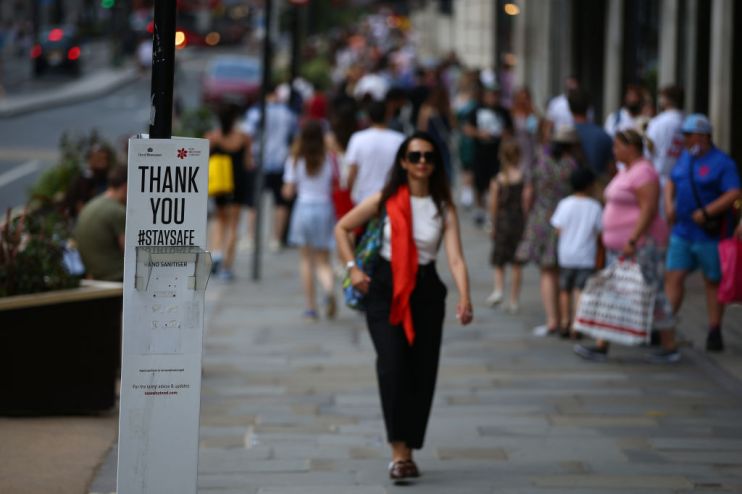
Anyone who has lived in London for more than a few months will have a jaundiced view of tourists. They crowd the pavements and the Tube, they form great queues outside museums and galleries, they book out restaurants and they seem to have a preternatural ability to wander aimlessly in a way which is maximally obstructive. I can’t be the only Londoner to have walked down Regent Street or through Leicester Square in these more sheltered pandemic times and thought, albeit guiltily, “This is… nice.”
Why the guilt? Because tourism matters. Here are a few statistics from the Before-Times: in 2018, 37 million people visited the UK. That’s a tourist for every two residents. The industry supporting them generated more than £200 billion and provided 10% of jobs in the UK workforce. We’re the 10th most visited country in the world.
The pandemic took an axe to all that. Making people isolate, quarantine or simply not travel was a devastating blow for the tourism industry. Visitor numbers fell by 76 per cent and spending by 80 per cent in 2020. That was inevitable, and the government has been supportive: earlier this year, they set up a £56 million Welcome Back Fund to help local authorities prepare for the return of something like normality. But the bald figures show the inadequacy of this: £56 million to help restart an industry worth thousands of times more than that.
Read more: West End boss reiterates calls for extended Sunday trading hours
This month, a report from the Centre for Economic and Business Research drew the problem into sharper focus in relation to the capital. Ongoing Covid-19 travel restrictions, it calculated, will carve £11 billion off the spending from tourism, and London will lose almost £7 billion of that. These huge losses will only be avoided, or at least mitigated, if we see a sharp upturn in visitor numbers over the remaining months of the year.
We need to take this problem seriously. The hospitality industry has been brutalised by the pandemic. Between February and April 2020, when Covid-19 first hit the UK in earnest, its economic output fell by 90 per cent. Think about that. In normal times, that would be regarded as the collapse of an industry. By the beginning of this year, although there had been a recovery, more than half of the jobs in hospitality were furloughed.
What, realistically, can we do to help the tourism industry? We cannot simply rely on the government for more financial handouts: spending is out of control, deficit and debt are unsustainably high, and we cannot live forever with critical industries limping along with state subsidies.
Nevertheless, there are other things the government can do. The most urgent priority is travel. The system of red, amber and green countries to and from which we can travel has been chaotic and illogical: for example, Pakistan is on the red list, while its direct neighbour, India, remains at amber. So the whole system must be overhauled, quickly, to give it three overriding characteristics. It must be easy to understand, it must be driven by comprehensive risk assessment and it must be responsive. Few would argue that it is currently any of these things.
Government and the private sector should also promote domestic tourism. Visit England has pushed the message hard that there are now next to no restrictions on what you can do in this country, and has highlighted the rather clever slogan “Escape the Everyday Responsibly”. Its canny and experienced chair, Nick de Bois, welcomed the recent news of a government-backed £750 million insurance fund for festivals and events and has cleverly used his platform on talkRADIO to raise the industry’s concerns.
A third focus, not just in the immediate term but ongoing, should be for tourist-reliant businesses to diversify and adapt. This is not an easy demand: we all understand that businesses which on the very margins of survival are reluctant to retreat into ‘blue-sky thinking’ or to go anywhere near a sandbox. The government can help, certainly: grants to pursue obviously beneficial projects which will provide supplementary income or a more sustainable economic base. Consultancies might be more proactive too, seeking out opportunities to help the sector and perhaps finding financially viable ways to do some initial work, perhaps with the promise of more to come.
We are in a difficult position. The need is urgent: businesses are struggling to stay afloat. But the answer cannot simply be Treasury largesse, and some reorientation must be done for the long term. So let us try to have a broad-based response, with the government doing what it can directly and using its extraordinarily valuable convening power elsewhere; the private sector co-operating within itself with a view to long-term success; and the public recognising the amazing travel opportunities within the British Isles for a well-needed rest and recuperation.
Tourism has become, in this exceptional crisis, a microcosm of society. We understand the symbiotic relationship we have, the ties that bind. If we pull together, and comprehend that our long-term futures are inextricably linked, we will make the decisions necessary for a survival plan that will help us all.
Read more: London compared: How hard has your borough been hit by Covid-19?