Sadiq Khan could be leading the way in deserting the foolish war on drugs

Those who like to think they take the long view of history will tell you that the “war on drugs” started in 1971, when Richard Nixon declared illegal narcotics to be public enemy number one. Yet its lineage extended far further back than that: in the US, Congress banned alcohol for nearly 15 years from 1920 to 1933. But the combative tone, the idea that we are locked in a struggle against drugs or the drug trade persists. It pervades the language we use, from “beating” addiction to “clamping down” on drug abuse.
Every so often, a political figure or pressure group will edge forward into the spotlight and suggest that there should be some greater nuance to our approach to drugs. These can be minor suggestions, such as non-custodial sentences for possession, or radical ideas, like wholesale legalisation.
There is always a backlash, because the media, following what’s assumed to be the public mood, prefers the chiaroscuro of “drugs are bad” to the sfumato of “well, actually” and a more creative and measured approach.
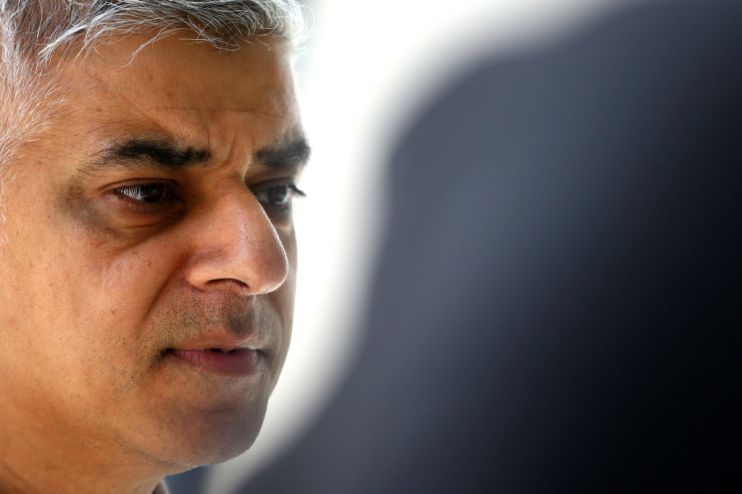
The mayor of London, Sadiq Khan, is the latest politician to step into this debate. Last week he was touring the United States as the capital’s global ambassador, and during his visit to Los Angeles he included a tour of a cannabis factory, or “cannabis dispensary and cultivation facility” in California’s language. Policy in the US is moving quickly: the non-medical use of cannabis is now legal in eighteen states, and decriminalised in a further thirteen. The direction of travel is clear, and it seems only a matter of time until cannabis is a legal and recreational substance across America.
Khan won re-election on a pledge to establish a London drugs commission, and has called for an “evidence-based approach” to legislation and control. Last week he used the opportunity of his visit to Los Angeles to announce his making good of that pledge. Indeed, Khan has asked Lord Falconer of Thoroton, Tony Blair’s lord chancellor and a shadow minister, to chair a review of the status of cannabis (which is a class B drug). The review will not extend to class A substances like cocaine and heroin.
It is always sensible to assay Khan’s public utterances for authenticity. One should note that neither City Hall nor the London Assembly has power over criminal justice, which is reserved to Parliament in England. The mayor, always alive to the chance of publicity, will hope to influence the debate. With due caution, it is fair to agree that a radical and firm proposal from the man with the biggest individual electoral mandate in the country would carry a degree of weight.
He is likely to have noted that regulating the sale and supply of cannabis in Los Angeles has created a new revenue stream for the city government. Here, after all, is a widely used commodity begging to be taxed like alcohol or tobacco. The legalisation has also cut cannabis-related arrests by 56 per cent, no small prize when police budgets and resources are stretched so thinly. The potential gains for a mayor are obvious to see.
Sadiq Khan is not home secretary, so he cannot directly influence public law on drugs, no matter what Charlie Falconer may conclude. The mayor is, however, chair of C40 Cities, a group of mayors of nearly 100 cities organised to tackle climate change. Might it be possible to assemble a similar coalition to address the issue of drugs and drug-related crime on an international urban basis?
Drug policy is an emotive issue. I tend towards liberalisation: it is the criminal context of drugs which has contributed hugely to the harm, and there is no rational basis for banning cannabis while alcohol and tobacco are legal. People should also generally be free to make informed choices for themselves. Whatever your view, it is obvious that the “war on drugs” is being lost, and lost comprehensively. Something has to change.
Khan is offering a possible way forward to this contentious policy area, and this should be cause for celebration. Not always an easy man to trust, the mayor has the opportunity to lead not just a national but an international debate, the chance to show courage and leadership on a problem which affects society from top to bottom. He can ask for the evidence he wants: will he be brave enough to follow through?