Salmond’s independence folly: A Yes vote will damage more than just Scotland

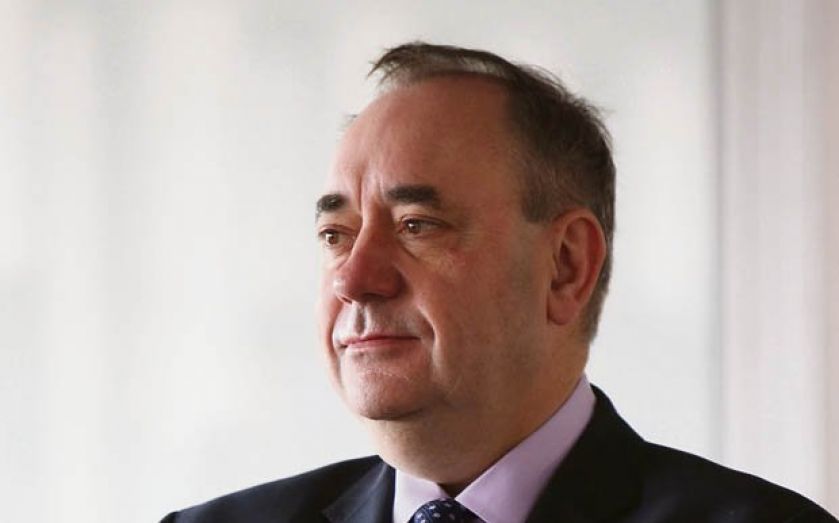
In less than three weeks’ time, we will know the outcome. Will the United Kingdom still be united, or will the 307-year old Union break? In global London, the question of Scottish independence may seem somewhat archaic. But should Scotland go its own way, the implications will be felt well south of Hadrian’s Wall.
To the southern mind, the mere fact that Scotland may want to leave is generally met with a raised eyebrow and slight incredulity. However, anyone who watched the BBC debate between Alex Salmond and Alistair Darling last week would be in no doubt that the discussion is far from cordial. And there are significant weaknesses in the case for independence. It makes little sense for Scotland, and could prove highly damaging for the rest of the UK.
What is the problem? As I argued in a recent paper for the Scottish Research Society, independence has substantial economic risks attached for Scotland, and would likely lead to spending cuts and tax rises – and probably both. Essentially, Scotland’s public sector is too large for the size of its economy, and its fiscal deficit post-independence would be one of the weakest in Europe. And with a highly cyclical economy, dependent on a banking sector larger, relative to GDP, than Ireland’s prior to its disaster, alongside highly volatile oil, the country would be vulnerable to significant negative shocks.
The currency issue offers little reassurance. Much has been made of the understandable refusal of the major British political parties to countenance Scotland’s joint use of sterling. If you ask for a divorce, the inheritance is normally lost. The reality is that none of Salmond’s Plan Bs work. Sure, the Scots could borrow sterling and use it without the permission of the rest of the UK, which is seductive. But without the support of the Bank of England as lender of last resort, the informal use of the pound is fraught with difficulties. These arrangements work until they don’t and, with Scotland’s economy being far more cyclical than that of the UK, any shock south of the border would be greatly magnified in Scotland.
Salmond’s apparent negotiating tactic of “no currency, no debt” shows a further naivety. With 70 per cent of Scottish trade going to the rest of the UK, it would make little sense to adopt such a hostile attitude towards your closest and most significant neighbour.
Joining the euro makes little sense either, although it may well be forced on Scotland as a price of eventual EU membership. Given Scotland’s export dependence on the rest of the UK, introducing exchange rate uncertainty is hardly wise. Further, with just 1 per cent of the EU population, Scotland would have virtually no influence in European chancels.
Scotland, with a geographic share of oil, raised £53bn in taxes in 2012-13. Yet the state spent a staggering £65.2bn, running up a fiscal deficit of over £12bn, or around £5,000 for each household. Government spending represents just over 50 per cent of Scottish GDP, some 5 percentage points higher than in the rest of the UK. A deficit of that magnitude is not sustainable in the long term.
Moreover, Scotland’s economy is inherently highly cyclical. State spending may seem secure, but it is ultimately dependent on tax receipts. Oil revenues will not fill the gap: they are volatile and non-predictable. With the UK economy 12 times larger than Scotland’s, oil makes up a “nice to have” 2 per cent of total UK tax receipts. To Scotland, it is vital. However, this revenue stream has varied between 5 and 22 per cent of Scottish tax receipts over the last 20 years, averaging around 12 per cent. Managing such violent swings, with such a large fiscal deficit as a starting point, would be no easy task. We have estimated that all this adds up to an interest rate premium for Scotland of 50 to 100 basis points, potentially more.
The London reader studying this might be tempted to say “well off you go then”. I would caution against this. While the loss of the Scottish economy would not be significant (it accounts for around 8 per cent of UK GDP), global markets may not be so sanguine. Not only would there be uncertainty over the divorce terms and debt split, but the UK – for all its faults – is considered one of the world’s few safe havens. Witness the capital that flows into London from around the world. The UK’s political standing, especially within the UN and on security matters, would be damaged. If Scotland leaves, there will be shock that such a stable country can split asunder, especially in a world that is clearly fraught with instability.
The Union is a win-win scenario: it is good for Scotland economically and good for England’s global standing. While, from a parochial point of view, Scotland’s referendum may have generated much heat, from a global perspective, creating a new border where there is none can only be considered indulgent hubris in an unstable world.