Skip to content
Sunday 9 August 2026London --:--Frankfurt --:--Zurich --:--
NewslettersSearchEN · DE
MorningWire

European business, markets and politics

FTSE 100
10,901.09
+0.31%
DAX
26,319.45
+0.69%
CAC 40
8,714.93
+0.17%
STOXX 50
6,523.86
+0.33%
  • Europe
  • Markets
  • Business
  • Economy
  • Technology
  • Politics
  • Opinion
More
GermanyFranceBankingAIEnergyFintechPropertyCapital Markets
  • Germany
  • France
  • Europe
  • Markets
  • Business
  • Economy
  • Technology
  • Politics
  • Opinion
  • DE
Wednesday 18 December 2019 6:16 am  |  Updated:  Tuesday 17 December 2019 6:37 pm

Despite its sky-high valuation, the Saudi Aramco IPO was no success

By: Charles Hollis

Add as a preferred source on Google
SAUDI-ARAMCO-ENERGY-MARKET

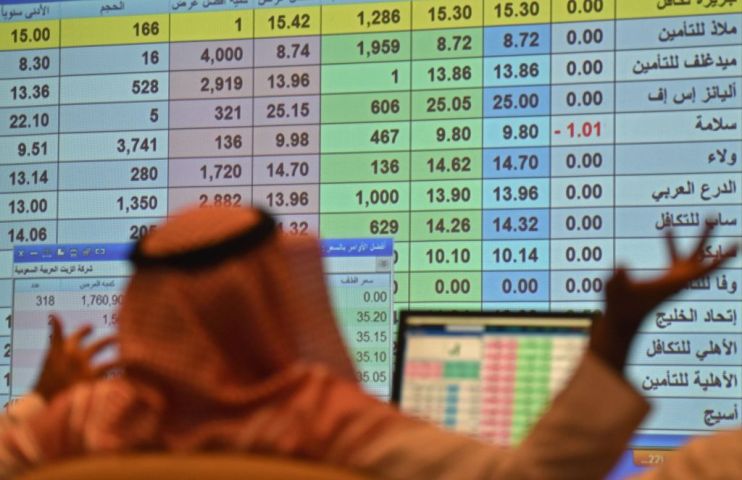
When Saudi Aramco launched its IPO on the Tadawul (the Saudi stock market) earlier this month, it quickly became the world’s most valuable listed company, with a valuation of $1.7 trillion. 

It is now worth more than the next five largest hydrocarbon companies — ExxonMobil, Total, Royal Dutch Shell, Chevron and BP — combined. 

Yet in spite of this, it is difficult to see the IPO as a success. While above the range that most international investors thought reasonable, it was still 15 per cent below the $2 trillion valuation that the Saudi authorities had been hoping for.

There are a number of reasons for the shortfall in Riyadh’s desired valuation, not least interference from the Saudi government to achieve the $2 trillion target, which may have only served to augment international investor concerns. Other reasons will also have played a part, including geopolitical and security risks, environmental pressures on long-term hydrocarbon use, and the dependence of Aramco on volatile oil prices.

Crucially, however, the failure of the Saudi government to be convincing that it was not unduly involved in the company’s operations limited its attractiveness to international investors. Those who are concerned at the level of state involvement may not be reassured by the conduct of the IPO and the support for the share price in the after-market.

Aramco’s target valuation was not set according to any objective measure, but by diktat from Crown Prince Mohamed bin Salman. Four years ago, he made the claim that the company was worth $2 trillion while announcing an intention to sell five per cent to global investors (last week, less than two per cent was listed). 

In the weeks leading up to the IPO, the stock was reportedly promoted through extensive advertising. Though Aramco’s share price surged soon after the business debuted on the Tadawul, the $2 trillion valuation was only briefly achieved — and with significant Saudi government support.

Mohamed bin Salman may have got his way in the short term, but there will be negative ramifications. 

Read more

Revolut founder’s wealth set to balloon amid talks of share award at $500bn valuation

Revolut CEO Nik Storonsky speaking at a business conference, wearing a suit and tie, addressing financial innovation.

The float of Aramco is expected to raise over $25bn — around half of Saudi Arabia’s projected budget deficit for 2020. Much of the proceeds from the IPO have been earmarked for investment in the development of the domestic economy. On the surface, then, Mohamed bin Salman’s ambitious plan for economic diversification, the Saudi Vision 2030, is still moving forward.

However, the float was supposed to be the first taste of foreign investor involvement in the Saudi economy. Ultimately, investment in Aramco was meant to catalyse further foreign investment in the Kingdom. In this sense, the IPO has been failure.

Other moves towards liberalisation continue, such as women being permitted to drive and to eat in the same parts of restaurants as men, and the Kingdom has played host to a number of sporting events, most recently the fight between Anthony Joshua and Andy Ruiz.

But while these kinds of reform are easy to make and play well to international opinion, they do little to provide employment for the estimated 30 per cent of young Saudis without jobs, nor to significantly diversify the economy away from hydrocarbons.

More fundamental changes will be far harder to achieve. The misfiring of the Saudi government’s attempt to open up what is the highest profile investment opportunity in the country for many years raises a question mark over the extent to which the country is capable of making these deep-seated structural reforms. 

For now, Saudi Arabia’s carefully constructed reputation as a free and open investment market may take some rebuilding. 

Main image credit: Getty

Read more

Revolut will become $1 trillion company by 2035, says early VC backer

Revolut London office glass facade with prominent R logo reflecting cityscape, highlighting modern fintech design

Share this article

  • Facebook
  • X
  • LinkedIn
  • WhatsApp
  • Email

Similarly tagged content:

Sections

  • Markets & Economics
  • Opinion

Categories

  • Markets
  • Opinion

Related Topics

  • Saudi Aramco

Trending Articles

  • How Britain can stay clear of rivals as home of overseas sport club owners

  • Why the Loire Valley is about so much more than fairytale castles

  • Why HMRC is huge Premier League transfer window tax headache

  • Thames Water faces fresh threat to survival after pensions regulation breach

  • Back to basics: Sainsbury’s gradual retreat from the British high street

More from Morning Wire

  • Revolut founder’s wealth set to balloon amid talks of share award at $500bn valuation

    Fintech
    Revolut CEO Nik Storonsky speaking at a business conference, wearing a suit and tie, addressing financial innovation.
  • Revolut will become $1 trillion company by 2035, says early VC backer

    Fintech
    Revolut London office glass facade with prominent R logo reflecting cityscape, highlighting modern fintech design
  • Multiply Media Group Expands into Saudi Arabia Through Strategic Partnership with Cenomi Centers and the Launch of BackLite KSA

    Business Wire
  • Exclusive: Wimbledon chiefs ready to defend brand amid Saudi tennis complex similarities

    Sport Business
    A person cleaning the Wimbledon Championships logo, featuring crossed tennis rackets and a ball.
  • Defence drilling firm tools up for London IPO

    Markets
    UK investment allocation is at risk of being overtaken by Europe.
  • London’s IPO lull expected to last into 2027

    Markets
    The London Stock Exchange has had a challenging 2024 so far, although bankers are eying a rebound for IPOs
  • Exclusive: Saudi ship struck by Houthis had insurance from Lloyd’s insurance giant

    Insurance
    Rising borrowing costs depicted amid escalating tensions following the Iran war, illustrating economic impact on global ma...
  • Chrysalis marks down Starling stake again and reduces Klarna holding

    Banking
    Hand inserting a turquoise Starling Bank PCA debit card with Mastercard logo into a brown wallet.
MorningWire

Independent European business, markets and political news for decision-makers.

Morning Briefing

Europe

  • Germany
  • France
  • Europe
  • UK & Ireland

Business

  • Markets
  • Banking
  • Technology
  • Energy
  • Property
  • Fintech

Editorial

  • Opinion
  • Editorial Policy
  • Corrections
  • Contact

Company

  • About Morning Wire
  • Privacy Policy
  • Terms of Use
  • Cookie Policy
© 2026 Morning Wire Ltd · Published by Morning Wire Media, Bahnhofstrasse 65, 8001 Zürich, Switzerland
Privacy · Terms · Cookies · Facebook