Screenshot: Is this the end for impartial TV news?

A weekly column from Morning Wire bringing you all the biggest stories and trends in technology, media and telecoms
This week
**Media Moment of the Week: How not the book the Four Seasons
**Is this the end for impartial TV news?
**UK protectionism: A tech takeover balancing act
Media Moment of the Week
This one’s from last weekend, but it’s such a howler that I just couldn’t resist. As Trump and his Republican supporters continued to make baseless claims about voter fraud, his lawyer Rudi Giuliani decided to call a major press conference at the Four Seasons hotel in Philadelphia.
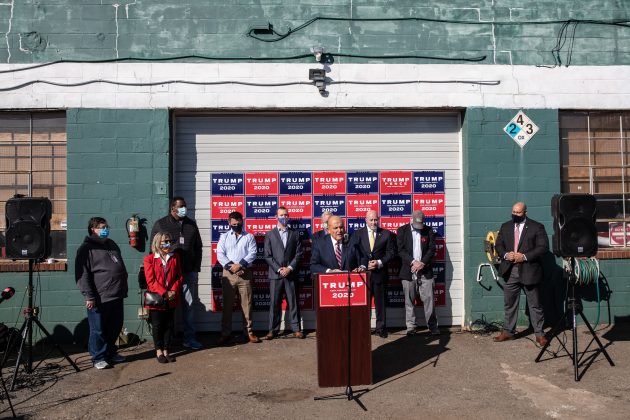
Unfortunately, there was a bit of a mix-up in the Trump camp, and instead of delivering the presser in the luxury hotel, Giuliani was forced to speak to journalists from the car park of Four Seasons Total Landscaping — a gardening company wedged between a sex shop and a crematorium on the outskirts of the city. You literally couldn’t make it up.
Is this the end for impartial TV news?
It’s sometimes said that the UK and the US have their media back-to-front. In Britain, newspapers can happily trumpet their partisan views, while broadcasters are bound by strict rules on impartiality. Across the pond, newspapers have an almost puritanical commitment to impartiality, while it’s the TV channels that get free rein to pick their sides.
All this, though, may be about to change. The government this week unveiled a new panel that will advise ministers over the future of the public service broadcasters — that’s the BBC, ITV, Channel 4 and Channel 5. One of the panel members, former BBC chair Lord Grade, said the UK’s stance on broadcast impartiality was an “anomaly” and a relaxation of the rules was “inevitable”.
Plans are already underway for two new TV news channels in the UK that will shun impartiality in favour of a more opinionated approach. One is GB News, a new ad-funded channel spearheaded by Andrew Neil. The other is a new venture from Rupert Murdoch’s media empire. Details on this are still quite thin, but News UK has reportedly approached Piers Morgan and Alan Sugar about taking up presenter roles.
It’s worth noting that Ofcom’s rules don’t require impartiality so much as balance, meaning broadcasters can air strongly opinionated segments as long as they are offset by alternative points of view. It’s a model that’s become hugely effective for radio stations such as LBC and Talk Radio.
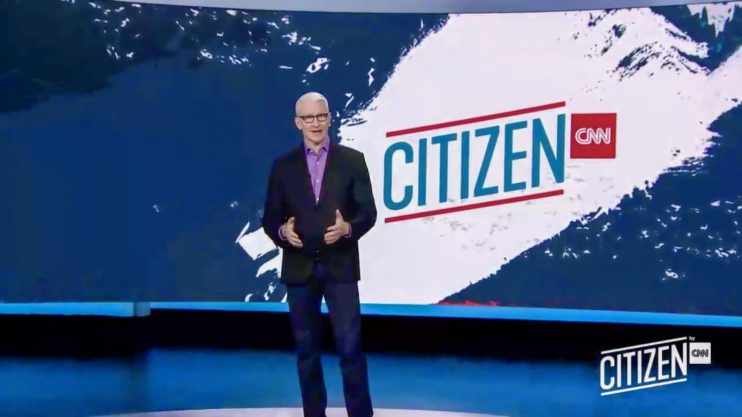
Still, we could be facing a fundamental shift in how we approach TV news. Critics of the current system say impartiality rules are anachronistic in the social media age, and there is a great deal of truth in this. However, the topic needs to be approached with some caution. Fox News has long been the subject of deirison on this side of the Atlantic for its nakedly pro-Trump stance (even if this has faded since the election). But last week’s election also showed the other side of coin, with CNN host Anderson Cooper coming under fire for describing Trump as an “obese turtle on his back flailing in the hot sun”.
There are two issues at play here. First, embracing opinionated news coverage leads to the emergence of US-style celebrity news anchors such as Cooper and Fox’s Tucker Carlson. Is this really who we want delivering our news?
Second, the UK has no newspaper impartiality to fall back on. If we remove the need for TV channels to be neutral, we could end up awash in a sea of opinion.
Of course, there’s a debate to be had over whether media outlets can ever be truly impartial (just look at the furore over the BBC). But if we strip back the commitments to impartiality, there’s a real danger that we’ll only further entrench the culture wars, and be left with one big shouting match.
The tech takeover balancing act
As the tech wars continue to escalate, it seems the UK is opting for a more protectionist approach. The government this week unveiled new laws that will enable ministers to intervene in or block takeovers of British companies by foreign bidders.
The new regulations, which have been described as the “most significant change” to UK merger and acquisition law in several decades, come amid rising concerns about national security and the transferral of British intellectual property to hostile states.
Arguably, the changes have been in the works ever since the government decided to clamp down on Huawei, but several high-profile tech takeovers have recently thrown the issue back into the spotlight. Nvidia’s planned $40bn takeover of Arm, for example, was met with outrage by the company’s own founder, as well as MPs and regulators. Former business secretary Lord Peter Mandelson told Morning Wire the deal was “completely anti-competitive” and accused the government of “waving the Union Jack while selling off the crown jewels”. Concerns have also been raised about foreign involvement in other British giants, including Inmarsat and Imagination Technologies.
While the bill relates to a string of critical industries, tech is undeniably at the forefront of the government’s focus as the booming sector continues to serve as a battlefield in a new industrial cold war.
But the challenge for the government will now be balancing this approach with the need to attract foreign investment, which will be greater than ever in the aftermath of Brexit.
The debate over Huawei boiled down to one fundamental point: did the UK want to prioritise innovation and economic growth or national security? In the case of the embattled Chinese tech giant, it opted for the latter. But with this new bill in place, it seems ministers may be forced to answer that same question time and time again.
The algorithm recommends:
- Netflix has poached ITN chief executive Anna Mallett to lead UK production. It’s the streaming giant’s latest effort to bolster its British credentials after announcing plans to triple its office space in London.
- The Music Venue Trust has named six London music venues that are at “imminent” danger of closing, including Egg in Kings Cross and Windmill Brixton. You can donate to a crowdfunding campaign here to help them survive.
Got a story? Drop me a line at [email protected] or on Twitter