Skip to content
Monday 14 September 2026London --:--Frankfurt --:--Zurich --:--
NewslettersSearchEN · DE · FR
MorningWire

European business, markets and politics

FTSE 100
10,650.44
+0.39%
DAX
25,568.56
0.00%
CAC 40
8,179.77
0.00%
STOXX 50
6,325.13
0.00%
  • Europe
  • Markets
  • Business
  • Economy
  • Regulation
  • Politics
  • Opinion
More
GermanyFranceEU InstitutionsCompetitionPublic AffairsBankingTechnologyEnergy
  • Germany
  • France
  • Europe
  • Markets
  • Business
  • Economy
  • Regulation
  • Politics
  • Opinion
  • DE
Monday 21 March 2022 6:55 am  |  Updated:  Monday 21 March 2022 4:15 am

The second race to be green as cities across the world compete for the best parks

By: Vincent Keaveny

Add as a preferred source on Google
Lidos Reopen After Coronavirus Lockdown
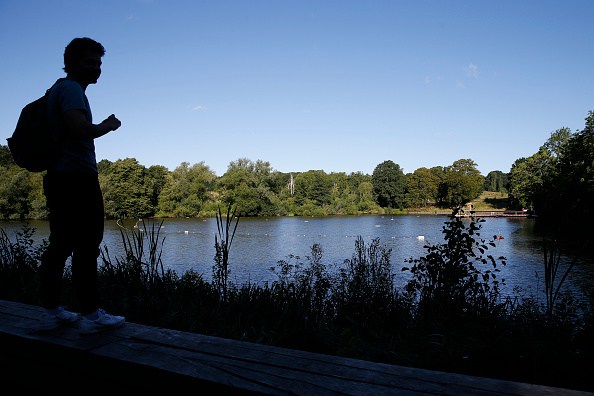
Hampstead Heath is one of the many green spaces managed by the City Corporation. (Photo by Hollie Adams/Getty Images)

Businesses across the world are increasingly focusing on the quality of life  they can offer their employees, as they reassess what is needed to deliver an attractive, modern workplace environment.

We know workers expect more than just an office when it comes to choosing where they relocate in the post-pandemic world. This shift was already happening pre-pandemic, and now this phenomenon is being embraced by some of London’s biggest international competitors.

Some cities in the US, for example, have become creative in constructing green space in urban environments. For example, the Mayor of New York recently announced that the city will be restarting 104 previously paused park projects this spring. And its world-famous High Line, which transformed a disused railway as an urban public park, has become an icon of American contemporary landscape architecture.

London needs to keep pace with this investment in nature and parks to make it a city renowned for its living standards as well as its financial prowess.

The capital’s parks have a gross asset value of more than £91bn, and these green spaces are a key asset when it comes to attracting employers and employees.

Spending time in nature can lead to a dramatic improvement in your wellbeing. Being active outdoors not only improves your physical health – it provides endorphins that boosts your mood, too. The health effects are, perhaps, obvious.

But it is also clear to me that access to outside space is now a leading driver in business location and recruitment decisions.

The capital has 35,000 acres of public green spaces – equivalent to 40 per cent of its surface area – making it one of the greenest cities of its size in the world. These parks, gardens, forest, and woodlands underpin London’s offer as a world class city.

Read more

Britain needs to start designing for drought

London cityscape from Primrose Hill showing dry, brown grass during drought with River Thames and skyscrapers

That’s why the City Corporation manages 11,000 acres of green space in and around London – including Hampstead Heath and Epping Forest – and over 200 smaller sites right here in the Square Mile.

One of those sites, Finsbury Circus Gardens, is the City’s largest – and London’s oldest – public park. Nestled between the thriving transport and commerce hubs of Liverpool Street and Moorgate, the park is about to get a huge transformation after being closed for a decade to allow for Crossrail works.

The garden reopened to the public in August last year and  plans to turn it into a haven for people and wildlife have been given the green light.

City workers and residents will be able to enjoy a new “urban forest” in the west of the park, with a 100-capacity pavilion café – built using low carbon concrete and natural materials – sitting within a “secret garden”, surrounded by new paths, planting, and seating.

City workers returning to the office, residents and visitors will all be able to enjoy a new oasis of peace, quiet and greenery – and businesses will reap the benefit.

As part of the Queen’s Platinum Jubilee celebrations, we also have plans to plant hundreds of trees in London and the south east of England.

My role is to promote London’s position as the world’s leading financial and professional services centre, and to strengthen the City’s competitiveness on the global stage.

But to stay on top of the pile, London needs world-class green spaces to attract and keep the best global talent.

Read more

Moove Raises $250 Million at $2.1 Billion Valuation to Scale the Global Infrastructure Layer for Autonomous Mobility

Share this article

  • Facebook
  • X
  • LinkedIn
  • WhatsApp
  • Email

Similarly tagged content:

Sections

  • Opinion

Categories

  • Opinion

Trending Articles

  • Wetherspoon boss: ‘Not up to Burnham’ to choose who is on the high street 

  • Four interest rate hikes loom despite surprise economic growth

  • Reform hits back at Tory plan to ‘abolish inheritance tax’

  • Lotus, Porsche and Corvette: the best sports cars to buy in 2026

  • Primark sales slip as owner dresses up retailer for demerger

More from Morning Wire

  • Britain needs to start designing for drought

    Opinion
    London cityscape from Primrose Hill showing dry, brown grass during drought with River Thames and skyscrapers
  • Moove Raises $250 Million at $2.1 Billion Valuation to Scale the Global Infrastructure Layer for Autonomous Mobility

    Business Wire
  • Why Albania’s Tirana could be the city break of the future

    Life&Style
    Radisson Collection hotel in Tirana, Albania, featuring a swimming pool, palm trees, and an external fire escape.
  • London doesn’t compete with other UK cities, it competes with global capitals

    Opinion
    London skyline with The Shard, Walkie Talkie, and Gherkin skyscrapers towering over residential buildings and autumn trees.
  • Why Katie Taylor proves sport produces cultural moments

    Sport Business
    Female boxer Katie Taylor picks up her boxing gloves in the ring after a match, with a cameraman nearby.
  • Gloomy outlook: Royal Parks charity bans ‘Optimism Picnic’ in Hyde Park 

    London
    Aerial view of London cityscape with Hyde Park, Serpentine Lake, and surrounding urban buildings
  • The decline of Harvey Nichols is a tale of London’s decline too

    Opinion
    Harvey Nichols department store at night, illuminated with neon signs and colorful window displays.
  • A global tram renaissance is underway. Why isn’t London jumping on board?

    Opinion
    London tram 1925 with Last Tram Week sign in front of the Houses of Parliament and Big Ben, 1952.
MorningWire

Independent European business, markets and political news for decision-makers.

Morning Briefing

Europe

  • Germany
  • France
  • EU Institutions
  • Europe

Business

  • Markets
  • Business
  • Economy
  • Regulation
  • Competition
  • Public Affairs

Editorial

  • Opinion
  • Editorial Policy
  • Corrections
  • Contact

Company

  • About Morning Wire
  • Privacy Policy
  • Terms of Use
  • Cookie Policy
© 2026 Morning Wire Ltd · Published by Morning Wire Media, Bahnhofstrasse 65, 8001 Zürich, Switzerland
Privacy · Terms · Cookies · Facebook