Skip to content
Wednesday 19 August 2026London --:--Frankfurt --:--Zurich --:--
NewslettersSearchEN · DE · FR
MorningWire

European business, markets and politics

FTSE 100
10,744.17
+0.15%
DAX
26,093.50
-0.13%
CAC 40
8,519.70
+0.12%
STOXX 50
6,458.31
-0.15%
  • Europe
  • Markets
  • Business
  • Economy
  • Regulation
  • Politics
  • Opinion
More
GermanyFranceEU InstitutionsCompetitionPublic AffairsBankingTechnologyEnergy
  • Germany
  • France
  • Europe
  • Markets
  • Business
  • Economy
  • Regulation
  • Politics
  • Opinion
  • DE
Thursday 04 May 2023 3:37 pm  |  Updated:  Friday 05 May 2023 10:22 am

Analysis: Shell profits reflect strength of industry as much as soaring oil and gas prices

By: Nicholas Earl

Add as a preferred source on Google
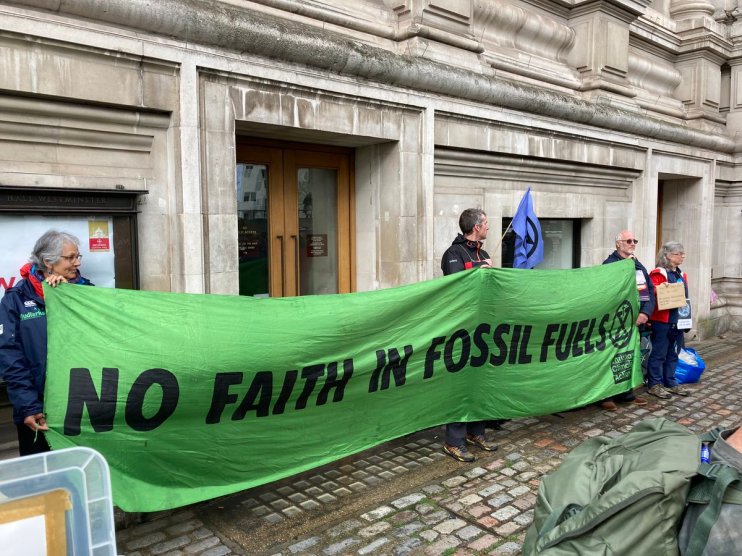
Activists targeted Shell's AGM last year amid pressure on the company to ramp up its climate goals - but Shell's aim has been to please its shareholders

Shell and BP unveiled bumper earnings this week, reigniting Labour’s push for the windfall tax to be tightened.

Labour wants the Conservative government to close so-called “loopholes” in the Energy Profits Levy, which enable energy firms to claim investment relief for new oil and gas projects – a chief aspect of Downing Street’s energy security strategy.

It also wants to use the profits from North Sea oil and gas companies not just to provide support for households and businesses grappling with energy bills, but also to freeze council taxes.

This was a pledge made in the same week as the local elections.

The argument is that if oil and gas giants are benefitting from a windfall, not driven by their own performance, then these profits can and should be harnessed for society’s needs.

The question, however, is whether we really are still in windfall conditions or not – and whether commodity rallies are still driving oil and gas prices.

There is no doubt this was a significant factor in the record profits recorded by Shell, BP and stateside rivals such as Chevron and Exxon Mobil last year.
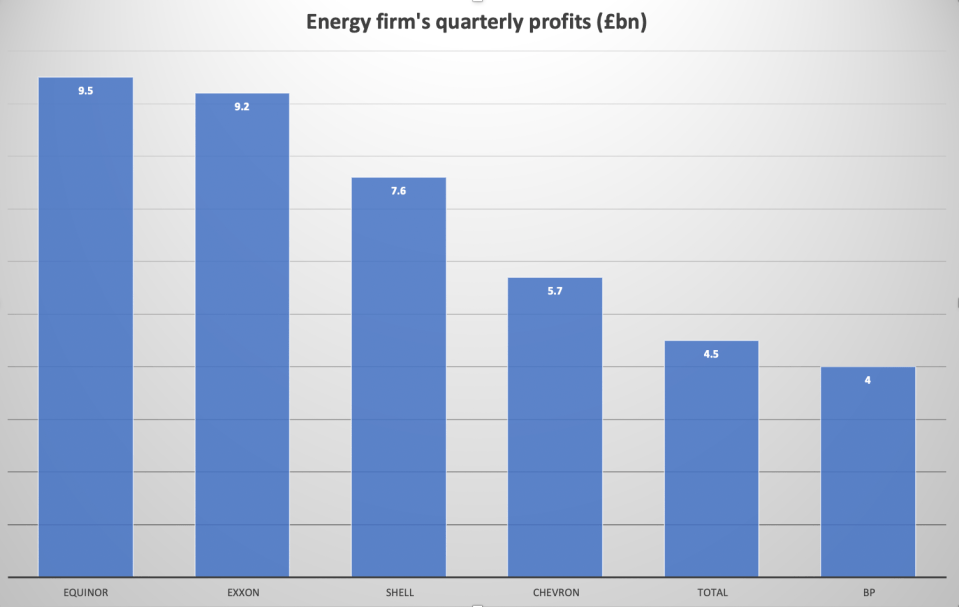
Shell was among the leading profit-makers in the energy sector this quarter

However, oil and gas prices have eased this year – plummeting from historically high peaks last year down to near conventional trading levels.

Oil has dropped to $73 (£58) per barrel – barely half the 14-year high of $139 (£111) per barrel it reached last March – while gas is trading at below 90p per therm, way below the £8 per therm peak it hit nine months ago.

This has seen energy bills mercifully start to decline, with severe drops expected later this year – leading to the prospect of a competitive retail supplier market once again.

It has also meant the performance of Shell and its contemporaries reflect their business decision making and trading expertise as much as conditions.

Read more

Shell launches bumper buyback after earnings more than double on Middle East turmoil

Shell CEO Wael Sawan in a boardroom setting, highlighting his reported £4.5m pay boost under new remuneration policy.

What’s really behind Shell’s mega profits?

Shell plans to hand £9.5bn back to shareholders through dividends and stock buybacks in the first half of this year, which has stoked further calls for a bigger tax raid.

However, Shell’s £7.6bn profits were powered by higher output from the company’s liquefied natural gas division, which has been ferrying supplies into storage tanks across Europe for over a year, contributing to £3.9bn earnings for the integrated gas division.

BP’s £4bn profits were fuelled by smart trading from its gas and oil trading teams, while Chevron and Exxon Mobil both reaped the benefits of long-term investments.

So, while these companies are still making mega profits, it is unclear if they are unearned, or simply reflective of massive companies operating in a generally lucrative sector with high demand, powered by expertise and trading experience.

UK Natural Gas Futures: Gas prices have declined to near conventional trading levels

Fossil fuel companies were powerless in the face of the pandemic to suffer losses, and were equally undeserving of the bumper profits from Russia’s invasion of Ukraine.

However, their profits are now being driven as much by business acumen as circumstance.

So, while a windfall tax was a valid position last year, it is not immediately obvious this is still the case. Rather than toughening the levy, it might be time to consider a price floor – or even removing it altogether.

After all, while international oil and gas companies swallow up the headlines with multibillion pound profits, most of these earnings are not made in the UK. Instead, they are an expression of global businesses operating in dozens of markets.

The companies truly bearing the brunt of the windfall tax are firms that haven’t diversified from the North Sea such as the independent oil and gas traders that are essential for future exploration to meet our energy needs.

Read more

BP quits North Sea after tax grab

North Sea oil terminal with storage tanks and docking facilities under a clear sky, highlighting energy infrastructure.

Share this article

  • Facebook
  • X
  • LinkedIn
  • WhatsApp
  • Email

Similarly tagged content:

Sections

  • News

Categories

  • Energy

Related Topics

  • Energy
  • Shell

Trending Articles

  • Jobless Banquet: Youth unemployment surge ‘sends Neets to KFC’

  • As it happened: FTSE 100 drops as oil prices rise after Trump makes Hormuz threat

  • US bond market jitters spark UK economy recession warning

  • Amanda Blanc has worked her magic at Aviva

  • City law firm sues prominent Emirati business family

More from Morning Wire

  • Shell launches bumper buyback after earnings more than double on Middle East turmoil

    Energy
    Shell CEO Wael Sawan in a boardroom setting, highlighting his reported £4.5m pay boost under new remuneration policy.
  • BP quits North Sea after tax grab

    Energy
    North Sea oil terminal with storage tanks and docking facilities under a clear sky, highlighting energy infrastructure.
  • North Sea is not competitive, says BP boss days after exit

    Markets
    British Petroleum BP forecourt with fuel pumps and company signage visible in a business setting, highlighting energy serv...
  • What Burnham could learn from BP’s pragmatism

    Energy
    BP logo and green lettering on a light background.
  • BP eyes finalising sale of solar arm to Kuwait-backed wealth fund

    Energy
    British Petroleum BP forecourt with fuel pumps and company signage visible in a business setting, highlighting energy serv...
  • Burnham to approve North Sea oil and gas drilling in policy blitz

    Politics
    North Sea oil terminal with storage tanks and docking facilities under a clear sky, highlighting energy infrastructure.
  • Britain should back the North Sea if it wants energy security and net zero

    Opinion
    Oil prices have risen as Israel and Iran tensions escalated.
  • UK borrowing costs surge as Trump declares Iran ceasefire over

    Economics
    Breaking news event coverage with diverse group of people engaging in discussion at a business meeting or conference.
MorningWire

Independent European business, markets and political news for decision-makers.

Morning Briefing

Europe

  • Germany
  • France
  • EU Institutions
  • Europe

Business

  • Markets
  • Business
  • Economy
  • Regulation
  • Competition
  • Public Affairs

Editorial

  • Opinion
  • Editorial Policy
  • Corrections
  • Contact

Company

  • About Morning Wire
  • Privacy Policy
  • Terms of Use
  • Cookie Policy
© 2026 Morning Wire Ltd · Published by Morning Wire Media, Bahnhofstrasse 65, 8001 Zürich, Switzerland
Privacy · Terms · Cookies · Facebook