Skip to content
Monday 10 August 2026London --:--Frankfurt --:--Zurich --:--
NewslettersSearchEN · DE
MorningWire

European business, markets and politics

FTSE 100
10,839.77
-0.56%
DAX
26,350.03
+0.12%
CAC 40
8,711.00
-0.05%
STOXX 50
6,538.45
+0.22%
  • Europe
  • Markets
  • Business
  • Economy
  • Technology
  • Politics
  • Opinion
More
GermanyFranceBankingAIEnergyFintechPropertyCapital Markets
  • Germany
  • France
  • Europe
  • Markets
  • Business
  • Economy
  • Technology
  • Politics
  • Opinion
  • DE
Monday 25 October 2021 4:10 pm  |  Updated:  Friday 12 November 2021 11:09 am

Shipping will not reach net zero without a carbon tax says industry report

By: Ilaria Grasso Macola

Add as a preferred source on Google

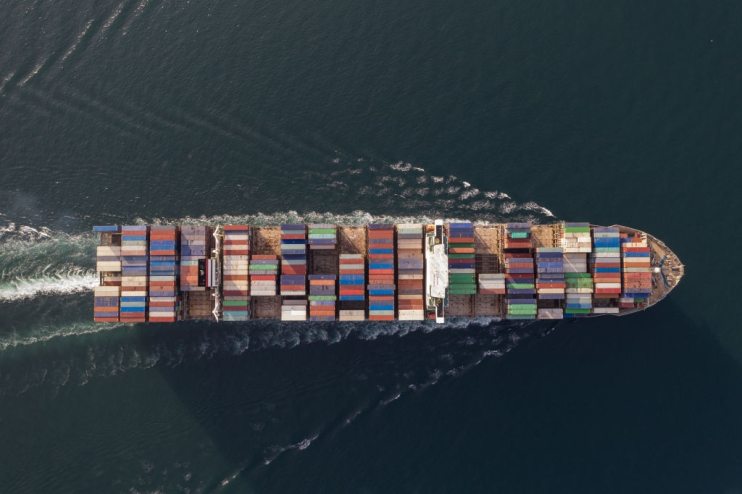
The global shipping sector is going in the wrong direction when it comes to net zero commitments, as it is currently at risk of registering a 20 per cent increase in its greenhouse gas emissions by 2050.

According to a report from Maersk McKinney Moller Center for Zero Carbon Shipping, at the current pace only 22 per cent of the industry will be completely carbon free by 2050. The container industry will lead the transition, with tankers and dry bulk trudging behind.

“The transition doesn’t happen by itself because the ways of decarbonising are more expensive than just continuing to run on fossil fuels,” Bo Cerup-Simonsen, head of the independent Maersk Mc-Kinney Moller Center for Zero Carbon Shipping, told Reuters.

The main challenge for the shipping industry is the price of fuel, as fossil fuels cost usually less than sustainable ones. According to the research, the best way for the industry to reach net zero is to introduce carbon pricing policies. “Carbon pricing can change consumption behaviour by making alternative fuels more attractive compared with fossil fuels,” read the paper.

“[The] introduction of a global carbon levy in 2025 means that the industry needs to act today and if delayed would require even higher levies to achieve decarbonisation over a shorter time period.”

Introducing a carbon levy where funds are earmarked and returned to those who transitioned early would help to close the gap in fuel cost and could produce around $2tn, adding a much lower cost for consumers.

At the same time, a growth in alternative fuel production and a reduction of price should also take place if the industry wants to maintain its 2050 net zero pathway.

“It is a daunting challenge, but we can’t let the complexities and risks paralyse us. As individuals, as leaders and as a responsible shipping sector, we must all play an active role,” added Cerup-Simonsen.

Read more

BP eyes finalising sale of solar arm to Kuwait-backed wealth fund

British Petroleum BP forecourt with fuel pumps and company signage visible in a business setting, highlighting energy serv...

Share this article

  • Facebook
  • X
  • LinkedIn
  • WhatsApp
  • Email

Similarly tagged content:

Sections

  • News

Categories

  • Business
  • Transport & Infrastructure

Related Topics

  • maersk
  • Net zero
  • Shipping

Trending Articles

  • Back to basics: Sainsbury’s gradual retreat from the British high street

  • Thames Water faces fresh threat to survival after pensions regulation breach

  • Hargreaves Lansdown orders staff back to office

  • FTSE 100 Live: Intel, Arm shares slide; Oil climbs higher

  • PwC’s Embankment HQ to get major makeover ahead of Canary Wharf move

More from Morning Wire

  • BP eyes finalising sale of solar arm to Kuwait-backed wealth fund

    Energy
    British Petroleum BP forecourt with fuel pumps and company signage visible in a business setting, highlighting energy serv...
  • What Burnham could learn from BP’s pragmatism

    Energy
    BP logo and green lettering on a light background.
  • Government to inject millions into electric vehicle firms despite mandate backlash

    Politics
    Car bodies on an assembly line in a UK car plant, showcasing EV manufacturing process
  • Energy operator ‘flying blind’ as net zero push threatens hiked bills and blackouts

    Energy
    Energy prices are high due to a range of factors including volatile gas prices and high net zero levies.
  • Britain set to miss net-zero car targets despite record electric vehicle sales

    Transport & Infrastructure
    Electric vehicle charging station with multiple charging ports and cars plugged in, promoting sustainable transportation s...
  • Sizewell B granted 20-year life extension

    Energy
    Sizewell B nuclear power station in Norfolk with clear skies and surrounding landscape, highlighting energy infrastructure.
  • Industry bodies call on Burnham to bring down energy bills to fire up growth

    Energy
    North Sea oil terminal with tankers, storage tanks, and cranes under a cloudy sky, highlighting energy industry infrastruc...
  • Energy minister says AI must ‘bring down bills’ as data centres squeeze the grid

    Tech
    National Grid has raised billions from investors for the energy transition
MorningWire

Independent European business, markets and political news for decision-makers.

Morning Briefing

Europe

  • Germany
  • France
  • Europe
  • UK & Ireland

Business

  • Markets
  • Banking
  • Technology
  • Energy
  • Property
  • Fintech

Editorial

  • Opinion
  • Editorial Policy
  • Corrections
  • Contact

Company

  • About Morning Wire
  • Privacy Policy
  • Terms of Use
  • Cookie Policy
© 2026 Morning Wire Ltd · Published by Morning Wire Media, Bahnhofstrasse 65, 8001 Zürich, Switzerland
Privacy · Terms · Cookies · Facebook