Silvio Berlusconi, the Super League and me: How a visionary English ad exec created the blueprint that changed European football

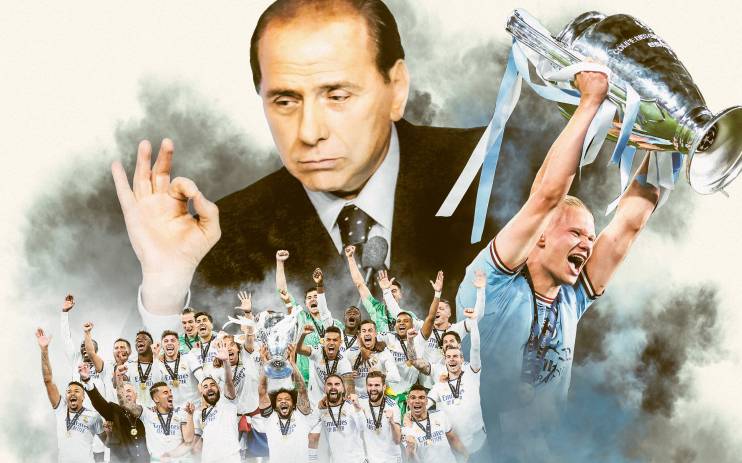
The Londoner who drew up the original European Super League plan for Silvio Berlusconi on working for the former Italian PM, forcing the creation of the Champions League, and where football is heading.
Alex Fynn did not know the shockwaves he was about to send through the European game when he agreed to speak at the launch of the Rothmans Football Yearbook in 1988.
The Saatchi and Saatchi advertising executive, who had carved out a reputation in the game through working with Tottenham Hotspur and the Football League, used his talk to deliver a 10-point manifesto for reform of the sport.
Fynn’s ideas were picked up in the British press and word reached Italy, where they struck a chord with one football club owner: the late media mogul and future world leader, Silvio Berlusconi.
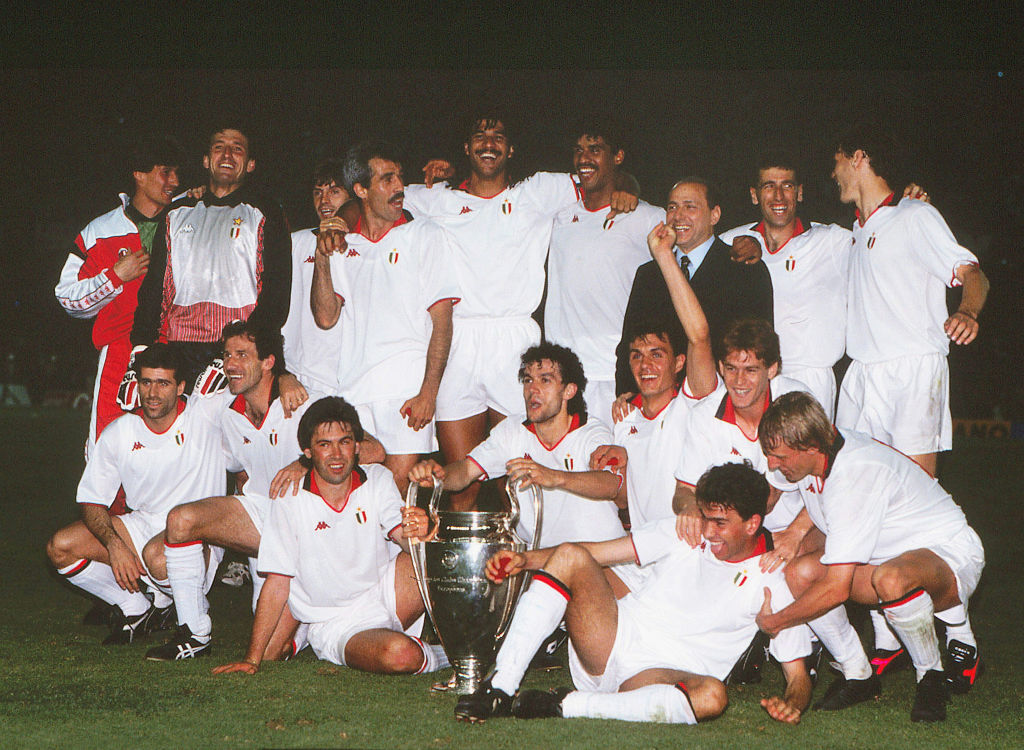
Berlusconi was particularly taken with one of Fynn’s proposals, the formation of a European Super League which would focus on the biggest clubs in the biggest television markets.
The AC Milan owner, who also ran Italian cable TV networks, was already unhappy that the knockout format of the European Cup did not guarantee enough games between top teams for his channels.
His gripe had taken root the previous year when the champions of Italy, Napoli, and Spain, Real Madrid, were drawn against each other in the first round, ensuring one would be eliminated.
Worried that the same fate could befall his club and dent his TV ratings, he later remarked: “It is economic nonsense that a club such as Milan might be eliminated in the first round. It’s not modern thinking.”
Upon getting wind of Fynn’s idea, he contacted Robert Lasagna, the head of Saatchi and Saatchi’s Italian office who would go on to become his campaign manager.
So Lasagna called his colleague in London. “Here’s the job you always wanted. Design a Super League for Signor Berlusconi,” Fynn recalls being told. “And I did.”
His work would shape not only the creation of the Champions League but also foreshadow more recent attempts to launch a breakaway European Super League.
The original European Super League plan
Berlusconi was still a few years off launching his controversial political career, so Fynn had no qualms about working with him and admits he was flattered to be asked.
“At that time, he was an entrepreneur,” he says. “He was an owner of a football club, and he wanted to make his football club the most successful part of his business empire.”
Fynn didn’t have to meet Berlusconi or even travel to Italy. He worked on fleshing out his proposal for a week and then, as promised, sent the two-page document to Lasagna by fax.
The plan was an 18-team European Super League: three clubs from England, Spain, Germany and Italy, two from France and the Netherlands, and one each from Portugal and Scotland.
There were flaws, says Fynn, not least the number of games necessitated, which would create conflict with domestic leagues. But it was enough for Berlusconi to float the idea.
And it bore a close resemblance to the structure of the putative Super League which launched in 2021 and was swiftly abandoned but remains the preferred option of some clubs.
“What I produced was remarkably similar to the breakaway European Super League that we’ve seen,” he says. “The driving forces were the big clubs in the big television markets.”
Berlusconi wasn’t the only football club chief unhappy with the status quo; Rangers secretary Campbell Ogilvie had been petitioning governing body Uefa to guarantee clubs more games.
But the combination of belated heavyweight support for Rangers’ position from Real Madrid and the bullish Italian’s new Super League plan forced the governing body’s hand.
It was “like the sword of Damocles over your infant’s head” for Uefa, Fynn says. “When someone like Berlusconi does some sabre rattling, you have to sit up and take notice.”
How Super League plan spawned Champions League
By 1991, Uefa had reformed the European Cup to include a league element in the form of a group stage which whittled the last eight down to two finalists.
The following year it was relaunched as the Champions League, marking the beginning of one of sport’s most successful brands, which now generates £3bn per year.
“If someone like Berlusconi could demolish the concept of the old-style knockout European Cup, then there had to be a better way,” says Fynn.
“As soon as he announced the plan, it was inevitable that change would happen. And it was inevitable that it would guarantee the big clubs more games and… a television spectacular playing before millions. So I think it was pretty influential as a catalyst.”
Its format has been through several iterations as top clubs have repeatedly applied further pressure on Uefa to increase the commercial returns.
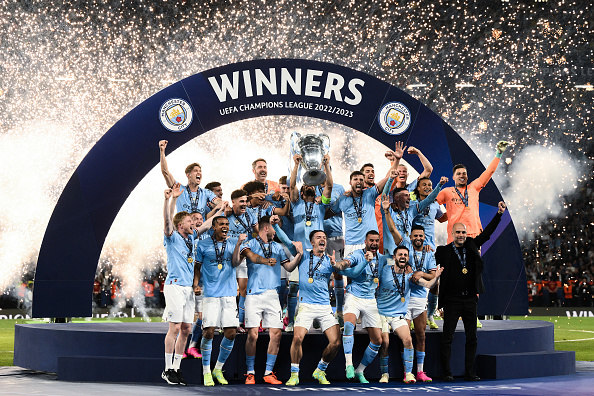
This season’s competition, which resumes this week with the round of 16, is the last before another shake-up sees the introduction of a Swiss model featuring 36 teams in one league.
In recent years clubs have also been given more say in the running of Uefa competitions, forming a joint venture to sell the commercial and broadcast rights.
Yet still the threat of a true European Super League looms. A landmark legal ruling in December has breathed new life into the idea for those who still support it.
Real Madrid and Barcelona are the two vocal proponents of a breakaway, which they believe can help teams on continental Europe bridge the financial gap to the Premier League.
But clubs are equally reluctant to unequivocally rule out ever joining a European Super League as doing so might weaken their hand in future negotiations with Uefa.
Why a European Super League is inevitable
For Fynn, working on the Berlusconi brief also had profound ramifications for his future work in a game undergoing rapid change in the early 1990s.
It was he who the Football Association called on to advise them when the Football League threatened the governing body with a power-sharing deal.
The talks ultimately led to the formation of the Premier League, although the FA ignored Fynn’s advice to retain 40 per cent of revenue from the new competition, now worth £3.5bn a year.
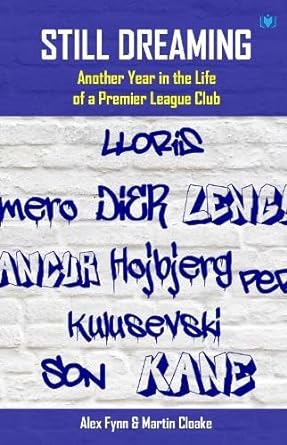
Fynn continued to consult in football, and now lectures and writes books, the latest being ‘Still Dreaming: Another Year in the Life of a Premier League Club’, about Tottenham.
Almost 36 years on from his initial blueprint, and despite the evolution of the club game since, he believes a European Super League remains the logical conclusion.

“However much money the big clubs earn, you can never give them enough. And the European Super League is probably an even better way to earn money. So it’s inevitable,” he says.
“And it’s a monster of their own creation. Because when you have only a handful clubs that matter, with all the money and all the hype, everybody has to have success.
“And the definition of success varies but the common denominators are player wages and transfers. So money is thrown at that. And of course, it will explode out of all proportion.
“I think it will never replace domestic leagues, because merit will always be important, and the best way that merit can be assessed is through winning the domestic league.
“But what it will play to is the big clubs with big squads who can divide their resources, who can prioritise both the domestic league as well as the Super League.”
‘Still Dreaming: Another Year in the Life of a Premier League Club’ by Alex Fynn and Martin Cloake is published by Hawksmoor Publishing.