Skip to content
Monday 14 September 2026London --:--Frankfurt --:--Zurich --:--
NewslettersSearchEN · DE · FR
MorningWire

European business, markets and politics

FTSE 100
10,650.44
+0.39%
DAX
25,568.56
0.00%
CAC 40
8,179.77
0.00%
STOXX 50
6,325.13
0.00%
  • Europe
  • Markets
  • Business
  • Economy
  • Regulation
  • Politics
  • Opinion
More
GermanyFranceEU InstitutionsCompetitionPublic AffairsBankingTechnologyEnergy
  • Germany
  • France
  • Europe
  • Markets
  • Business
  • Economy
  • Regulation
  • Politics
  • Opinion
  • DE
Friday 22 October 2021 6:15 am  |  Updated:  Friday 22 October 2021 12:26 pm

Siri showed us how much we want speech recognition to work – and how bad it can be

By: David Keene

Add as a preferred source on Google
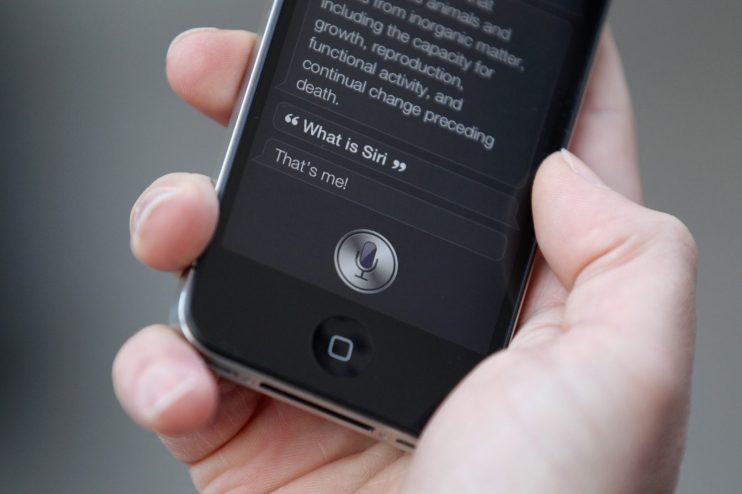
The Apple iPhone 4s Is Released Worldwide
Voice recognition needs to be inclusive, otherwise it will serve no one. (Photo by Oli Scarff/Getty Images)

Ten years ago Apple launched Siri. It was described as a “humble virtual assistant”, using natural language processing to interpret and action voice commands. It was seen as a major step forward for speech and voice recognition, with one analyst describing it as “a powerful harbinger of the future use of mobile devices – not just the power of voice but, more importantly, the ability to contextualise a statement or request”. The announcement was a statement of intent from Apple: that they would be the first to market with this new technology (Amazon and Google were at least a year behind), but would also drive it forward in the years to come.

Fast forward a decade and the company’s lofty ambitions for Siri and its ilk have fallen short of the mark. While many think of Siri when they hear the phrase “speech recognition” they will also likely be aware of the problems it has encountered, whether it be the questions around user privacy or even a glitch that saw it using expletives. However, the most prevalent issue with Siri is depressingly simple: it fails to understand everyone.

As a result, consumer speech recognition has mostly failed to live up to the hype. Many are left wondering whether it will ever deliver for everyone. We  laugh at a parrot ordering items on Amazon through a virtual assistant, but in reality, this is an egregious failure and can have devastating consequences – such as the Irish woman who failed an English exam and was denied an Australian visa when an automated oral test was unable to recognise her accent. In the years to come, speech recognition will play an increasingly important role in our personal and professional lives, but we need to ensure that this benefit is truly felt by all.

Obviously, understanding is everything – however, achieving it is no mean feat. In the last decade, major breakthroughs have been made. But there is an inevitable bias given who trains Siri: white English speaking men. Simply put, we need a wider representation of voices in our datasets.

Recent developments have aimed to address this. Most machine learning algorithms need a human to “label” data in order to train it to identify patterns – thus a machine learning algorithm knows that when it sees something with a similar label, it can assume those things are related. Self supervised learning is this same process, but without the need for human intervention. This means the sources of data available to self supervised engines are massive compared to their supervised counterparts, as they don’t need to be categorised beforehand – they can process far high quantities and more diverse datasets. 

All of the big tech players are acutely aware of the value in speech recognition innovation. The UK’s challenger to Silicon Valley, Cambridge has proved a valuable source for them. Since the launch of Siri, Apple has snapped up VocalIQ, Google bought Phonetic Arts and Amazon acquired Evi Technologies. These moves are a clear indication of the huge commercial opportunity.

While “good enough” may have been acceptable when Siri was first introduced, we should now be light years ahead. It’s now likely others will win the race.

Read more

Google backs publisher model as Apple considers price tag for news

AI copyright laws

Share this article

  • Facebook
  • X
  • LinkedIn
  • WhatsApp
  • Email

Similarly tagged content:

Sections

  • Opinion

Categories

  • Opinion

Trending Articles

  • Wetherspoon boss: ‘Not up to Burnham’ to choose who is on the high street 

  • Badger Beer maker Hall & Woodhouse doubles profit ahead of tie-up with James May

  • Four interest rate hikes loom despite surprise economic growth

  • Primark sales slip as owner dresses up retailer for demerger

  • Lotus, Porsche and Corvette: the best sports cars to buy in 2026

More from Morning Wire

  • Google backs publisher model as Apple considers price tag for news

    Media
    AI copyright laws
  • England stars back player-led calls for Fifa president Infantino to quit

    Sport Business
    Gianni Infantino speaking with a man in a chefs jacket at a formal event
  • Treasury sought to cap motor finance payouts, court filings claim

    Banking
    Rows of new and used cars parked at a dealership lot, ready for sale.
  • Are Labour Chancellors really still blaming Liz Truss?

    Opinion
    John Healey speaking at a podium with the UK Royal Coat of Arms, gesturing with his left hand during his speech.
  • Healey wants to focus on the future but business is haunted by past mistakes

    Business
    A bald man in a suit speaking at a podium with the Royal Coat of Arms, flanked by two ABB industrial robots.
  • Fed chair Kevin Warsh faces Jackson Hole D-Day

    Economics
    Kevin Warsh, former Fed Governor, in a suit and blue tie, attending Jackson Hole meeting.
  • Silence Therapeutics Announces Pricing of Upsized $175 Million Underwritten Public Offering

    Business Wire
  • FTSE 100 Segro agrees to £14bn takeover by Prologis

    Property
    David Sleath, Chief Executive Officer, delivering a speech at a business conference with a focused expression.
MorningWire

Independent European business, markets and political news for decision-makers.

Morning Briefing

Europe

  • Germany
  • France
  • EU Institutions
  • Europe

Business

  • Markets
  • Business
  • Economy
  • Regulation
  • Competition
  • Public Affairs

Editorial

  • Opinion
  • Editorial Policy
  • Corrections
  • Contact

Company

  • About Morning Wire
  • Privacy Policy
  • Terms of Use
  • Cookie Policy
© 2026 Morning Wire Ltd · Published by Morning Wire Media, Bahnhofstrasse 65, 8001 Zürich, Switzerland
Privacy · Terms · Cookies · Facebook