The small state game changer: We can transform Britain forever in four stages

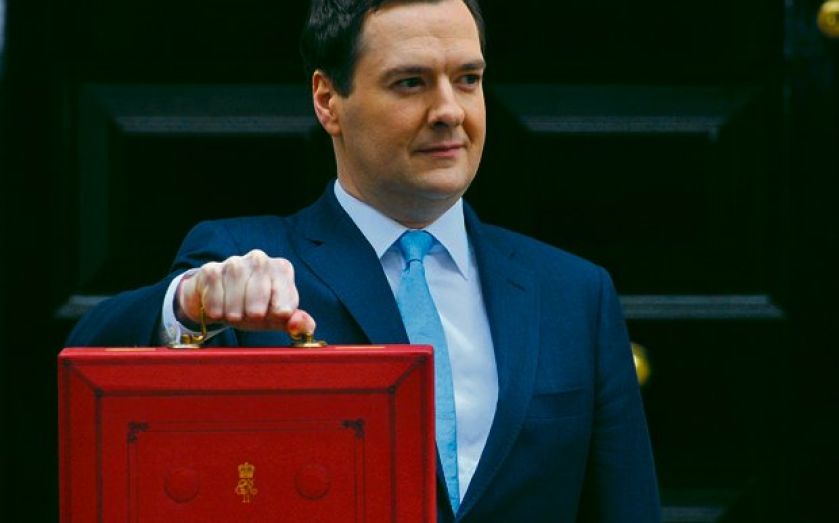
HOW DO you fashion a small state when there’s a huge deficit and a majority of the political and media class howl at the mere suggestion of less public spending? The chancellor’s answer is to slowly reduce public spending towards 40 per cent of GDP, and his Budget next month is unlikely to deviate from this course. So in other words, you get a smaller state but not a small one. Tax reductions are blocked economically by the deficit, and politically by the challenge of which schools and hospitals to shut to finance them. That’s the impasse we’ve reached.
And it gets worse. Supply-siders (like me) who argue that tax reductions will lead to dynamic behavioural effects – due to the increased incentive to work, save and invest – have a chink in our armour. Our weakness is that small marginal changes in taxation don’t have significant behavioural effects. Why should they? A penny off income tax or national insurance isn’t going to cut the mustard.
You have to think a whole lot bigger to yield the supply-side boost, which raises economic growth in the long term. And that’s the problem. How can you think big when money is so short? And if you can’t think big, how can you show the supply-side gains, quickly and powerfully enough, to really make the case for a smaller state? Game, set and match for big government? Not so fast. There’s a game changer out there.
There is a radical Budget strategy staring us in the face, which could finance huge tax reductions without raising the deficit or closing schools and hospitals. The solution lies in the world of so-called tax expenditures and reliefs. In particular, it lies in one of the most expensive of them all – tax relief on pension contributions, which costs a cool £42bn per annum if you add together reliefs on income tax (employer and employee contributions) and national insurance (employer contributions). Stephen Herring of the IoD first planted the seed of this idea into my mind.
There are three particular attributes of pension relief which make it a very powerful tool for reform. First, £42bn is a big number. Second, removing pension relief and reducing taxes puts money into people’s pockets now. Supply-side effects and faster growth then top-up pension payments in the long term from a more dynamic and faster-growing economy, with higher incomes and returns on investment. Third, tax relief for pensions disproportionately favours higher income households, and so reform is easier to sell politically.
There are four stages to the game changer strategy. First, tax relief on pensions is progressively withdrawn (with transition arrangements). In the wake of this withdrawal, deep cuts in income tax are introduced. You could spend £30bn per annum reducing the standard rate of income tax from 20 per cent to 15 per cent, and the higher and top rates of income tax down to 30 per cent, from 40 per cent and 45 per cent respectively. I’m merely using these examples as an illustration of how radical the chancellor could be.
Once these big and popular tax cuts are introduced, there would then be more political cover to press ahead with deeper reductions in tax expenditures and reliefs, of which there are over 1,000. Some of these are untouchable, such as the personal allowance or zero-rated VAT. But an across the board trim of all tax expenditures and reliefs could easily yield £6bn per annum. Stage Two raises the potential tax reductions to £48bn per annum. At this point, you can begin to abolish certain taxes altogether, such as inheritance tax. You could also move towards a lower rate of corporation tax than in Ireland.
Stage Three arises from an accelerated reduction in public spending. But this doesn’t kick in until the tax reductions have been in place for a couple of years. Remember that overall public spending is falling by less than 1 per cent per annum in real terms. Austerity isn’t that austere. We can surely squeeze another 1 per cent per annum out of public sector productivity with a fundamental root and branch re-appraisal of what it should or shouldn’t be doing. With total public spending over £700bn, a further 1 per cent per annum yields almost £7bn for tax reductions, without any deterioration in the deficit.
Stages One, Two and Three have found £55bn per annum. Stage Four is the final element of the strategy, when the positive supply-side benefits of deep tax cuts begin to increase the underlying potential growth rate of the economy. Caution would need to be applied here but, three to five years after these deep tax cuts, potential GDP growth should be on the up. Moreover, stronger growth would also necessitate other supply-side reforms to further boost the growth rate. The end result would be a public spending-to-GDP ratio falling towards 33 per cent in the early 2020s, which would further accelerate potential output growth. With the state down to a third of national income, the promised land of a flat tax world would then be close at hand. Impasse, what impasse?
Graeme Leach is director of economics and prosperity studies at the Legatum Institute in London.