Skip to content
Sunday 13 September 2026London --:--Frankfurt --:--Zurich --:--
NewslettersSearchEN · DE · FR
MorningWire

European business, markets and politics

FTSE 100
10,650.44
+0.39%
DAX
25,568.56
+0.82%
CAC 40
8,179.77
+0.78%
STOXX 50
6,325.13
+0.90%
  • Europe
  • Markets
  • Business
  • Economy
  • Regulation
  • Politics
  • Opinion
More
GermanyFranceEU InstitutionsCompetitionPublic AffairsBankingTechnologyEnergy
  • Germany
  • France
  • Europe
  • Markets
  • Business
  • Economy
  • Regulation
  • Politics
  • Opinion
  • DE
Tuesday 29 March 2022 12:15 pm  |  Updated:  Tuesday 29 March 2022 12:30 pm

A snap legislative change to isolate P&O exposes the holes of employment law

By: Elena Siniscalco

Add as a preferred source on Google
Government To Close Minimum Wage Loophole
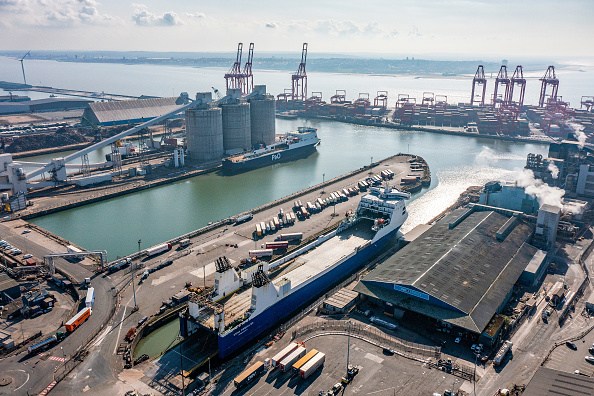
General view of P&O ferries Norbay and Stena Forecaster at Gladstone Dock on March 28, 2022 in Liverpool, England. The UK government will introduce legislation in the House of Commons this week to close the loophole that allows Ferry operators to use UK ports but register their vessels overseas and pay crew less than the minimum wage. (Photo by Christopher Furlong/Getty Images)

First came the heavy-handed sacking of 800 workers via Zoom. Then followed the unnerving performance of P&O chief exec Peter Hebblethwaite in front of a parliamentary select committee. The P&O saga has been a total mishap. Now, Transport Secretary Grant Shapps has vowed to change the laws and make it illegal to pay employees below minimum wage in international waters for all ferry companies operating from UK ports. P&O sacked its seafarers to replace them with agency workers that could be paid as little as £5.15 per hour, by Hebblethwaite’s own admission.

Many have applauded Shapps’ plans to close this loophole – and they’re right to. If companies are able to cut corners, they will do so in an attempt to keep costs down. It is up to governments to bring in legal change, rather than businesses to anticipate it, even if it is in their interests to continually look to the future. But we shouldn’t ignore the fact it comes only after a scandal and the accompanying brouhaha. This has always been the problem with reactive policymaking, and one that has persistently plagued this government. Legislating only in the wake of a bad outcome is no way of running a country; the law is not there to fix things, but to deter and avoid episodes like this from happening in the first place.

Ministers are worried if the law is not changed, P&O’s decision will cause a domino effect, with other companies following suit to stay competitive. But P&O’s behaviour can be explained by a legal environment that has allowed questionable loopholes and practices such as fire and rehire to flourish. New laws will be specifically targeted at seafarers working in international waters. If and when they come through, they might bring some relief to workers in a largely inequitable industry. But the problem is more widespread than just on the high seas.

Often, employers will happily break employment law with the proviso they’re prepared to pay the compensation for it, according to Richard Woodman, an employment lawyer at Royds Withy King. To put it simply, employers regularly sack people and pay them off. The approach is common in financial services, in particular with the bulge bracket investment banks, according to Tom McLaughlin, an employment lawyer at BDBF. Banks rarely conduct a full redundancy consultation process; they often put employees “at risk” of redundancy and then offer a settlement agreement. P&O is not an isolated case; the reason why we find it shocking is because it was done so brazenly, without any notice or appropriate consultation with the unions.

Workers have their unions and their employment tribunals. But neither  have a great record of reinstating employees in their jobs. The three outcomes available are reinstatement, reengagement or financial compensation. Some people would want the latter, but for those who want their old job back there are strict feasibility tests to be met. This leaves space for the employer to simply argue that the bond of trust between employer and employee has been breached, and that a professional relationship would be impossible to reinstate. In other words, it gets employers off the hook.

The problem with the P&O case, then, goes well beyond the issue of minimum wage. It’s worth asking ourselves whether employment law, which can be broken so easily without fear of repercussions, is good enough law to begin with. You don’t have to have worked at P&O to know that the answer is that it’s not.

Read more

Tesco, B&Q and Whitbread scolded in minimum wage crackdown

A man with a beard and dark suit holding a notebook, standing in front of a building with windows.

Share this article

  • Facebook
  • X
  • LinkedIn
  • WhatsApp
  • Email

Similarly tagged content:

Sections

  • Opinion

Categories

  • Opinion

Trending Articles

  • Wetherspoon boss: ‘Not up to Burnham’ to choose who is on the high street 

  • Primark sales slip as owner dresses up retailer for demerger

  • Badger Beer maker Hall & Woodhouse doubles profit ahead of tie-up with James May

  • Crystal Palace owner Blitzer part of £1bn mega stadium redevelopment

  • Barclays faces legal scrutiny over role in £90m ‘Ponzi scheme within a Ponzi scheme’

More from Morning Wire

  • Tesco, B&Q and Whitbread scolded in minimum wage crackdown

    Retail
    A man with a beard and dark suit holding a notebook, standing in front of a building with windows.
  • Skilled tech visa applications fall again despite AI talent push

    Tech
    UK work and study visas have fallen as Labour faces pressure to reduce immigration.
  • Jenrick pledges reform for small businesses

    Politics
    Robert Jenrick speaking at a podium with BRITISH WORKERS FIRST displayed, gesturing with his right hand.
  • Family businesses are the economy’s great survivors

    Opinion
    Barbour black hat with tartan lining and product tags, showcasing classic British family business apparel
  • Goldman: Junior white-collar workers squeezed hardest by AI hiring slump

    AI
    People waiting outside a job centre, highlighting unemployment issues and job search challenges in the current economy.
  • AI startup raises $20m to build ‘digital twins’ of office workers

    Tech
    Modern open-plan office space with employees working at computers, bright lighting, and large windows.
  • Paramount-Warner Bros deal faces ‘sufficient competition’, says CMA

    Media
    Paramount, Netflix, Warner logos; media giants intensifying streaming competition and strategic industry shifts
  • Easyjet’s over-60s recruitment push is economically necessary

    Opinion
    Six smiling EasyJet cabin crew, 50+, in uniform in front of an airplane on a cloudy day.
MorningWire

Independent European business, markets and political news for decision-makers.

Morning Briefing

Europe

  • Germany
  • France
  • EU Institutions
  • Europe

Business

  • Markets
  • Business
  • Economy
  • Regulation
  • Competition
  • Public Affairs

Editorial

  • Opinion
  • Editorial Policy
  • Corrections
  • Contact

Company

  • About Morning Wire
  • Privacy Policy
  • Terms of Use
  • Cookie Policy
© 2026 Morning Wire Ltd · Published by Morning Wire Media, Bahnhofstrasse 65, 8001 Zürich, Switzerland
Privacy · Terms · Cookies · Facebook